Xinjiang Trip
Changji Trip
Burjin Trip
Kanas Trip
Kelamayi Trip
Urumqi Trip
Turpan Trip
Southern Xinjiang Trip
Luntai Trip
Kuqa Trip
Aksu Trip
Artux Trip
Kashgar Trip
Kizilsu Trip

Changji Trip
Burjin Trip
Kanas Trip
Kelamayi Trip
Urumqi Trip
Turpan Trip
Southern Xinjiang Trip
Luntai Trip
Kuqa Trip
Aksu Trip
Artux Trip
Kashgar Trip
Kizilsu Trip

Silk Road Travel Guide
Top Attractions on the Silk Road
Silk Road Travel Tips
Xian Travel Guide
Tianshui Travel Guide
Lanzhou Travel Guide
Xiahe Travel Guide
Wuwei Travel Guide
Zhangye Travel Guide
Jiayuguan Travel Guide
Dunhuang Travel Guide
Turpan Travel Guide
Urumqi Travel Guide
Fuyun Travel Guide
Altay Travel Guide
Altay Travel Guide
Burjin Travel Guide
Karamy Travel Guide
Bole Travel Guide
Yining Travel Guide
Bayanbulak Travel Guide
Korla Travel Guide
Luntai Travel Guide
Kuqa Travel Guide
Aksu Travel Guide
Kashgar Travel Guide
Artux Travel Guide
Tashkurgan Travel Guide
Yarkan Travel Guide
Hotan Travel Guide
Mingfeng Travel Guide
Xining Travel Guide
Yinchuan Travel Guide
Zhongwei Travel Guide
Silk Road Travel Tips
Xian Travel Guide
Tianshui Travel Guide
Lanzhou Travel Guide
Xiahe Travel Guide
Wuwei Travel Guide
Zhangye Travel Guide
Jiayuguan Travel Guide
Dunhuang Travel Guide
Turpan Travel Guide
Urumqi Travel Guide
Fuyun Travel Guide
Altay Travel Guide
Altay Travel Guide
Burjin Travel Guide
Karamy Travel Guide
Bole Travel Guide
Yining Travel Guide
Bayanbulak Travel Guide
Korla Travel Guide
Luntai Travel Guide
Kuqa Travel Guide
Aksu Travel Guide
Kashgar Travel Guide
Artux Travel Guide
Tashkurgan Travel Guide
Yarkan Travel Guide
Hotan Travel Guide
Mingfeng Travel Guide
Xining Travel Guide
Yinchuan Travel Guide
Zhongwei Travel Guide
Beijing Tour
Xian Tour
Shanghai Tour
Guilin Tour
Datong Tour
Chengde Tour
Chengdu Tour
Chongqing Tour
Hong Kong Tour
Luoyang Tour
Lijiang Tour
Pingyao Tour
Inner Mongolia Tour
Harbin Tour
Hangzhou Tour
Huangshan Tour
Tianjin Tour
Qufu Tour
Mt.Taishan Tour
Jinan Tour
Qingdao Tour
Qinhuangdao Tour
Jiuzhaigou Tour
Zhangjiajie Tour
Xian Tour
Shanghai Tour
Guilin Tour
Datong Tour
Chengde Tour
Chengdu Tour
Chongqing Tour
Hong Kong Tour
Luoyang Tour
Lijiang Tour
Pingyao Tour
Inner Mongolia Tour
Harbin Tour
Hangzhou Tour
Huangshan Tour
Tianjin Tour
Qufu Tour
Mt.Taishan Tour
Jinan Tour
Qingdao Tour
Qinhuangdao Tour
Jiuzhaigou Tour
Zhangjiajie Tour
China Province Tour
Tibet Tour
Shandong Tour
Guangdong Tour
Fujian Tour
Qinghai Tour
Ninxia Tour
Guizhou Tour
Inner Mongolia Tour
Shandong Tour
Guangdong Tour
Fujian Tour
Qinghai Tour
Ninxia Tour
Guizhou Tour
Inner Mongolia Tour
Beijing Trip
Xian Trip
Shanghai Trip
Guilin Trip
Chengdu Trip
Chengde Trip
Inner Mongolia Trip
Datong Trip
Harbin Trip
Pingyao Trip
Luoyang Trip
Qufu Trip
Shangdong Trip
Hangzhou Trip
Lhasa Trip
Yangtze River Trip
Huangshan Trip
Xian Trip
Shanghai Trip
Guilin Trip
Chengdu Trip
Chengde Trip
Inner Mongolia Trip
Datong Trip
Harbin Trip
Pingyao Trip
Luoyang Trip
Qufu Trip
Shangdong Trip
Hangzhou Trip
Lhasa Trip
Yangtze River Trip
Huangshan Trip
- - - - - - - - - - - - - - - - - - - -
Beijing Travel Service
China Travel Agency
Beijing Travel Tips
Beijing Information
Beijing Travel Service
China Travel Agency
Beijing Travel Tips
Beijing Information
Home → China Tours → Silk Road Tours
Silk Road Tours
The history of Silk Road dates back to more than 2,000 years. It started in Chang'an (present Xian, Shaanxi Province) in the east and extended to Rome, Italy in the west.
The route passes through Shaanxi, Gansu, Qinghai Provinces, Ningxia Hui and Xinjiang Uygur autonomous regions and then stretches over the Pamirs, further extend to Central and West Asia and finally gets to the east bank of the Mediterranean Sea and Eastern Europe. The total length of the Silk Road is over 7000km, over half of which is within China.
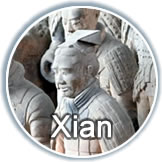
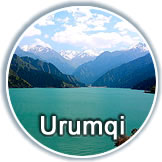
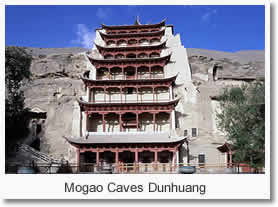
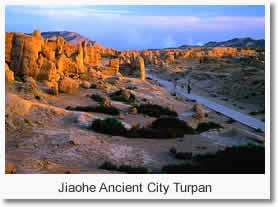
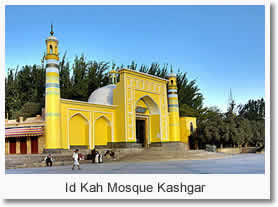
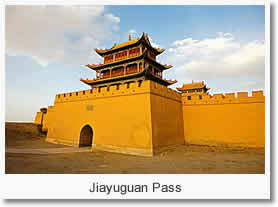
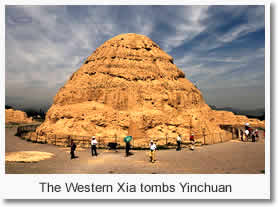
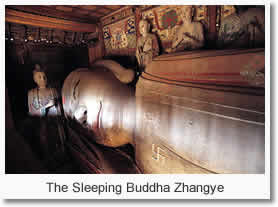
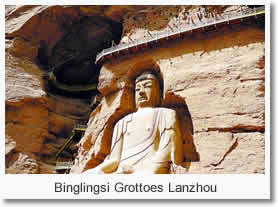
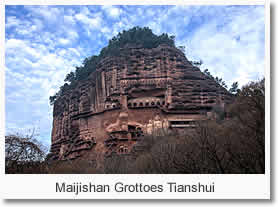
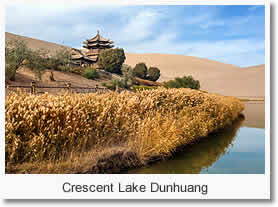
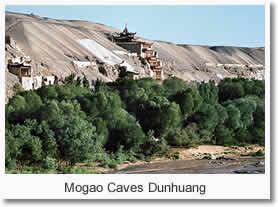
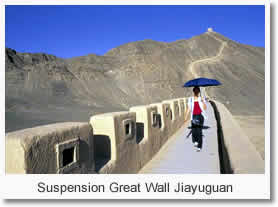
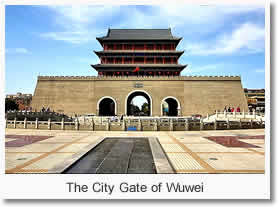
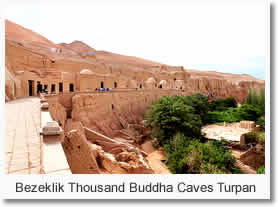
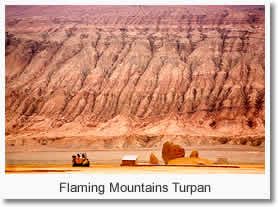
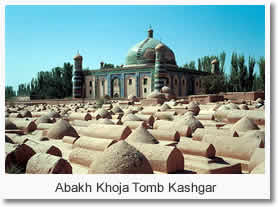
There are numerous scenic spots and historical sites along the silk road. Just name some of the attractions on the silk route: Terra-cotta Warriors and Horse of Xi'an, Yellow River and Bingling Thousand Buddha Caves of Lanzhou, the Eastern Han Tomb and Confucius Temple of Wuwei, China's largest Reclining Buddha of Zhangye, Jiayuguan Pass, the Mogao Grottoes of Dunhuang, Yangguan Pass, the Turpan Basin, Bazaar of Urumqi, Abakh Khoja Tomb, Idgar Mosque, Kashgar Old Town of Kashgar and (Kashi) and many more. For more silk road tourism information, please visit Major Cities & Attractions Along China Silk Road.
To have a good preparation for your Silk Road travel, you need to learn some practical information and some silk road travel tips: What to Pack, Best Travel Time to Silk Road, Food and Drink, Taboos and more. For more Silk Road travel tips, please visit Silk Road First Time Visitors Travel Tips.
Now there are 27 pre-designed China Silk Road private tours. If you prefer a custom silk road vacation package, please advise us your ideas and rough travel plan, and we will send you our suggested tour package with estimated tour cost.
Silk Road Travel Tips
Silk Road Local Time
The Beijing standard time, which is eight hours ahead of Greenwich Mean Time (London) and 13 hours ahead of Eastern Standard Time (New York), is the standard time used in China. The visitor must know though that in Xinjiang, locals often use the Xinjiang time, which is two hours behind the standard Beijing time. For example : 11:00 AM Beijing time = 9:00 AM Xinjiang time.
Best Seasons to visit the Silk Road
The months of May and October are the best time to travel the Silk Road. The summer can be searingly hot. The winter is freezing. During May, the average temperature along the route is around 15C. The scenery is most beautiful during May. The accumulated winter snow on the tableland is melting. The grass is turning green. Visitors can enjoy this enchanting scenery without suffering extreme temperatures.
Tips on visiting Temples along the way
When traveling along the Silk Road, a temple is often an important spot visited by travelers. There are some important things to remember, though, in order to ensure a pleasant visit to the temples.
Proper Manners: put your palms together and lower your head when meeting with the monks. Attempting to handshake, embrace or touch the head of the monk is considered sacrilegious.
Visiting Behaviour: Be respectful. Do not touch or deface any religious artifacts, and be silent and nonjudgemental during religious ceremonies.
Tips on how to visit the local ethnic families
When traveling along the Silk Road, you may be fortunate enough to be invited to visit families of other nationalities. Different nationalities have different customs, taboos and living styles. Remembering the saying, "When in Rome, do as the Romans do..." can ensure you a smooth and pleasant visit.
The best time to visit in a day is in the afternoon; however the busy festival period should be avoided. Orderly and clean clothing is a symbol of politeness. Short trousers, waistcoat and hats are impolite. Before your visit a culture, get some knowledge about their religion, habits, living styles and especially taboos. Some gifts should be prepared at the first visit. Don't bring things that they would consider taboo and don't touch the utensils in their houses.
When the hosts treat you with their local food, it is considered impolite to refuse it. If you are really reluctant, thank your host and offer some a reasonable explanation. When the hosts toast you, you should receive the cup and first offer your thanks to the hosts. Then you can drink it or let other people help you if you cannot bear the whole cup of wine yourself.
Money Safety along the Silk Road
China is probably one of the safest countries to visit, although you should still travel wisely and keep your money close to you at all times. In hotels, leave your valuables in the safe. Be cautious in crowded public areas like bazaars, bus and train stations since thefts from pockets and day packs are not uncommon. The best prevention against theft is a money belt worn inside your clothing.
Hotels on the Silk Road
The Silk Road spans most of China, from modern cities in the central China to isolated villages and towns in the remote west. Accordingly accommodations along the route range from high standard luxurious hotels to simple guesthouse.
In cities like Dunhuang, Turpan, Kashgar, Urumqi, Lanzhou, the visitor can enjoy high standard hotels. They all provide excellent conditions, all-round services and they are quite safe. But this kind of hotels is more expensive. Visitors on a tight budget may consider the cheaper hotels (Guesthouse). With simpler facilities and basic service, these guesthouses are used by most Chinese travelers. In the remote villages only simple and rough lodgings are available. These locations offer nothing but a quite simple room.
Here is only for Questions and Answers. ( For anyone who wants to have an enquiry or tour booking, please fill in our Online Enquiry. )
Silk Road Tours
The history of Silk Road dates back to more than 2,000 years. It started in Chang'an (present Xian, Shaanxi Province) in the east and extended to Rome, Italy in the west.
The route passes through Shaanxi, Gansu, Qinghai Provinces, Ningxia Hui and Xinjiang Uygur autonomous regions and then stretches over the Pamirs, further extend to Central and West Asia and finally gets to the east bank of the Mediterranean Sea and Eastern Europe. The total length of the Silk Road is over 7000km, over half of which is within China.
There are numerous scenic spots and historical sites along the silk road. Just name some of the attractions on the silk route: Terra-cotta Warriors and Horse of Xi'an, Yellow River and Bingling Thousand Buddha Caves of Lanzhou, the Eastern Han Tomb and Confucius Temple of Wuwei, China's largest Reclining Buddha of Zhangye, Jiayuguan Pass, the Mogao Grottoes of Dunhuang, Yangguan Pass, the Turpan Basin, Bazaar of Urumqi, Abakh Khoja Tomb, Idgar Mosque, Kashgar Old Town of Kashgar and (Kashi) and many more. For more silk road tourism information, please visit Major Cities & Attractions Along China Silk Road.
To have a good preparation for your Silk Road travel, you need to learn some practical information and some silk road travel tips: What to Pack, Best Travel Time to Silk Road, Food and Drink, Taboos and more. For more Silk Road travel tips, please visit Silk Road First Time Visitors Travel Tips.
Now there are 27 pre-designed China Silk Road private tours. If you prefer a custom silk road vacation package, please advise us your ideas and rough travel plan, and we will send you our suggested tour package with estimated tour cost.
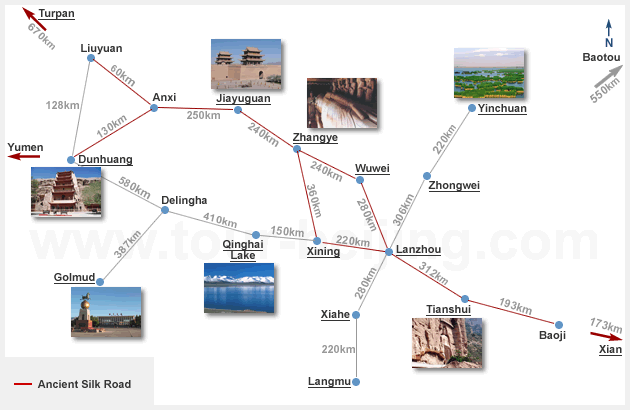
| China Silk Road Map ( Gansu Section ): |
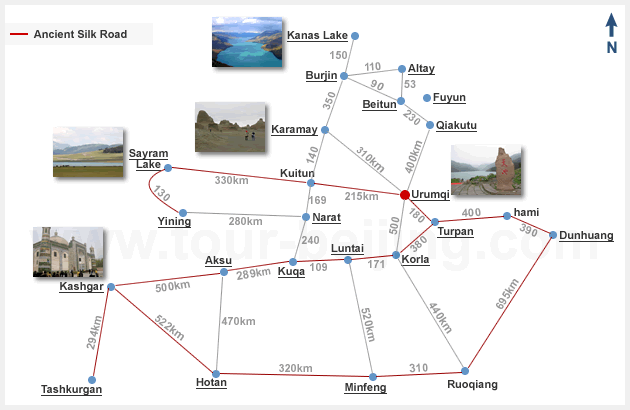
| China Silk Road Map ( Xinjiang Section ): |
| Content: |
| · Silk Road Tours Starting from Beijing |
| · Silk Road Tours Starting from Xian |
| · Silk Road Tours Starting from Urumqi |
| · Silk Road Travel Tips |
| Silk Road Tours Starting from Beijing |
China Silk Road Impression 9-Day Tour from US$1807 p/pChina Silk Road Highlight 7-Day Tour from US$1528 p/p China Silk Road Experience 13-Day Tour from US$1898 p/p China Silk Road Adventure 15-Day Tour from US$2176 p/p China Silk Road Exotic 15-Day Tour from US$2300 p/p China Ancient Silk Road Exploration 14-Day Tour from US$1800 p/p |
| Silk Road Tours Starting from Xian |
Xian Lanzhou Xiahe 4-Day Tour from US$345 p/pXian Tianshui Lanzhou Xiahe 4-Day Tour from US$380 p/p Xian Dunhuang 2-Day Tour by air from US$698 p/p Xian Dunhuang 5-Day by train from US$495 p/p Xian Dunhuang Jiayuguan 5-Day Tour from US$685 p/p Xian Lanzhou Xiahe Jiayuguan Dunhuang 6-Day Tour from US$830 p/p Xian Lanzhou Xiahe Wuwei Zhangye Jiayuguan Dunhuang 8-Day Tour from US$1050 p/p Xian Xining Lanzhou Xiahe Jiayuguan Dunhuang 6-Day Tour from US$1020 p/p Beijing Lanzhou Xiahe Zhongwei Yinchuan 5-Day Tour from US$840 p/p Beijing Xining Lanzhou Xiahe Zhongwei Yinchuan 6-Day Tour from US$1020 p/p China Ancient Silk Road Adventure 17-Day Tour from US$1490 p/p |
| Silk Road Tours Starting from Urumqi |
Urumqi Turpan 2-Day Tour from US$180 p/pUrumqi Turpan 4-Day Tour from US$325 p/p Urumqi Kashi 2-Day Tour from US$470 p/p Urumqi Kashi Kalakuri Lake 3-Day from US$540 p/p Urumqi Turpan Korla Kuqa 7-Day Tour from US$665 p/p Urumqi Korla Kuqa Aksu Kashi 8-Day Tour from US$895 p/p Urumqi Turpan Korla Kuqa Aksu Kashi 9-Day Tour from US$1115 p/p Urumqi Korla Kuqa Minfeng Hotan Kashi 8-Day Tour from US990 p/p Urumqi Bole Yining Nalati Bole 7-Day Tour from US$635 p/p Urumqi Burjin Kanas Jiadengyu Kelamayi from US$730 p/p |
Silk Road Travel Tips
Silk Road Local Time
The Beijing standard time, which is eight hours ahead of Greenwich Mean Time (London) and 13 hours ahead of Eastern Standard Time (New York), is the standard time used in China. The visitor must know though that in Xinjiang, locals often use the Xinjiang time, which is two hours behind the standard Beijing time. For example : 11:00 AM Beijing time = 9:00 AM Xinjiang time.
Best Seasons to visit the Silk Road
The months of May and October are the best time to travel the Silk Road. The summer can be searingly hot. The winter is freezing. During May, the average temperature along the route is around 15C. The scenery is most beautiful during May. The accumulated winter snow on the tableland is melting. The grass is turning green. Visitors can enjoy this enchanting scenery without suffering extreme temperatures.
Tips on visiting Temples along the way
When traveling along the Silk Road, a temple is often an important spot visited by travelers. There are some important things to remember, though, in order to ensure a pleasant visit to the temples.
Proper Manners: put your palms together and lower your head when meeting with the monks. Attempting to handshake, embrace or touch the head of the monk is considered sacrilegious.
Visiting Behaviour: Be respectful. Do not touch or deface any religious artifacts, and be silent and nonjudgemental during religious ceremonies.
Tips on how to visit the local ethnic families
When traveling along the Silk Road, you may be fortunate enough to be invited to visit families of other nationalities. Different nationalities have different customs, taboos and living styles. Remembering the saying, "When in Rome, do as the Romans do..." can ensure you a smooth and pleasant visit.
The best time to visit in a day is in the afternoon; however the busy festival period should be avoided. Orderly and clean clothing is a symbol of politeness. Short trousers, waistcoat and hats are impolite. Before your visit a culture, get some knowledge about their religion, habits, living styles and especially taboos. Some gifts should be prepared at the first visit. Don't bring things that they would consider taboo and don't touch the utensils in their houses.
When the hosts treat you with their local food, it is considered impolite to refuse it. If you are really reluctant, thank your host and offer some a reasonable explanation. When the hosts toast you, you should receive the cup and first offer your thanks to the hosts. Then you can drink it or let other people help you if you cannot bear the whole cup of wine yourself.
Money Safety along the Silk Road
China is probably one of the safest countries to visit, although you should still travel wisely and keep your money close to you at all times. In hotels, leave your valuables in the safe. Be cautious in crowded public areas like bazaars, bus and train stations since thefts from pockets and day packs are not uncommon. The best prevention against theft is a money belt worn inside your clothing.
Hotels on the Silk Road
The Silk Road spans most of China, from modern cities in the central China to isolated villages and towns in the remote west. Accordingly accommodations along the route range from high standard luxurious hotels to simple guesthouse.
In cities like Dunhuang, Turpan, Kashgar, Urumqi, Lanzhou, the visitor can enjoy high standard hotels. They all provide excellent conditions, all-round services and they are quite safe. But this kind of hotels is more expensive. Visitors on a tight budget may consider the cheaper hotels (Guesthouse). With simpler facilities and basic service, these guesthouses are used by most Chinese travelers. In the remote villages only simple and rough lodgings are available. These locations offer nothing but a quite simple room.
| Questions & Answers: |