


Xinjiang Trip
Changji Trip
Burjin Trip
Kanas Trip
Kelamayi Trip
Urumqi Trip
Turpan Trip
Southern Xinjiang Trip
Luntai Trip
Kuqa Trip
Aksu Trip
Artux Trip
Kashgar Trip
Kizilsu Trip

Changji Trip
Burjin Trip
Kanas Trip
Kelamayi Trip
Urumqi Trip
Turpan Trip
Southern Xinjiang Trip
Luntai Trip
Kuqa Trip
Aksu Trip
Artux Trip
Kashgar Trip
Kizilsu Trip

Silk Road Travel Guide
Top Attractions on the Silk Road
Silk Road Travel Tips
Xian Travel Guide
Tianshui Travel Guide
Lanzhou Travel Guide
Xiahe Travel Guide
Wuwei Travel Guide
Zhangye Travel Guide
Jiayuguan Travel Guide
Dunhuang Travel Guide
Turpan Travel Guide
Urumqi Travel Guide
Fuyun Travel Guide
Altay Travel Guide
Altay Travel Guide
Burjin Travel Guide
Karamy Travel Guide
Bole Travel Guide
Yining Travel Guide
Bayanbulak Travel Guide
Korla Travel Guide
Luntai Travel Guide
Kuqa Travel Guide
Aksu Travel Guide
Kashgar Travel Guide
Artux Travel Guide
Tashkurgan Travel Guide
Yarkan Travel Guide
Hotan Travel Guide
Mingfeng Travel Guide
Xining Travel Guide
Yinchuan Travel Guide
Zhongwei Travel Guide
Silk Road Travel Tips
Xian Travel Guide
Tianshui Travel Guide
Lanzhou Travel Guide
Xiahe Travel Guide
Wuwei Travel Guide
Zhangye Travel Guide
Jiayuguan Travel Guide
Dunhuang Travel Guide
Turpan Travel Guide
Urumqi Travel Guide
Fuyun Travel Guide
Altay Travel Guide
Altay Travel Guide
Burjin Travel Guide
Karamy Travel Guide
Bole Travel Guide
Yining Travel Guide
Bayanbulak Travel Guide
Korla Travel Guide
Luntai Travel Guide
Kuqa Travel Guide
Aksu Travel Guide
Kashgar Travel Guide
Artux Travel Guide
Tashkurgan Travel Guide
Yarkan Travel Guide
Hotan Travel Guide
Mingfeng Travel Guide
Xining Travel Guide
Yinchuan Travel Guide
Zhongwei Travel Guide
Beijing Tour
Xian Tour
Shanghai Tour
Guilin Tour
Datong Tour
Chengde Tour
Chengdu Tour
Chongqing Tour
Hong Kong Tour
Luoyang Tour
Lijiang Tour
Pingyao Tour
Inner Mongolia Tour
Harbin Tour
Hangzhou Tour
Huangshan Tour
Tianjin Tour
Qufu Tour
Mt.Taishan Tour
Jinan Tour
Qingdao Tour
Qinhuangdao Tour
Jiuzhaigou Tour
Zhangjiajie Tour
Xian Tour
Shanghai Tour
Guilin Tour
Datong Tour
Chengde Tour
Chengdu Tour
Chongqing Tour
Hong Kong Tour
Luoyang Tour
Lijiang Tour
Pingyao Tour
Inner Mongolia Tour
Harbin Tour
Hangzhou Tour
Huangshan Tour
Tianjin Tour
Qufu Tour
Mt.Taishan Tour
Jinan Tour
Qingdao Tour
Qinhuangdao Tour
Jiuzhaigou Tour
Zhangjiajie Tour
China Province Tour
Tibet Tour
Shandong Tour
Guangdong Tour
Fujian Tour
Qinghai Tour
Ninxia Tour
Guizhou Tour
Inner Mongolia Tour
Shandong Tour
Guangdong Tour
Fujian Tour
Qinghai Tour
Ninxia Tour
Guizhou Tour
Inner Mongolia Tour
Beijing Trip
Xian Trip
Shanghai Trip
Guilin Trip
Chengdu Trip
Chengde Trip
Inner Mongolia Trip
Datong Trip
Harbin Trip
Pingyao Trip
Luoyang Trip
Qufu Trip
Shangdong Trip
Hangzhou Trip
Lhasa Trip
Yangtze River Trip
Huangshan Trip
Xian Trip
Shanghai Trip
Guilin Trip
Chengdu Trip
Chengde Trip
Inner Mongolia Trip
Datong Trip
Harbin Trip
Pingyao Trip
Luoyang Trip
Qufu Trip
Shangdong Trip
Hangzhou Trip
Lhasa Trip
Yangtze River Trip
Huangshan Trip
- - - - - - - - - - - - - - - - - - - -
Beijing Travel Service
China Travel Agency
Beijing Travel Tips
Beijing Information
Beijing Travel Service
China Travel Agency
Beijing Travel Tips
Beijing Information
Home → China Tours → Silk Road Tours → Zhangye Travel Guide
Zhangye Travel Guide
Location: Zhangye is located in the middle section of the Hexi Corridor, far western Gansu Province.
Population: about 1,270,000
Area: 4,240 sq km
Nationalities: Han, Hui, Mongolia, Yugu nationality,
History: It is an important part of the ancient Silk Road and belongs to the national historical and cultural city. It is close to Wuwei in the east and Jjiuquan in the west. In 121 BC, in order to acquire its fame, the emperor of Qing Dynasty sent general Huo Qubing to Hexi to conquer the Huns (a tribe of people). After that, the Huns were named Zhangye.
Climate: Zhangye has a continental climate. Like its western neighbors Dunhuang and Jiayuguan, the climate here is characterized by dryness all the year round. The annual temperature for the city is 6.8℃. January is the coldest month, while July the hottest. Generally speaking, the optimum time to pay the city a visit is from June to September.
Transportation: By far the easiest way to get to Zhangye is still by train, for it is a major stop along the Lanzhou-Urumqi Railway Line. Each day there are more than 10 daily trains going to and beyond Zhangye. There is a nightly express train that from Lanzhou to Zhangye to Zhangye after 12 hours. You can cost RMB3 by mini bus or RMB 10 by taxi, for the railway station is about 10kms from the city center. It is also very convenient to go to or from Zhangye by bus. The Eastern Bus Station, south down Donghuancheng lu from the Hexi Hotel, dispatches 8 daily buses in the evening to Lanzhou, three of which have sleeper seats (sleeper: RMB85; non-sleeper: RMB35; duration: 15 hours). There are also 3 buses each morning to Jiayuguan (fare: RMB20; duration: 5 hours).
Local Specialties: Wujiang Rice, Minyue Garlic, Gaotai Capsicum, Linze Chinese Date
Local Food: Saozi noodles, Cuoyumian, Niangpizi, Stewed pork
Major Attractions:
The Giant Buddha Temple – The Giant Buddha Temple, with the original name Jiayerulaipian Temple is in the southeast part of Zhangye, which is the largest temple in Gansu. The great Buddhist Temple is 33 meters high. A Buddhist made up of wood, soil and plastic lies in the temple. It is said to be the largest lying Buddha in China.
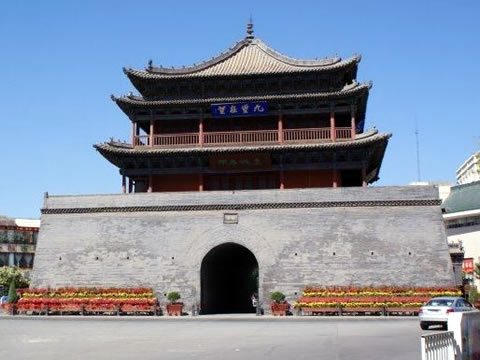
The Bell Tower and Drum Tower - The bell and drum tower in Zhangye, the biggest drum tower in the Hexi Corridor of the silk road district, was built in 1507 during the Ming Dynasty. In 1648 during the Qing Dynasty, it was destroyed by war. In 1668, Zhang Yong, the superintendent of Gansu, rebuilt the bell and drum tower.
Here is only for Questions and Answers. ( For anyone who wants to have an enquiry or tour booking, please fill in our Online Enquiry. )
Zhangye Travel Guide
Location: Zhangye is located in the middle section of the Hexi Corridor, far western Gansu Province.
Population: about 1,270,000
Area: 4,240 sq km
Nationalities: Han, Hui, Mongolia, Yugu nationality,
History: It is an important part of the ancient Silk Road and belongs to the national historical and cultural city. It is close to Wuwei in the east and Jjiuquan in the west. In 121 BC, in order to acquire its fame, the emperor of Qing Dynasty sent general Huo Qubing to Hexi to conquer the Huns (a tribe of people). After that, the Huns were named Zhangye.
Climate: Zhangye has a continental climate. Like its western neighbors Dunhuang and Jiayuguan, the climate here is characterized by dryness all the year round. The annual temperature for the city is 6.8℃. January is the coldest month, while July the hottest. Generally speaking, the optimum time to pay the city a visit is from June to September.
Transportation: By far the easiest way to get to Zhangye is still by train, for it is a major stop along the Lanzhou-Urumqi Railway Line. Each day there are more than 10 daily trains going to and beyond Zhangye. There is a nightly express train that from Lanzhou to Zhangye to Zhangye after 12 hours. You can cost RMB3 by mini bus or RMB 10 by taxi, for the railway station is about 10kms from the city center. It is also very convenient to go to or from Zhangye by bus. The Eastern Bus Station, south down Donghuancheng lu from the Hexi Hotel, dispatches 8 daily buses in the evening to Lanzhou, three of which have sleeper seats (sleeper: RMB85; non-sleeper: RMB35; duration: 15 hours). There are also 3 buses each morning to Jiayuguan (fare: RMB20; duration: 5 hours).
Local Specialties: Wujiang Rice, Minyue Garlic, Gaotai Capsicum, Linze Chinese Date
Local Food: Saozi noodles, Cuoyumian, Niangpizi, Stewed pork
Major Attractions:
The Giant Buddha Temple – The Giant Buddha Temple, with the original name Jiayerulaipian Temple is in the southeast part of Zhangye, which is the largest temple in Gansu. The great Buddhist Temple is 33 meters high. A Buddhist made up of wood, soil and plastic lies in the temple. It is said to be the largest lying Buddha in China.
The Bell Tower and Drum Tower - The bell and drum tower in Zhangye, the biggest drum tower in the Hexi Corridor of the silk road district, was built in 1507 during the Ming Dynasty. In 1648 during the Qing Dynasty, it was destroyed by war. In 1668, Zhang Yong, the superintendent of Gansu, rebuilt the bell and drum tower.

| Questions & Answers: |