



Xinjiang Trip
Changji Trip
Burjin Trip
Kanas Trip
Kelamayi Trip
Urumqi Trip
Turpan Trip
Southern Xinjiang Trip
Luntai Trip
Kuqa Trip
Aksu Trip
Artux Trip
Kashgar Trip
Kizilsu Trip

Changji Trip
Burjin Trip
Kanas Trip
Kelamayi Trip
Urumqi Trip
Turpan Trip
Southern Xinjiang Trip
Luntai Trip
Kuqa Trip
Aksu Trip
Artux Trip
Kashgar Trip
Kizilsu Trip

Silk Road Travel Guide
Top Attractions on the Silk Road
Silk Road Travel Tips
Xian Travel Guide
Tianshui Travel Guide
Lanzhou Travel Guide
Xiahe Travel Guide
Wuwei Travel Guide
Zhangye Travel Guide
Jiayuguan Travel Guide
Dunhuang Travel Guide
Turpan Travel Guide
Urumqi Travel Guide
Fuyun Travel Guide
Altay Travel Guide
Altay Travel Guide
Burjin Travel Guide
Karamy Travel Guide
Bole Travel Guide
Yining Travel Guide
Bayanbulak Travel Guide
Korla Travel Guide
Luntai Travel Guide
Kuqa Travel Guide
Aksu Travel Guide
Kashgar Travel Guide
Artux Travel Guide
Tashkurgan Travel Guide
Yarkan Travel Guide
Hotan Travel Guide
Mingfeng Travel Guide
Xining Travel Guide
Yinchuan Travel Guide
Zhongwei Travel Guide
Silk Road Travel Tips
Xian Travel Guide
Tianshui Travel Guide
Lanzhou Travel Guide
Xiahe Travel Guide
Wuwei Travel Guide
Zhangye Travel Guide
Jiayuguan Travel Guide
Dunhuang Travel Guide
Turpan Travel Guide
Urumqi Travel Guide
Fuyun Travel Guide
Altay Travel Guide
Altay Travel Guide
Burjin Travel Guide
Karamy Travel Guide
Bole Travel Guide
Yining Travel Guide
Bayanbulak Travel Guide
Korla Travel Guide
Luntai Travel Guide
Kuqa Travel Guide
Aksu Travel Guide
Kashgar Travel Guide
Artux Travel Guide
Tashkurgan Travel Guide
Yarkan Travel Guide
Hotan Travel Guide
Mingfeng Travel Guide
Xining Travel Guide
Yinchuan Travel Guide
Zhongwei Travel Guide
Beijing Tour
Xian Tour
Shanghai Tour
Guilin Tour
Datong Tour
Chengde Tour
Chengdu Tour
Chongqing Tour
Hong Kong Tour
Luoyang Tour
Lijiang Tour
Pingyao Tour
Inner Mongolia Tour
Harbin Tour
Hangzhou Tour
Huangshan Tour
Tianjin Tour
Qufu Tour
Mt.Taishan Tour
Jinan Tour
Qingdao Tour
Qinhuangdao Tour
Jiuzhaigou Tour
Zhangjiajie Tour
Xian Tour
Shanghai Tour
Guilin Tour
Datong Tour
Chengde Tour
Chengdu Tour
Chongqing Tour
Hong Kong Tour
Luoyang Tour
Lijiang Tour
Pingyao Tour
Inner Mongolia Tour
Harbin Tour
Hangzhou Tour
Huangshan Tour
Tianjin Tour
Qufu Tour
Mt.Taishan Tour
Jinan Tour
Qingdao Tour
Qinhuangdao Tour
Jiuzhaigou Tour
Zhangjiajie Tour
China Province Tour
Tibet Tour
Shandong Tour
Guangdong Tour
Fujian Tour
Qinghai Tour
Ninxia Tour
Guizhou Tour
Inner Mongolia Tour
Shandong Tour
Guangdong Tour
Fujian Tour
Qinghai Tour
Ninxia Tour
Guizhou Tour
Inner Mongolia Tour
Beijing Trip
Xian Trip
Shanghai Trip
Guilin Trip
Chengdu Trip
Chengde Trip
Inner Mongolia Trip
Datong Trip
Harbin Trip
Pingyao Trip
Luoyang Trip
Qufu Trip
Shangdong Trip
Hangzhou Trip
Lhasa Trip
Yangtze River Trip
Huangshan Trip
Xian Trip
Shanghai Trip
Guilin Trip
Chengdu Trip
Chengde Trip
Inner Mongolia Trip
Datong Trip
Harbin Trip
Pingyao Trip
Luoyang Trip
Qufu Trip
Shangdong Trip
Hangzhou Trip
Lhasa Trip
Yangtze River Trip
Huangshan Trip
- - - - - - - - - - - - - - - - - - - -
Beijing Travel Service
China Travel Agency
Beijing Travel Tips
Beijing Information
Beijing Travel Service
China Travel Agency
Beijing Travel Tips
Beijing Information
Home → China Tours → Silk Road Tours → Turpan Travel Guide
Turpan Travel Guide
Location: Turpan is located about 150kms southeast of Urumqi and in the middle of Turpan Basin.
Population: Its population was 254,900 at the end of 2003
Area: with a whole area of 13, 689 sq km
Nationalities: Uygur, Han, Hui, etc.
History: Turpan’s history started with the ongoing struggles in the Han dynasty between the Chinese and the Xiongnu tribesmen. Both peoples wanted this area as their power expansion base. For many centuries, the region remained a contested area. During the Yuan dynasty, the Silk Road enjoyed a boom that was never seen before. Turpan took advantage of the opportunity and became a major oasis along the Silk Road.
Climate: Turpan has extremely hot summers with low rainfall but high evaporation; long frost-free period and gusty winds; in central area, the tiptop temperature of 117℉. Make sure you come prepared if you visit during the summer months. Always carry plenty of drinking water, take some very strong sunblock and a good hat! The grade harvest season, namely July, August and September, is the best time for tourists to visit.
Transportation: Turpan Railway Station is about 50kms from Turpan city, connected with Urumchi, Korla, Beijing, Shanghai and so on. Highway in Turpan is very developed. National highway 312 and 314 cross here. Tourists could take buss at Turpan Coach Station and Daheyan Coach Station to some major cities of Xinjiang. In summer the earliest buss is at 7:30am, the latest at 20:30. And in winter the earliest is at 8:30am, the latest at 19:30.
Local Specialties: tapestry, Yengisar knife, flower hat, fig, fragrant bear, white grape, cantaloupe
Local Food: cried noodle, shouzhuafan, roasted whole sheep, shouzhuarou, kabob, paermuding,
Major Attractions:
Jiaohe Ruins - Jiaohe Town ruin is the best preserved town ruin in China. It is located about 10 kilometers away from Turpan city. The strip-shaped town was around 0.8 kilometers long and the widest point spanned about 300 meters. The town was surrounded by sheer cliffs, then two twisting 30-meter-deep rivers. That's why the town was so called for Jiaohe means twisting rivers in Chinese.
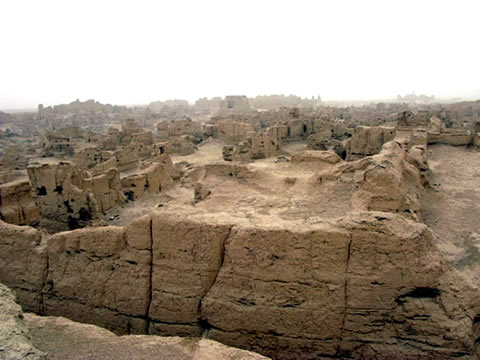
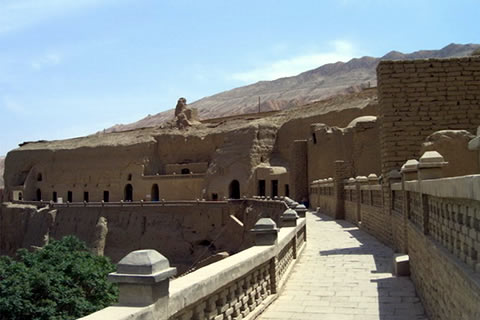
The Bezeklik Thousand Buddha Caves – The Bezeklik Thousand Buddha Caves are complex of Buddhist cave grottos dating from the 5th to the 9th centuries between the cities of Turpan and Loulan. There are 77 rock-cut caves at the site. Most have rectangular spaces with rounded arch ceilings often divided into four sections, each with a mural of Buddha. The quality of the murals vary with some being artistically naive while others are masterpieces of religious art.
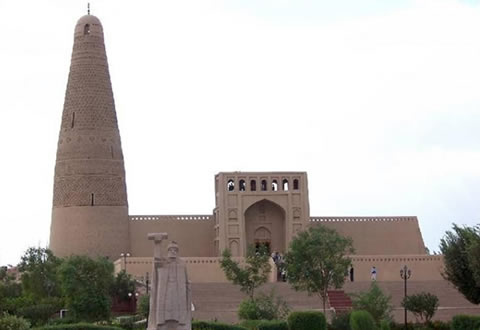
Sugong Pagoda - The Sugong Pagoda is known as the Turpan Pagoda among local residents. A stone tablet at its entrance cites the reason for the pagoda's construction in Wei and Han characters. The structure was built in 1181 of the Hui calendar (1779) by Su Laiman II, the ruler of the Turpan Prefecture, to honor his father.
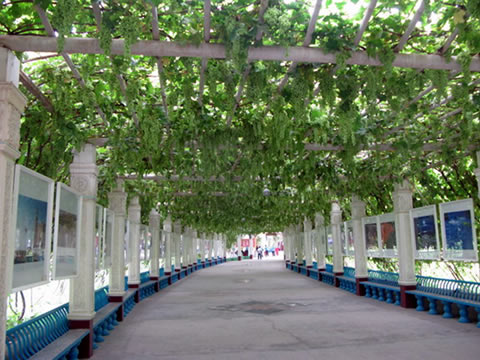
Grape Valley – Grape Valley is at the northeast of Turpan. It is a gully to the west of the Flaming Mountain. The valley runs 8 kilometers long, spans 0.6-2.0 kilometers wide. While the west side of the valley hangs sheer cliffs inside the valley is a forest of intertwined grape vines. Around the grape gardens towers vibrant poplar trees interspersed with a few flowers. Cottages and adobe houses are elaborately arranged on the slopes.
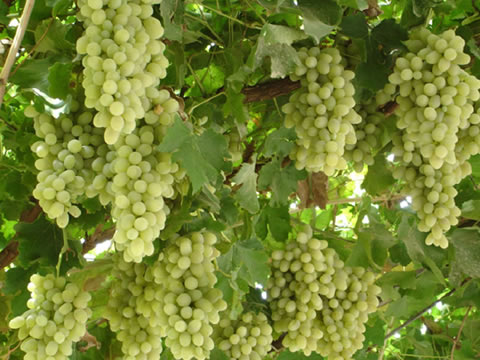
Karez Well – Karez Well is the pride of Turpan. The underground irrigation channel was created by ancestors of Xinjiang. There are more than 1400 Karez wells in Turfan. The total length amounts to more than 5000 km with an annual runoff volume up to 300 million cubic meters, surpassing the total runoff volume of the Flaming Mountain water system.
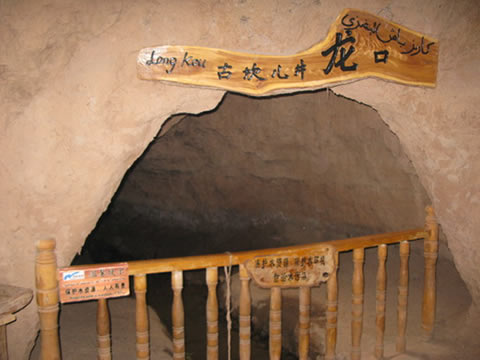
Gaochang Ruins - It is the largest city ruins in west China. The site is located 40 kilometers from the Turpan City, at the north bank of the Aiding Lake and to the south of the Flaming Mountain. It was listed as the National key cultural unit in 1961. The ruins cover around 2.2 million square meters, containing the outer and inner cities. The layout of the city is similar to that of Chang'an, capital of Tang Dynasty at that time. The outer wall is the only visible structure left today. Some parts are well-preserved.
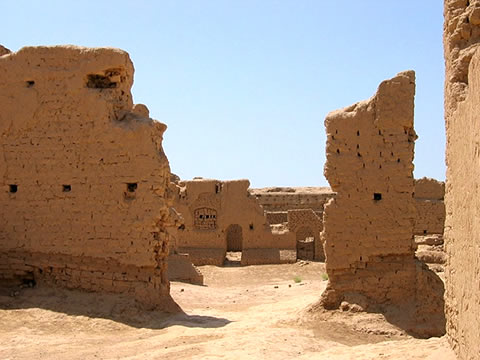
Astana Grave - The Astana Graves are a series of underground tombs about 40 km to the southeast of Turpan in Xinjiang. The tombs were used by the inhabitants of the ancient city of Gaochang, both officials and commoners. The graveyard was built around the 3rd to 8th century AD some 1,700 years ago. It stretches for about 5 km from the east to the west and 2 km from the north to the south, covering an area of 10 sq km.
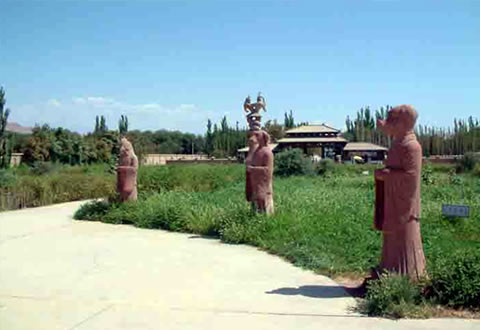
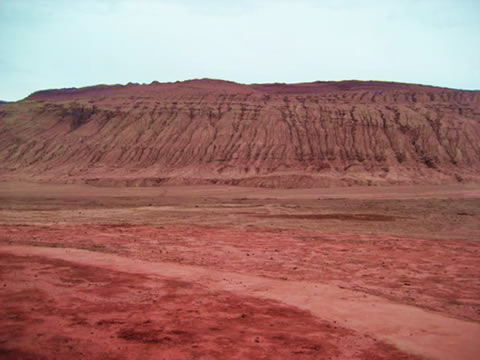
Flaming Mountain - The Flaming Mountain is very popular thanks to a classical novel, The Journey to the West by the Ming Dynasty (1368-1644) writer, Wu Cheng'en and its charming hero - the Monkey King. The mountain lies 10 km (6.2miles) east of Turpan city, covering about 100 km (62miles) from east to west with a width of 9 km (5.6miles). The average height is 500m (1640feet), while the 831-meter (2726-foot) - high peak rises above Shengjinkou, a vital pass of the ancient city of Gaochang.
Travel Tips:
If you want to take pictures in Karez Well, do it when you walk along the road. Because it is unallowed to back out.
Here is only for Questions and Answers. ( For anyone who wants to have an enquiry or tour booking, please fill in our Online Enquiry. )
Turpan Travel Guide
Location: Turpan is located about 150kms southeast of Urumqi and in the middle of Turpan Basin.
Population: Its population was 254,900 at the end of 2003
Area: with a whole area of 13, 689 sq km
Nationalities: Uygur, Han, Hui, etc.
History: Turpan’s history started with the ongoing struggles in the Han dynasty between the Chinese and the Xiongnu tribesmen. Both peoples wanted this area as their power expansion base. For many centuries, the region remained a contested area. During the Yuan dynasty, the Silk Road enjoyed a boom that was never seen before. Turpan took advantage of the opportunity and became a major oasis along the Silk Road.
Climate: Turpan has extremely hot summers with low rainfall but high evaporation; long frost-free period and gusty winds; in central area, the tiptop temperature of 117℉. Make sure you come prepared if you visit during the summer months. Always carry plenty of drinking water, take some very strong sunblock and a good hat! The grade harvest season, namely July, August and September, is the best time for tourists to visit.
Transportation: Turpan Railway Station is about 50kms from Turpan city, connected with Urumchi, Korla, Beijing, Shanghai and so on. Highway in Turpan is very developed. National highway 312 and 314 cross here. Tourists could take buss at Turpan Coach Station and Daheyan Coach Station to some major cities of Xinjiang. In summer the earliest buss is at 7:30am, the latest at 20:30. And in winter the earliest is at 8:30am, the latest at 19:30.
Local Specialties: tapestry, Yengisar knife, flower hat, fig, fragrant bear, white grape, cantaloupe
Local Food: cried noodle, shouzhuafan, roasted whole sheep, shouzhuarou, kabob, paermuding,
Major Attractions:
Jiaohe Ruins - Jiaohe Town ruin is the best preserved town ruin in China. It is located about 10 kilometers away from Turpan city. The strip-shaped town was around 0.8 kilometers long and the widest point spanned about 300 meters. The town was surrounded by sheer cliffs, then two twisting 30-meter-deep rivers. That's why the town was so called for Jiaohe means twisting rivers in Chinese.

The Bezeklik Thousand Buddha Caves – The Bezeklik Thousand Buddha Caves are complex of Buddhist cave grottos dating from the 5th to the 9th centuries between the cities of Turpan and Loulan. There are 77 rock-cut caves at the site. Most have rectangular spaces with rounded arch ceilings often divided into four sections, each with a mural of Buddha. The quality of the murals vary with some being artistically naive while others are masterpieces of religious art.

Sugong Pagoda - The Sugong Pagoda is known as the Turpan Pagoda among local residents. A stone tablet at its entrance cites the reason for the pagoda's construction in Wei and Han characters. The structure was built in 1181 of the Hui calendar (1779) by Su Laiman II, the ruler of the Turpan Prefecture, to honor his father.

Grape Valley – Grape Valley is at the northeast of Turpan. It is a gully to the west of the Flaming Mountain. The valley runs 8 kilometers long, spans 0.6-2.0 kilometers wide. While the west side of the valley hangs sheer cliffs inside the valley is a forest of intertwined grape vines. Around the grape gardens towers vibrant poplar trees interspersed with a few flowers. Cottages and adobe houses are elaborately arranged on the slopes.


Karez Well – Karez Well is the pride of Turpan. The underground irrigation channel was created by ancestors of Xinjiang. There are more than 1400 Karez wells in Turfan. The total length amounts to more than 5000 km with an annual runoff volume up to 300 million cubic meters, surpassing the total runoff volume of the Flaming Mountain water system.

Gaochang Ruins - It is the largest city ruins in west China. The site is located 40 kilometers from the Turpan City, at the north bank of the Aiding Lake and to the south of the Flaming Mountain. It was listed as the National key cultural unit in 1961. The ruins cover around 2.2 million square meters, containing the outer and inner cities. The layout of the city is similar to that of Chang'an, capital of Tang Dynasty at that time. The outer wall is the only visible structure left today. Some parts are well-preserved.

Astana Grave - The Astana Graves are a series of underground tombs about 40 km to the southeast of Turpan in Xinjiang. The tombs were used by the inhabitants of the ancient city of Gaochang, both officials and commoners. The graveyard was built around the 3rd to 8th century AD some 1,700 years ago. It stretches for about 5 km from the east to the west and 2 km from the north to the south, covering an area of 10 sq km.

Flaming Mountain - The Flaming Mountain is very popular thanks to a classical novel, The Journey to the West by the Ming Dynasty (1368-1644) writer, Wu Cheng'en and its charming hero - the Monkey King. The mountain lies 10 km (6.2miles) east of Turpan city, covering about 100 km (62miles) from east to west with a width of 9 km (5.6miles). The average height is 500m (1640feet), while the 831-meter (2726-foot) - high peak rises above Shengjinkou, a vital pass of the ancient city of Gaochang.

Travel Tips:
If you want to take pictures in Karez Well, do it when you walk along the road. Because it is unallowed to back out.
| Questions & Answers: |