

Xinjiang Trip
Changji Trip
Burjin Trip
Kanas Trip
Kelamayi Trip
Urumqi Trip
Turpan Trip
Southern Xinjiang Trip
Luntai Trip
Kuqa Trip
Aksu Trip
Artux Trip
Kashgar Trip
Kizilsu Trip

Changji Trip
Burjin Trip
Kanas Trip
Kelamayi Trip
Urumqi Trip
Turpan Trip
Southern Xinjiang Trip
Luntai Trip
Kuqa Trip
Aksu Trip
Artux Trip
Kashgar Trip
Kizilsu Trip

Silk Road Travel Guide
Top Attractions on the Silk Road
Silk Road Travel Tips
Xian Travel Guide
Tianshui Travel Guide
Lanzhou Travel Guide
Xiahe Travel Guide
Wuwei Travel Guide
Zhangye Travel Guide
Jiayuguan Travel Guide
Dunhuang Travel Guide
Turpan Travel Guide
Urumqi Travel Guide
Fuyun Travel Guide
Altay Travel Guide
Altay Travel Guide
Burjin Travel Guide
Karamy Travel Guide
Bole Travel Guide
Yining Travel Guide
Bayanbulak Travel Guide
Korla Travel Guide
Luntai Travel Guide
Kuqa Travel Guide
Aksu Travel Guide
Kashgar Travel Guide
Artux Travel Guide
Tashkurgan Travel Guide
Yarkan Travel Guide
Hotan Travel Guide
Mingfeng Travel Guide
Xining Travel Guide
Yinchuan Travel Guide
Zhongwei Travel Guide
Silk Road Travel Tips
Xian Travel Guide
Tianshui Travel Guide
Lanzhou Travel Guide
Xiahe Travel Guide
Wuwei Travel Guide
Zhangye Travel Guide
Jiayuguan Travel Guide
Dunhuang Travel Guide
Turpan Travel Guide
Urumqi Travel Guide
Fuyun Travel Guide
Altay Travel Guide
Altay Travel Guide
Burjin Travel Guide
Karamy Travel Guide
Bole Travel Guide
Yining Travel Guide
Bayanbulak Travel Guide
Korla Travel Guide
Luntai Travel Guide
Kuqa Travel Guide
Aksu Travel Guide
Kashgar Travel Guide
Artux Travel Guide
Tashkurgan Travel Guide
Yarkan Travel Guide
Hotan Travel Guide
Mingfeng Travel Guide
Xining Travel Guide
Yinchuan Travel Guide
Zhongwei Travel Guide
Beijing Tour
Xian Tour
Shanghai Tour
Guilin Tour
Datong Tour
Chengde Tour
Chengdu Tour
Chongqing Tour
Hong Kong Tour
Luoyang Tour
Lijiang Tour
Pingyao Tour
Inner Mongolia Tour
Harbin Tour
Hangzhou Tour
Huangshan Tour
Tianjin Tour
Qufu Tour
Mt.Taishan Tour
Jinan Tour
Qingdao Tour
Qinhuangdao Tour
Jiuzhaigou Tour
Zhangjiajie Tour
Xian Tour
Shanghai Tour
Guilin Tour
Datong Tour
Chengde Tour
Chengdu Tour
Chongqing Tour
Hong Kong Tour
Luoyang Tour
Lijiang Tour
Pingyao Tour
Inner Mongolia Tour
Harbin Tour
Hangzhou Tour
Huangshan Tour
Tianjin Tour
Qufu Tour
Mt.Taishan Tour
Jinan Tour
Qingdao Tour
Qinhuangdao Tour
Jiuzhaigou Tour
Zhangjiajie Tour
China Province Tour
Tibet Tour
Shandong Tour
Guangdong Tour
Fujian Tour
Qinghai Tour
Ninxia Tour
Guizhou Tour
Inner Mongolia Tour
Shandong Tour
Guangdong Tour
Fujian Tour
Qinghai Tour
Ninxia Tour
Guizhou Tour
Inner Mongolia Tour
Beijing Trip
Xian Trip
Shanghai Trip
Guilin Trip
Chengdu Trip
Chengde Trip
Inner Mongolia Trip
Datong Trip
Harbin Trip
Pingyao Trip
Luoyang Trip
Qufu Trip
Shangdong Trip
Hangzhou Trip
Lhasa Trip
Yangtze River Trip
Huangshan Trip
Xian Trip
Shanghai Trip
Guilin Trip
Chengdu Trip
Chengde Trip
Inner Mongolia Trip
Datong Trip
Harbin Trip
Pingyao Trip
Luoyang Trip
Qufu Trip
Shangdong Trip
Hangzhou Trip
Lhasa Trip
Yangtze River Trip
Huangshan Trip
- - - - - - - - - - - - - - - - - - - -
Beijing Travel Service
China Travel Agency
Beijing Travel Tips
Beijing Information
Beijing Travel Service
China Travel Agency
Beijing Travel Tips
Beijing Information
Home → China Tours → Silk Road Tours → Xining Travel Guide
Xining Travel Guide
Location: Xining is located in the eastern part of Qinghai province and lies on the Huang River.
Population: 2,177,900
Area: 350 sq km
Nationalities: Han, Hui, Tibet, Tu, Mongolia, and Sala
History: Xining has a history of over 2100 years[1] and was a chief commercial hub on the Hexi Corridor caravan route to Tibet, handling especially timber, wool and salt in ancient times. The trade along the Hexi Corridor was part of a larger trade corridor along the Northern Silk Road, whose use was intensified in the first century BC after efforts by the Han Dynasty to control this route.
Climate: Xining is cool in summer with an average temperature is 17-19℃. Its annual average temperature is 7.6 ℃ with the highest temperature of 34.6℃ and the lowest that of -18.9℃.
Transportation: Xining Caojiabu Airport serves the area with regularly scheduled passenger flights to major Chinese cities including Beijing, Shanghai and Hong Kong.
Since 1959 Xining has been connected by rail to the main Chinese system at Lanzhou; this railway extends into the Qaidam area via Haiyan near Qinghai Lake to Golmud.
China National Highway 214 passes through the area.
Local Specialties: aweto, colorful stones, muskiness
Local Food: Liangfen (bean jelly), Niangpi, Zasui Soup, Mutton eaten with fingers
Major Attractions:
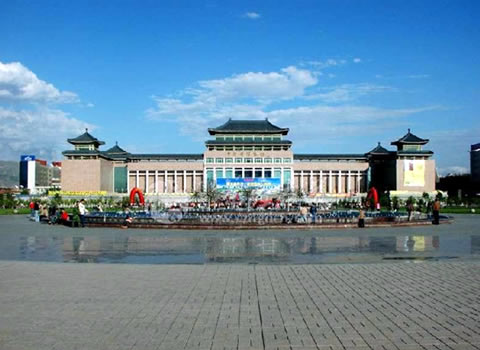
Qinghai Provincial Museum - The Qinghai Provincial Museum, located at Xining City, is a provincial-level comprehensive museum of China. The Museum building used to be residence of Ma Bufang, a local warlord of Qinghai. At present the Museum, covering an area of 30,000 square meters with a floor space of 6,000 square meters, is one of the historical sites under the protection of the province.
Beishan Si – Beishan Si (North Mountain Temple) is located north of the Huangshui River, on the outskirts of Xining. This Taoist temple is over 1,700 years old and there were hundreds of steps that led along a series of walkways and bridges connecting caves decorated with Taoist designs.
Shuijing Xiang Market - Xining's largest market occupies several streets and an enjoyable place to browse and watch the crows. There are a lot of snacks. It extends east from the West Gate.
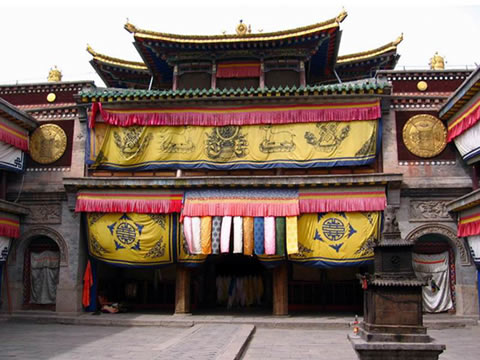
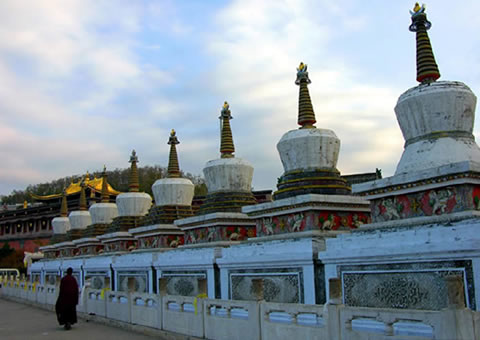
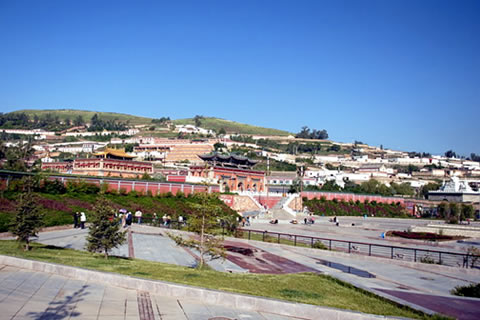
Ta’er Monastery - The Ta'er Lamasery, a famous Tibetan Buddhist monastery in Qinghai Province, was recently renovated, restoring it to its former glory. Hoping to be the first worshippers to the lamasery after its renovation, pilgrims of different ethnic groups came from near and far. Some of them, in ethnic clothes and ornaments, carried abundant packages of offerings; some rotated a prayer wheel in their hands while chanting; and some lay flat or knelt on the ground, praying for the happiness and well-being of their families.
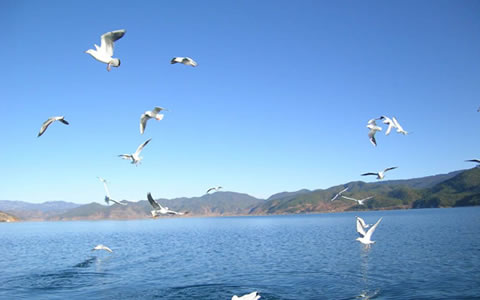
Qinghai Lake - Qinghai means green lake in Chinese and this is the largest inland saltwater lake in China. Lying in the northeast of Qinghai Province, approximately 150km (193 miles) from Xining at 3,200 meters (10,500ft) above sea level, the lake stretches endlessly into the horizon. It has an area of 4,635 sq km and is more than 360km (220 miles) in circumference. The lake has an abundant supply of fish, which in turn attracts large flocks of birds including many migratory breeds. Major sights on or around the lake are: Bird Island, Haixin Hill, Haixi Hill, Sankuaishi (Three Stones), and Sand Island.
Travel Tips:
1. Near Ta’er Temple, some badmen gather together to force tourists to buy their knives. Do not stand to view and do not show any interesting. It is safer to buy you needs in the shops.
2. For its dry weather, it is unadvisable to eat mutton excessively
3. Please respect the custom of locals
Here is only for Questions and Answers. ( For anyone who wants to have an enquiry or tour booking, please fill in our Online Enquiry. )
Xining Travel Guide
Location: Xining is located in the eastern part of Qinghai province and lies on the Huang River.
Population: 2,177,900
Area: 350 sq km
Nationalities: Han, Hui, Tibet, Tu, Mongolia, and Sala
History: Xining has a history of over 2100 years[1] and was a chief commercial hub on the Hexi Corridor caravan route to Tibet, handling especially timber, wool and salt in ancient times. The trade along the Hexi Corridor was part of a larger trade corridor along the Northern Silk Road, whose use was intensified in the first century BC after efforts by the Han Dynasty to control this route.
Climate: Xining is cool in summer with an average temperature is 17-19℃. Its annual average temperature is 7.6 ℃ with the highest temperature of 34.6℃ and the lowest that of -18.9℃.
Transportation: Xining Caojiabu Airport serves the area with regularly scheduled passenger flights to major Chinese cities including Beijing, Shanghai and Hong Kong.
Since 1959 Xining has been connected by rail to the main Chinese system at Lanzhou; this railway extends into the Qaidam area via Haiyan near Qinghai Lake to Golmud.
China National Highway 214 passes through the area.
Local Specialties: aweto, colorful stones, muskiness
Local Food: Liangfen (bean jelly), Niangpi, Zasui Soup, Mutton eaten with fingers
Major Attractions:
Qinghai Provincial Museum - The Qinghai Provincial Museum, located at Xining City, is a provincial-level comprehensive museum of China. The Museum building used to be residence of Ma Bufang, a local warlord of Qinghai. At present the Museum, covering an area of 30,000 square meters with a floor space of 6,000 square meters, is one of the historical sites under the protection of the province.

Beishan Si – Beishan Si (North Mountain Temple) is located north of the Huangshui River, on the outskirts of Xining. This Taoist temple is over 1,700 years old and there were hundreds of steps that led along a series of walkways and bridges connecting caves decorated with Taoist designs.

Shuijing Xiang Market - Xining's largest market occupies several streets and an enjoyable place to browse and watch the crows. There are a lot of snacks. It extends east from the West Gate.
Ta’er Monastery - The Ta'er Lamasery, a famous Tibetan Buddhist monastery in Qinghai Province, was recently renovated, restoring it to its former glory. Hoping to be the first worshippers to the lamasery after its renovation, pilgrims of different ethnic groups came from near and far. Some of them, in ethnic clothes and ornaments, carried abundant packages of offerings; some rotated a prayer wheel in their hands while chanting; and some lay flat or knelt on the ground, praying for the happiness and well-being of their families.


Qinghai Lake - Qinghai means green lake in Chinese and this is the largest inland saltwater lake in China. Lying in the northeast of Qinghai Province, approximately 150km (193 miles) from Xining at 3,200 meters (10,500ft) above sea level, the lake stretches endlessly into the horizon. It has an area of 4,635 sq km and is more than 360km (220 miles) in circumference. The lake has an abundant supply of fish, which in turn attracts large flocks of birds including many migratory breeds. Major sights on or around the lake are: Bird Island, Haixin Hill, Haixi Hill, Sankuaishi (Three Stones), and Sand Island.

Travel Tips:
1. Near Ta’er Temple, some badmen gather together to force tourists to buy their knives. Do not stand to view and do not show any interesting. It is safer to buy you needs in the shops.
2. For its dry weather, it is unadvisable to eat mutton excessively
3. Please respect the custom of locals
| Questions & Answers: |