


Xinjiang Trip
Changji Trip
Burjin Trip
Kanas Trip
Kelamayi Trip
Urumqi Trip
Turpan Trip
Southern Xinjiang Trip
Luntai Trip
Kuqa Trip
Aksu Trip
Artux Trip
Kashgar Trip
Kizilsu Trip

Changji Trip
Burjin Trip
Kanas Trip
Kelamayi Trip
Urumqi Trip
Turpan Trip
Southern Xinjiang Trip
Luntai Trip
Kuqa Trip
Aksu Trip
Artux Trip
Kashgar Trip
Kizilsu Trip

Silk Road Travel Guide
Top Attractions on the Silk Road
Silk Road Travel Tips
Xian Travel Guide
Tianshui Travel Guide
Lanzhou Travel Guide
Xiahe Travel Guide
Wuwei Travel Guide
Zhangye Travel Guide
Jiayuguan Travel Guide
Dunhuang Travel Guide
Turpan Travel Guide
Urumqi Travel Guide
Fuyun Travel Guide
Altay Travel Guide
Altay Travel Guide
Burjin Travel Guide
Karamy Travel Guide
Bole Travel Guide
Yining Travel Guide
Bayanbulak Travel Guide
Korla Travel Guide
Luntai Travel Guide
Kuqa Travel Guide
Aksu Travel Guide
Kashgar Travel Guide
Artux Travel Guide
Tashkurgan Travel Guide
Yarkan Travel Guide
Hotan Travel Guide
Mingfeng Travel Guide
Xining Travel Guide
Yinchuan Travel Guide
Zhongwei Travel Guide
Silk Road Travel Tips
Xian Travel Guide
Tianshui Travel Guide
Lanzhou Travel Guide
Xiahe Travel Guide
Wuwei Travel Guide
Zhangye Travel Guide
Jiayuguan Travel Guide
Dunhuang Travel Guide
Turpan Travel Guide
Urumqi Travel Guide
Fuyun Travel Guide
Altay Travel Guide
Altay Travel Guide
Burjin Travel Guide
Karamy Travel Guide
Bole Travel Guide
Yining Travel Guide
Bayanbulak Travel Guide
Korla Travel Guide
Luntai Travel Guide
Kuqa Travel Guide
Aksu Travel Guide
Kashgar Travel Guide
Artux Travel Guide
Tashkurgan Travel Guide
Yarkan Travel Guide
Hotan Travel Guide
Mingfeng Travel Guide
Xining Travel Guide
Yinchuan Travel Guide
Zhongwei Travel Guide
Beijing Tour
Xian Tour
Shanghai Tour
Guilin Tour
Datong Tour
Chengde Tour
Chengdu Tour
Chongqing Tour
Hong Kong Tour
Luoyang Tour
Lijiang Tour
Pingyao Tour
Inner Mongolia Tour
Harbin Tour
Hangzhou Tour
Huangshan Tour
Tianjin Tour
Qufu Tour
Mt.Taishan Tour
Jinan Tour
Qingdao Tour
Qinhuangdao Tour
Jiuzhaigou Tour
Zhangjiajie Tour
Xian Tour
Shanghai Tour
Guilin Tour
Datong Tour
Chengde Tour
Chengdu Tour
Chongqing Tour
Hong Kong Tour
Luoyang Tour
Lijiang Tour
Pingyao Tour
Inner Mongolia Tour
Harbin Tour
Hangzhou Tour
Huangshan Tour
Tianjin Tour
Qufu Tour
Mt.Taishan Tour
Jinan Tour
Qingdao Tour
Qinhuangdao Tour
Jiuzhaigou Tour
Zhangjiajie Tour
China Province Tour
Tibet Tour
Shandong Tour
Guangdong Tour
Fujian Tour
Qinghai Tour
Ninxia Tour
Guizhou Tour
Inner Mongolia Tour
Shandong Tour
Guangdong Tour
Fujian Tour
Qinghai Tour
Ninxia Tour
Guizhou Tour
Inner Mongolia Tour
Beijing Trip
Xian Trip
Shanghai Trip
Guilin Trip
Chengdu Trip
Chengde Trip
Inner Mongolia Trip
Datong Trip
Harbin Trip
Pingyao Trip
Luoyang Trip
Qufu Trip
Shangdong Trip
Hangzhou Trip
Lhasa Trip
Yangtze River Trip
Huangshan Trip
Xian Trip
Shanghai Trip
Guilin Trip
Chengdu Trip
Chengde Trip
Inner Mongolia Trip
Datong Trip
Harbin Trip
Pingyao Trip
Luoyang Trip
Qufu Trip
Shangdong Trip
Hangzhou Trip
Lhasa Trip
Yangtze River Trip
Huangshan Trip
- - - - - - - - - - - - - - - - - - - -
Beijing Travel Service
China Travel Agency
Beijing Travel Tips
Beijing Information
Beijing Travel Service
China Travel Agency
Beijing Travel Tips
Beijing Information
Home → China Tours → Silk Road Tours → Wuwei Travel Guide
Wuwei Travel Guide
Location: Located in the northwest central of Gansu Province, bordering Inner Mongolia in the northwest.
Population: the whole population is about 1,940,000.
Area: 33,000 sq km
Nationalities: Han, Hui, Mongolian and Tujia Nationality
History: As early as 4,000 years ago, our ancestors subsisted on this land and left remoter brilliant culture. Wuwei was established originally to show the military success of Huo Qubing’s inbreak of Hun in 121 AD. It was a key link for the Northern Silk Road, and a number of important archaeological finds were uncovered from Wuwei, including ancient copper carts with stone animals. Its importance as a stop along the Silk Road made it a crossroads of cultures and ethnic groups from all over central Asia.
Climate: Wuwei enjoys a typical continental climates, the annual average temperature is about 7.8 degrees Celsius, the annual average precipitation is 60 to 610 mm, annual average sunshine time exceed 2200-3030 hours, and frost-free period is about 73-155 days.
Transportation: There are two railway stations in Wuwei – Wusei South Station and Wuwei Station. Wuwei South Station is the connection between Lan – Xin line and Wuwei Halfback Station. Moreover, Wuwei Station is a intermediate station. Almost train from Beijing West Station, Shanghai, Wuwei, Xian, Yinchuan, Urumchi and so on pass through stations in Wuwei. The highway in Wuwei is also convenient, leading to Wuwei, Xinin, Urumchi, Dunhuang, Yinchuan, etc.
Local Specialties: wine, honeydew melon, vinegar
Local Food: Liangzhou Mooncake, Liangpi, Niangpizi, Braised mustton in brown sauce
Major Attractions:
Han Tomb of Leitai - Han Tomb Of Leitai is located in the old Leitai Park of Wuwei. The tomb consists of 19.34 m long passage, 3 coffin chambers and 3 side chambers. There were 231 gold, silver, bronze, iron, jade, bone and pottery articles, and 99 bronze warriors and horses excavated from here, among which the Bronze Flying Horse is the most valuable.
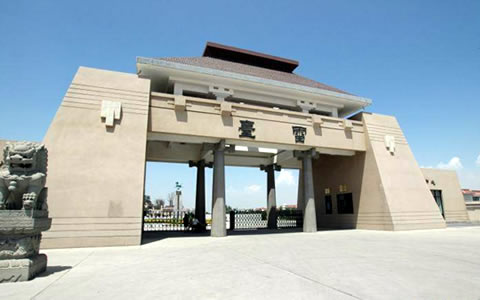
Confucius Temple – Known as “Wenmiao” in Chinese, Confucius Temple was established in 1439 in honor of Confucius. It is the largest and best-preserved temple dedicated to Confucius in Gansu. The symmetrically aligned historic buildings together with the collections of stone steles and scriptures means that Confucian Temple possesses a very important position in the cultural heritage of the Chinese nation as a whole.
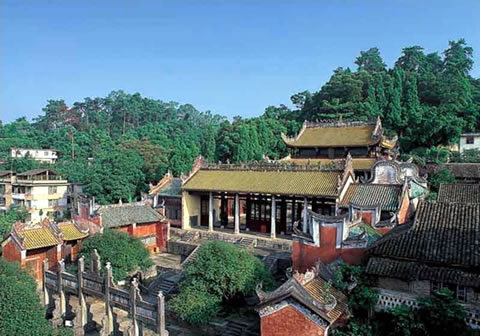
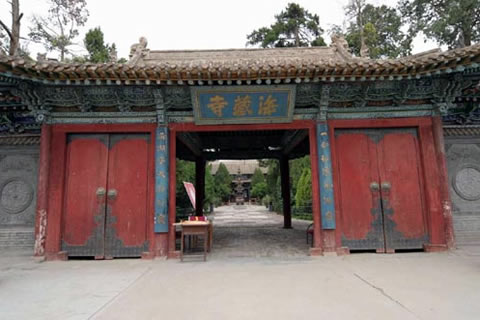
Haizang Temple - Haizang Temple, located 2km northwest of Wuwie city, is the largest complex of ancient buildings in Wuwei. The temple was opened as a park. The well preserved gateways, archways, pavilions and temples of Ming and Qing Dynasties are surrounded by river, lake and age-old trees, which make the park a quiet spot with its spectacular scenery.
Here is only for Questions and Answers. ( For anyone who wants to have an enquiry or tour booking, please fill in our Online Enquiry. )
Wuwei Travel Guide
Location: Located in the northwest central of Gansu Province, bordering Inner Mongolia in the northwest.
Population: the whole population is about 1,940,000.
Area: 33,000 sq km
Nationalities: Han, Hui, Mongolian and Tujia Nationality
History: As early as 4,000 years ago, our ancestors subsisted on this land and left remoter brilliant culture. Wuwei was established originally to show the military success of Huo Qubing’s inbreak of Hun in 121 AD. It was a key link for the Northern Silk Road, and a number of important archaeological finds were uncovered from Wuwei, including ancient copper carts with stone animals. Its importance as a stop along the Silk Road made it a crossroads of cultures and ethnic groups from all over central Asia.
Climate: Wuwei enjoys a typical continental climates, the annual average temperature is about 7.8 degrees Celsius, the annual average precipitation is 60 to 610 mm, annual average sunshine time exceed 2200-3030 hours, and frost-free period is about 73-155 days.
Transportation: There are two railway stations in Wuwei – Wusei South Station and Wuwei Station. Wuwei South Station is the connection between Lan – Xin line and Wuwei Halfback Station. Moreover, Wuwei Station is a intermediate station. Almost train from Beijing West Station, Shanghai, Wuwei, Xian, Yinchuan, Urumchi and so on pass through stations in Wuwei. The highway in Wuwei is also convenient, leading to Wuwei, Xinin, Urumchi, Dunhuang, Yinchuan, etc.
Local Specialties: wine, honeydew melon, vinegar
Local Food: Liangzhou Mooncake, Liangpi, Niangpizi, Braised mustton in brown sauce
Major Attractions:
Han Tomb of Leitai - Han Tomb Of Leitai is located in the old Leitai Park of Wuwei. The tomb consists of 19.34 m long passage, 3 coffin chambers and 3 side chambers. There were 231 gold, silver, bronze, iron, jade, bone and pottery articles, and 99 bronze warriors and horses excavated from here, among which the Bronze Flying Horse is the most valuable.

Confucius Temple – Known as “Wenmiao” in Chinese, Confucius Temple was established in 1439 in honor of Confucius. It is the largest and best-preserved temple dedicated to Confucius in Gansu. The symmetrically aligned historic buildings together with the collections of stone steles and scriptures means that Confucian Temple possesses a very important position in the cultural heritage of the Chinese nation as a whole.

Haizang Temple - Haizang Temple, located 2km northwest of Wuwie city, is the largest complex of ancient buildings in Wuwei. The temple was opened as a park. The well preserved gateways, archways, pavilions and temples of Ming and Qing Dynasties are surrounded by river, lake and age-old trees, which make the park a quiet spot with its spectacular scenery.
| Questions & Answers: |