


Xinjiang Trip
Changji Trip
Burjin Trip
Kanas Trip
Kelamayi Trip
Urumqi Trip
Turpan Trip
Southern Xinjiang Trip
Luntai Trip
Kuqa Trip
Aksu Trip
Artux Trip
Kashgar Trip
Kizilsu Trip

Changji Trip
Burjin Trip
Kanas Trip
Kelamayi Trip
Urumqi Trip
Turpan Trip
Southern Xinjiang Trip
Luntai Trip
Kuqa Trip
Aksu Trip
Artux Trip
Kashgar Trip
Kizilsu Trip

Silk Road Travel Guide
Top Attractions on the Silk Road
Silk Road Travel Tips
Xian Travel Guide
Tianshui Travel Guide
Lanzhou Travel Guide
Xiahe Travel Guide
Wuwei Travel Guide
Zhangye Travel Guide
Jiayuguan Travel Guide
Dunhuang Travel Guide
Turpan Travel Guide
Urumqi Travel Guide
Fuyun Travel Guide
Altay Travel Guide
Altay Travel Guide
Burjin Travel Guide
Karamy Travel Guide
Bole Travel Guide
Yining Travel Guide
Bayanbulak Travel Guide
Korla Travel Guide
Luntai Travel Guide
Kuqa Travel Guide
Aksu Travel Guide
Kashgar Travel Guide
Artux Travel Guide
Tashkurgan Travel Guide
Yarkan Travel Guide
Hotan Travel Guide
Mingfeng Travel Guide
Xining Travel Guide
Yinchuan Travel Guide
Zhongwei Travel Guide
Silk Road Travel Tips
Xian Travel Guide
Tianshui Travel Guide
Lanzhou Travel Guide
Xiahe Travel Guide
Wuwei Travel Guide
Zhangye Travel Guide
Jiayuguan Travel Guide
Dunhuang Travel Guide
Turpan Travel Guide
Urumqi Travel Guide
Fuyun Travel Guide
Altay Travel Guide
Altay Travel Guide
Burjin Travel Guide
Karamy Travel Guide
Bole Travel Guide
Yining Travel Guide
Bayanbulak Travel Guide
Korla Travel Guide
Luntai Travel Guide
Kuqa Travel Guide
Aksu Travel Guide
Kashgar Travel Guide
Artux Travel Guide
Tashkurgan Travel Guide
Yarkan Travel Guide
Hotan Travel Guide
Mingfeng Travel Guide
Xining Travel Guide
Yinchuan Travel Guide
Zhongwei Travel Guide
Beijing Tour
Xian Tour
Shanghai Tour
Guilin Tour
Datong Tour
Chengde Tour
Chengdu Tour
Chongqing Tour
Hong Kong Tour
Luoyang Tour
Lijiang Tour
Pingyao Tour
Inner Mongolia Tour
Harbin Tour
Hangzhou Tour
Huangshan Tour
Tianjin Tour
Qufu Tour
Mt.Taishan Tour
Jinan Tour
Qingdao Tour
Qinhuangdao Tour
Jiuzhaigou Tour
Zhangjiajie Tour
Xian Tour
Shanghai Tour
Guilin Tour
Datong Tour
Chengde Tour
Chengdu Tour
Chongqing Tour
Hong Kong Tour
Luoyang Tour
Lijiang Tour
Pingyao Tour
Inner Mongolia Tour
Harbin Tour
Hangzhou Tour
Huangshan Tour
Tianjin Tour
Qufu Tour
Mt.Taishan Tour
Jinan Tour
Qingdao Tour
Qinhuangdao Tour
Jiuzhaigou Tour
Zhangjiajie Tour
China Province Tour
Tibet Tour
Shandong Tour
Guangdong Tour
Fujian Tour
Qinghai Tour
Ninxia Tour
Guizhou Tour
Inner Mongolia Tour
Shandong Tour
Guangdong Tour
Fujian Tour
Qinghai Tour
Ninxia Tour
Guizhou Tour
Inner Mongolia Tour
Beijing Trip
Xian Trip
Shanghai Trip
Guilin Trip
Chengdu Trip
Chengde Trip
Inner Mongolia Trip
Datong Trip
Harbin Trip
Pingyao Trip
Luoyang Trip
Qufu Trip
Shangdong Trip
Hangzhou Trip
Lhasa Trip
Yangtze River Trip
Huangshan Trip
Xian Trip
Shanghai Trip
Guilin Trip
Chengdu Trip
Chengde Trip
Inner Mongolia Trip
Datong Trip
Harbin Trip
Pingyao Trip
Luoyang Trip
Qufu Trip
Shangdong Trip
Hangzhou Trip
Lhasa Trip
Yangtze River Trip
Huangshan Trip
- - - - - - - - - - - - - - - - - - - -
Beijing Travel Service
China Travel Agency
Beijing Travel Tips
Beijing Information
Beijing Travel Service
China Travel Agency
Beijing Travel Tips
Beijing Information
Home → China Tours → Silk Road Tours → Kashgar Travel Guide
Kashgar Travel Guide
Location: Kashgar is sited west of the Taklamakan Desert at the foot of the Tianshan Mountain range.
Population: 3,615,400
Area: 1,117,940,300 sq km
Nationalities: Uyghur, Han, Hui, Tajik, Kirgiz, Ozbek, Kazakstan, Russian, Mongolia, Manchu, Xibo, etc.
History: The earliest mention of Kashgar is when the Chinese Han Dynasty envoy traveled the Northern Silk Road to explore lands to the west. The opening of the Tang Dynasty, in 618, saw the beginning of a prolonged struggle between China and the Western Turks for control of the Tarim Basin. The great Tungani (Dungani) revolt, or insurrection of the Chinese Muslims, which broke out in 1862 in Gansu, spread rapidly to Dzungaria and through the line of towns in the Tarim Basin. With the overthrow of Chinese rule in 1865 by Yakub Beg (1820-1877), the manufacturing industries of Kashgar are supposed to have declined.Kashgar and the other cities of the Tarim Basin remained under Yakub Beg’s rule until May 1877
Climate: Climate in this area varies greatly because of the varied topography. Kashgar has a long summer and a short winter. The annual mean temperature is 11.7 C, with the lowest temperature of -24.4° C in January and the hottest 40.1°C in July.
Transportation: There are three flights from Kashgar to Urumqi. There is also regular train to Urumqi. Buses to Pakistan is available at Tuman Hotel beside the Tuman river north,not at China Bagh Hotel. There are several buses to Urumchi at cheaper offering. They depart from Tuman river. City transport is taxi,buses,bicycle instead of donkey cart.
Local Specialties: folk music instrument, carpet, Yengisar knife, Aidelaisi silk, flower hat, allover, terrazzo, ornaments
Local Food: kabob, grilled fish, rice eaten with hands, hand-pulled noodle, nangkengkaorou, ququ, san zi
Major Attractions:
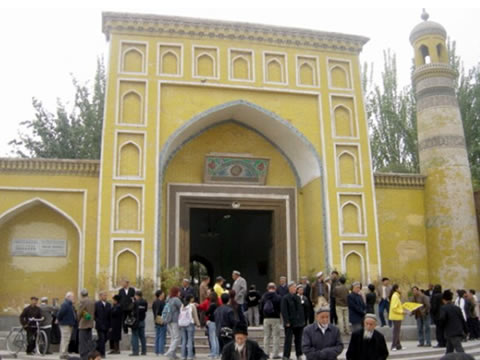
Id Kah Mosque - The Id Kah Mosque,in Uyghur means Square of festival, typical Uyghur structure, regarded as the biggest in China, located in the center of Kashar, has a history of more than five hundred years.100,000 worshippers attend religions service at the same time. On Lesser Bairam and Corban, the biggest Islam festivals, the Uygur people gather on the square in front of the mosque to celebrate their festivals with jubilation. On those days Uyghur people dressed in their holiday best, dance"Sama," overflowing with enthusiasm, to the cheerful drum beats and music. It contrasts with Cornival in Western.
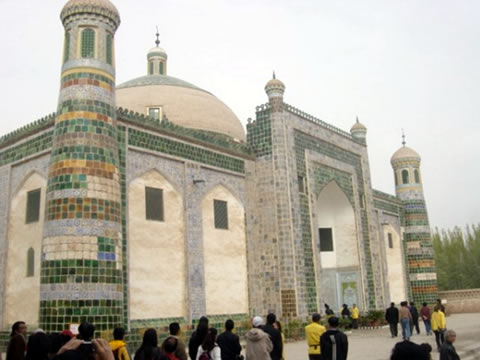
Abakh Khoja Tomb – In Chinese, the tomb is better know as the tomb of Xiangfei, the only Uigur concubine among the 41 wives of Emperor Qianlong in the Qing Dynasty (1644-1911).It is an ancient Islamic building nestles among poplar trees, five kilometers (3.1 miles) northeast of Kashgar. With glazed tiles shining in the sun, its tower points to the azure sky.
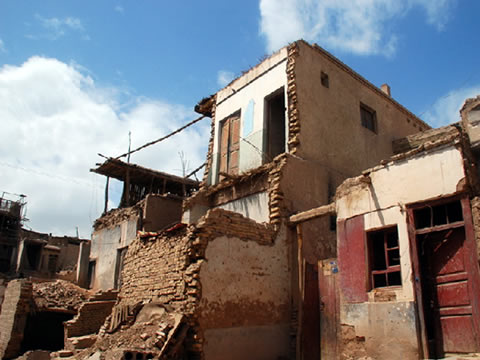
Residential Area on High Platform – Actually speaking, this area is the residential place of local Uygurs. However, it has been regarded as a sigh displaying the folk character of Xinjiang. It is located on a natural slope of yellow soil, earthy and huddled with old houses, kept in reservation of part of the former Kashgar town. Most homes are handed down from generation to generation for over 300 to 400 years. The unique homes and antique soil earthenware workshops on soil precipice have become the two tourist attractions.
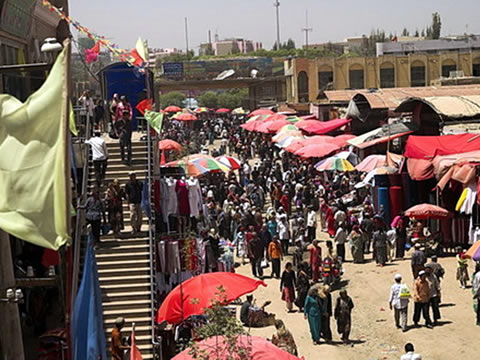
Sunday Bazaar - Sunday Bazaar is located in Kashgar City Dongmen, Maximal international trade of our country Northwest Territories marketplace. Bar of letter , department Uighur , intention are a bazaar. Ka Shi City is an acient upper Silk Road leading historical and cultural city , is also a commodity distributing centre, Company of travelling merchants who proceeded from Xi'an in that very year, Disregarding visiting Tianshan Mountains Nanlu or Tianshan Mountains leaking, Beilu , equal here field join. Here being close to pricks name of up to now, had the history of more than two thousand years , had "the maximal bazaar of Asia" in the ancient times. The marketplace is set up having more than 5,000 stall , is has almost ten thousand kind commodity , person rate of
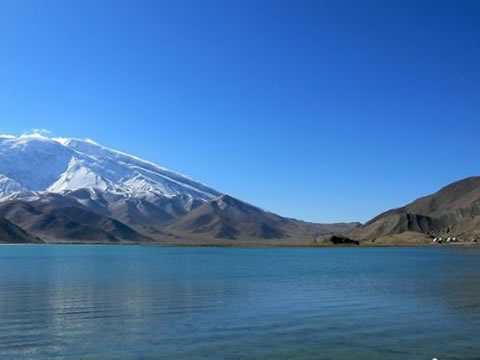
Karakuri Lake – It is 190km from Kashgar. It is rare highland lake in the world. By the lake ,there are yurst and restaurant available for tourists to stop and over night. In a day, you get a good view of Muztagh Ata and Kongur and snow-cappad peaks, flocks of animals, grassland are all invertedly reflected in the water, which looks magistic.
Here is only for Questions and Answers. ( For anyone who wants to have an enquiry or tour booking, please fill in our Online Enquiry. )
Kashgar Travel Guide
Location: Kashgar is sited west of the Taklamakan Desert at the foot of the Tianshan Mountain range.
Population: 3,615,400
Area: 1,117,940,300 sq km
Nationalities: Uyghur, Han, Hui, Tajik, Kirgiz, Ozbek, Kazakstan, Russian, Mongolia, Manchu, Xibo, etc.
History: The earliest mention of Kashgar is when the Chinese Han Dynasty envoy traveled the Northern Silk Road to explore lands to the west. The opening of the Tang Dynasty, in 618, saw the beginning of a prolonged struggle between China and the Western Turks for control of the Tarim Basin. The great Tungani (Dungani) revolt, or insurrection of the Chinese Muslims, which broke out in 1862 in Gansu, spread rapidly to Dzungaria and through the line of towns in the Tarim Basin. With the overthrow of Chinese rule in 1865 by Yakub Beg (1820-1877), the manufacturing industries of Kashgar are supposed to have declined.Kashgar and the other cities of the Tarim Basin remained under Yakub Beg’s rule until May 1877
Climate: Climate in this area varies greatly because of the varied topography. Kashgar has a long summer and a short winter. The annual mean temperature is 11.7 C, with the lowest temperature of -24.4° C in January and the hottest 40.1°C in July.
Transportation: There are three flights from Kashgar to Urumqi. There is also regular train to Urumqi. Buses to Pakistan is available at Tuman Hotel beside the Tuman river north,not at China Bagh Hotel. There are several buses to Urumchi at cheaper offering. They depart from Tuman river. City transport is taxi,buses,bicycle instead of donkey cart.
Local Specialties: folk music instrument, carpet, Yengisar knife, Aidelaisi silk, flower hat, allover, terrazzo, ornaments
Local Food: kabob, grilled fish, rice eaten with hands, hand-pulled noodle, nangkengkaorou, ququ, san zi
Major Attractions:
Id Kah Mosque - The Id Kah Mosque,in Uyghur means Square of festival, typical Uyghur structure, regarded as the biggest in China, located in the center of Kashar, has a history of more than five hundred years.100,000 worshippers attend religions service at the same time. On Lesser Bairam and Corban, the biggest Islam festivals, the Uygur people gather on the square in front of the mosque to celebrate their festivals with jubilation. On those days Uyghur people dressed in their holiday best, dance"Sama," overflowing with enthusiasm, to the cheerful drum beats and music. It contrasts with Cornival in Western.

Abakh Khoja Tomb – In Chinese, the tomb is better know as the tomb of Xiangfei, the only Uigur concubine among the 41 wives of Emperor Qianlong in the Qing Dynasty (1644-1911).It is an ancient Islamic building nestles among poplar trees, five kilometers (3.1 miles) northeast of Kashgar. With glazed tiles shining in the sun, its tower points to the azure sky.

Residential Area on High Platform – Actually speaking, this area is the residential place of local Uygurs. However, it has been regarded as a sigh displaying the folk character of Xinjiang. It is located on a natural slope of yellow soil, earthy and huddled with old houses, kept in reservation of part of the former Kashgar town. Most homes are handed down from generation to generation for over 300 to 400 years. The unique homes and antique soil earthenware workshops on soil precipice have become the two tourist attractions.

Sunday Bazaar - Sunday Bazaar is located in Kashgar City Dongmen, Maximal international trade of our country Northwest Territories marketplace. Bar of letter , department Uighur , intention are a bazaar. Ka Shi City is an acient upper Silk Road leading historical and cultural city , is also a commodity distributing centre, Company of travelling merchants who proceeded from Xi'an in that very year, Disregarding visiting Tianshan Mountains Nanlu or Tianshan Mountains leaking, Beilu , equal here field join. Here being close to pricks name of up to now, had the history of more than two thousand years , had "the maximal bazaar of Asia" in the ancient times. The marketplace is set up having more than 5,000 stall , is has almost ten thousand kind commodity , person rate of

Karakuri Lake – It is 190km from Kashgar. It is rare highland lake in the world. By the lake ,there are yurst and restaurant available for tourists to stop and over night. In a day, you get a good view of Muztagh Ata and Kongur and snow-cappad peaks, flocks of animals, grassland are all invertedly reflected in the water, which looks magistic.

| Questions & Answers: |