



Great Wall Tour

Visiting the Great Wall is a delightful must for the first-time visitors to Beijing China.The Great Wall was built in different times and dynasties, largely constructed in the three dynasties – Qin Dynasty (221 B.C to 206 B.C); Han Dynasty (206 B.C.– 220 A.D ) and Ming Dynasty (1368 A.D - 1644 A.D). The most powerful Yuan Dynasty (1271 A.D - 1368 A.D) and the last Qing Dynasty (1644 A.D - 1911 A.D) did nothing about the building of the Great Wall since they were "barbarians" against whom the Great Wall of China had been built.
For historical and geographical reasons, the Great Wall of China doesn't form a continuous line and in fact exits in different sections. The official survey shows the Great Wall now totals 21196 km long with the Great Wall built in Ming Dynasty ( 1368A.D - 1644 A.D ) as long as 8851 km.
Currently there are 8 official locations of the Great Wall around Beijing open to visitors. These 8 sections of the Great Wall is tamed, renovated or half restored, and some parts are still left wild and original. Safety measures have been taken on these official sections of the Great Wall with guardrails if necessary, security guards, restaurants, toilets and parking lots. The 8 chunks of the Great Wall include Juyongguan Pass Great Wall, Badaling Great Wall, Shixiaguan Great Wall, Huanghuacheng Great Wall, Mutianyu Great Wall, Gubeikou Great Wall, Jinshanling Great Wall and Simatai Great Wall. Each section of the Great Wall has its own geographic and construction features.
Jiankou Great Wall is not an official location for Great Wall hiking, but favored by wild Great Wall trekkers. The 4-hour scenic walk from the unrestored Jiankou Great Wall to the restored Mutianyu Great Wall, in particular, entices a consistent flow of visitors. Hikers should take great care while hiking Jiankou Great Wall.
About 400km west of Beijing, Datong Great Wall is the epitome of the tamped earth wall in the northern China. Hebei Great Wall ( namely the Wall east of Beijing to the Sea) including the Wall near Beijing are the most luxuary sections of the Great Wall in China's history, which are made of majestic bricks and stones with a length of over 1000km.
If you visit the Great Wall for the first time, basically you need to plan ahead to know when to visit, which section to visit and how to visit. You can either travel independently doing all the researching on your own or turn to a local travel agency such as Tour Beijing for arranging time-saving and hassle-free day trips to the Great Wall.
We offer a full range of Great Wall travel service including Great Wall Sightseeing (1-2 hour walk on the wall), Great Wall Hike (4-5 hour hike), Great Wall Camping and even Flying over the Great Wall by helicopter and more. Well, let's start!
| Table of Contents |
 Great Wall Sightseeing (Moderate) Great Wall Sightseeing (Moderate)  1-2 hour walk on the Great Wall, suitable for sightseeing tourists who only want to have a glimpse of the Wall and take some pictures, often coupled with other sights on a day trip. |
Great Wall Hiking ( Strenuous ) 4-5 hour daily hike on the Great Wall, designed for travelers in good shape who are interested in feeling and touching the Great Wall,specially the wild and original sections of the Wall as a kind of unique experience. |
| Great Wall Camping Sleeping on the Great Wall is a pleasant and unique experience. You are so close to the Wall, to the history and to the nature under a stary sky, for travelers in good health. |
Flying Over Great Wall Seeing the Great Wall of China from the air by helicoper is an exciting adventure and delivers unrivaled photo opportunities to capture images of China's iconic landmark. |
| Great Wall Sidecar & Bike We improvise the sidecar or the bike tours with you, taking you to see the Great Wall and the villages in the countryside. |
Great Wall Car Rental Hire a car or van with a driver and explore the Great Wall around Beijing on your own and at your own pace! |
| Great Wall Join-in Group Tour Take a local Great Wall group tour to split up the cost, a good way of having excursions to the different sections of the Great Wall around Beijing. |
Tour Great Wall By Sections Choose your favorite sections of the Great Wall and go! Totally 17 sections of the Great Wall around Beijing are listed for day trips and multiday tours. |
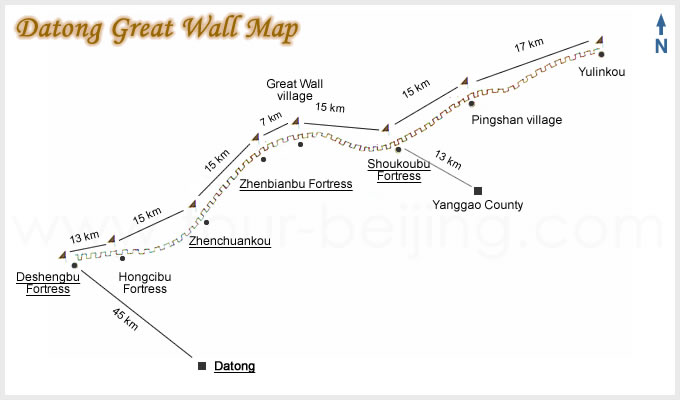
| Datong Great Wall Tour About 400km west of Beijing, Datong Great Wall is the epitome of the tamped earth wall in the northern China. Datong Great Wall was an important part of the Wall's central section from the Yellow River to the passes leading to Beijing, vital to the defense of both central China and Beijing. |
Hebei Great Wall Tour Hebei Great Wall ( namely the Wall east of Beijing to the Sea) including the Wall near Beijing are the most luxuary sections of the Great Wall in China's history, which are made of majestic bricks and stones with a length of over 1000km. |
| Great Wall Maps & Videos We provide 8 tourist maps and videos for the 8 sections of the Great Wall around Beijing for a better understanding of the Great Wall you are going to visit. |
How to Visit Great Wall For Great Wall visitors as well as independent travelers who want to have more international travel experience with a strong desire for individual travel. |
| Questions & Answers If you have any questions, just drop a line. One of our staffers will contact you for the details. |
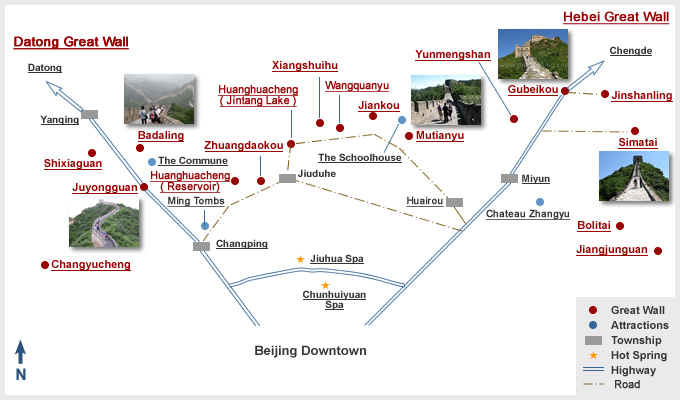
The Wall around Beijing
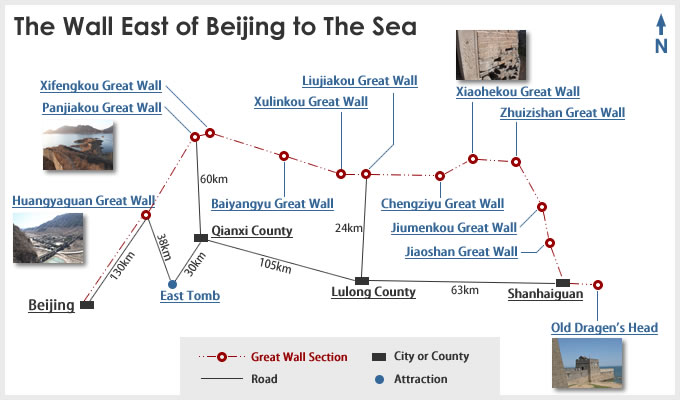
The Wall East of Beijing
Datong Great Wall Map
Great Wall Sightseeing (Moderate:Daily 1-2 Hour Hike)
1-2 hour walk on the Great Wall, suitable for sightseeing tourists who only want to have a glimpse of the Wall and take some pictures, often coupled with other sights on a day trip.
|
|||
 |
 Departure: Daily
Tour Type: A private tour
Duration: Approx.4 hours ( 2 hours on the wall)
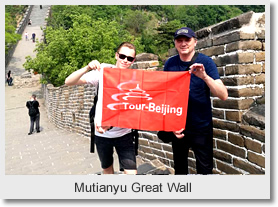
Hiking Area: Mutianyu Great Wall Section
Pick-up point and time: Your Hotel around 8:00am or 13:30pm
Finishing point and time: Your Hotel around 13:00pm or 6:30pm
Hiking Time: 2 hours
Hiking Level: beginner
Cable car: available (not included)
Service: Entrance fees + private tour guide & driver + private car / van
Tour Code: BHDT-07
Price: Click Here Departure: Daily
Tour Type: A private tour
Duration: Approx.4 hours ( 2 hours on the wall)
Hiking Area: Mutianyu Great Wall Section
Pick-up point and time: Your Hotel around 8:00am or 13:30pm
Finishing point and time: Your Hotel around 13:00pm or 6:30pm
Hiking Time: 2 hours
Hiking Level: beginner
Cable car: available (not included)
Service: Entrance fees + private tour guide & driver + private car / van
Tour Code: BHDT-07
Price: Click Here |
||

|
|||
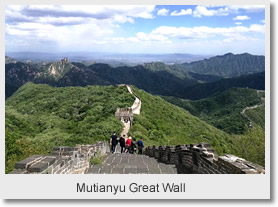 |
Attractions: Mutianyu Great Wall and Underground Palace (Ming Tombs)
Tour Type: A private tour
Duration: Approx.8 hours ( 2 hours on the wall)
Pick-up point and time: Your Hotel around 8:00am
Finishing point and time: Your Hotel around 5:00pm
Hiking Time: 2 hours
Walking Level: Beginner
Service: Entrance fees + lunch + private tour guide & driver + private car / van
Tour Code: BXIT-F02A
Price: Click Here |
||
|
|||
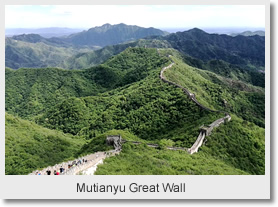 |
Attractions: Mutianyu Great Wall, Forbidden City and Tiananmen Square
Tour Type: A private tour
Duration: Approx.8 hours ( 2 hours on the wall)
Pick-up point and time: Your Hotel around 8:00am
Finishing point and time: Your Hotel around 6:00pm
Hiking Time: 2 hours
Walking Level: Beginner
Service: Entrance fees + lunch + private tour guide & driver + private car / van
Tour Code: BXIT-F04A
Price: Click Here |
||
|
|||
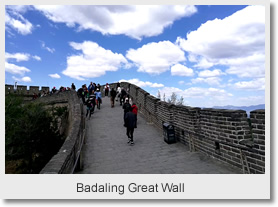 |
Attractions: Badaling Great Wall and Underground Palace (Ming Tombs)
Tour Type: A private tour
Duration: Approx.8 hours ( 2 hours on the wall)
Pick-up point and time: Your Hotel around 8:00am
Finishing point and time: Your Hotel around 5:00pm
Hiking Time: 2 hours
Walking Level: Beginner
Service: entrance fees + lunch + private tour guide & driver + private car / van
Tour Code: BXIT-F02
Price: Click Here |
||
|
|||
 |
Attractions: Badaling Great Wall, Forbidden City and Tiananmen Square
Tour Type: A private tour
Duration: Approx.8 hours ( 2 hours on the wall)
Pick-up point and time: Your Hotel around 8:00am
Finishing point and time: Your Hotel around 6:00pm
Hiking Time: 2 hours
Walking Level: Beginner
Service: Entrance fees + lunch + private tour guide & driver + private car / van
Tour Code: BXIT-F04
Price: Click Here |
||
|
|||
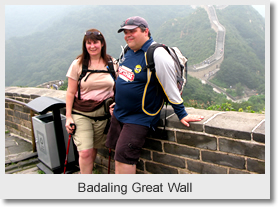 |
Departure: Daily
Tour Type: A private tour
Duration: Approx.9 hours (including lunch and 2+2 hours on the walls)
Hiking Area: Badaling Section and Mutianyu Section
Pick-up point and time: Your Hotel around 8:00am
Finishing point and time: Your Hotel around 6:00pm
Hiking Time: 2 + 2 hours
Hiking Level: Beginner - Intermediate
Cable car: Available ( not included )
Service: Entrance fees + lunch + private tour guide & driver + private car / van
Tour Code: GWPD-02
Price: Click Here |
||
|
|||
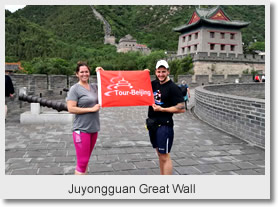 |
Departure: Daily Duration: 2 Days Tour Type: A private tour Pick-up point and time: Your Hotel in Beijing around 08:00am Finishing point and time: Your Hotel around 4:00pm in 2 days Hiking Time: Day 1 = 2+2 hrs, Day 2 = 2 hrs Hiking Level: Beginner - Intermediate Service: Entrance fees + lunch + hotel + private tour guide & driver + private car / van Tour Code: BGH-01 Price: Make an inquiry |
||
|
|||
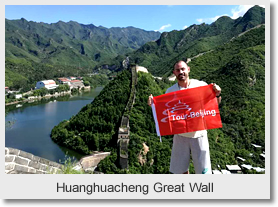 |
Departure: Daily
Duration: 3 Days
Tour Type: A private tour
Pick-up point and time: Your Hotel in Beijing around 08:00am
Finishing point and time: Your Hotel around 4:00pm in 3 days
Hiking Time: Day 1 = 2+2 hrs, Day 2 = 2+1 hrs, Day 3 = 2 hrs
Hiking Level: Beginner - Intermediate
Service: Entrance fees + lunch + hotel + private tour guide & driver + private car / van
Tour Code: BGH-07
Price: Make an inquiry |
||
Great Wall Hike ( Strenuous:Daily 4-5 Hour Hike )
4-5 hour daily hike on the Great Wall, designed for travelers in good shape who are interested in feeling and touching the Great Wall as a kind of unique experience.
|
|||
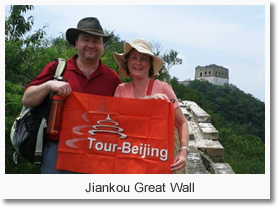 |
Departure: Daily
Tour Type: A private tour
Duration: Approx.9 hours ( 4-5 hours on the wal)
Hiking Area: Jiankou Great Wall - Mutianyu Great Wall
Pick-up point and time: Your Hotel around 8:00am
Finishing point and time: Your Hotel around 6:00pm
Hiking Time: 4-5 hours
Hiking Level: Intermediate - Advanced (8km hike )
Cable car: not available
Service: Entrance fees + lunch + private tour guide & driver + private car / van
Tour Code: GWPD-17
Price: Click Here |
||
|
|||
 |
Departure: Daily
Tour Type: A private tour
Duration: Approx.8 hours (4 hours on the wal)
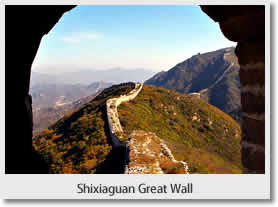
Hiking Area: Shixiaguan Great Wall ( or Remnant Great Wall at Badaling)
Pick-up point and time: Your Hotel around 8:00am
Finishing point and time: Your Hotel around 5:00pm
Hiking Time: 4-5 hours
Hiking Level: Intermediate
Cable car: not available
Service: Entrance fees + lunch + private tour guide & driver + private car / van
Tour Code: GWPD-10
Price: Click Here |
||
|
|||
 |
Departure: Daily
Duration: 2 Days
Tour Type: A private tour
Pick-up point and time: Your Hotel in Beijing around 08:00am
Finishing point and time: Your Hotel around 4:00pm in 2 days
Hiking Time: Day 1 = 4-5 hrs, Day 2 = 3 hrs
Service: Lunch + private tour guide & driver + private car / van
Tour Code: BGH-15
Price: Make an inquiry |
||
|
|||
 |
Departure: Daily
Duration: 3 Days
Tour Type: A private tour
Pick-up point and time: Your Hotel in Beijing around 08:00am
Finishing point and time: Your Hotel around 4:00pm in 3 days
Hiking Time: Day 1 = 4-5 hrs, Day 2 = 5 hrs, Day 3 = 3 hrs
Service: Lunch + private tour guide & driver + private car / van
Tour Code: BGH-16
Price: Click Here |
||
|
|||
 |
Departure: Daily
Duration: 4 Days
Tour Type: A private tour
Pick-up point and time: Your Hotel in Beijing around 08:00am
Finishing point and time: Your Hotel around 4:00pm in 3 days
Hiking Time: Day 1 = 4 hrs, Day 2 = 4-5 hrs, Day 5, Day 4 = 3 hrs
Service: Lunch + private tour guide & driver + private car / van
Tour Code: BGH-17
Price: Click Here |
||
|
|||
 |
Departure: Daily
Tour Type: A private tour
Duration: Approx.9 hours (5 Hours on the walls)
Hiking Area: Panlongshan Great Wall at Gubeikou and Jinshanling Great Wall (east)
Pick-up point and time: Your Hotel around 7:00am
Finishing point and time: Your Hotel around 6:00pm
Hiking Time: 4-5 hours from Gubeikou to Jinshanling Great Wall
Hiking Level: Intermediate - Advanced (10km hike )
Cable car: Not available
Service: Entrance fees +Self-prepared lunch + private tour guide & driver + private car / van
Tour Code: GWPD-08
Price: Click Here |
||
|
|||
 |
Departure: Daily
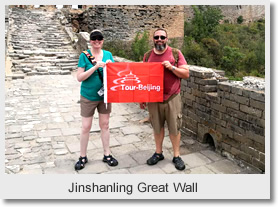
Hiking Area: Jinshanling and Simatai West
Tour Type: A private tour
Duration: Approx.8 hours (3 Hours on the walls)
Pick-up point and time: Your Hotel around 8:00am
Finishing point and time: Your Hotel around 5:00pm
Hiking Time: 3-4 hours
Hiking Level: Intermediate ( hours and 5km )
Service: Lunch + private tour guide & driver + private car / van
Tour Code: GWPD-01
Price: Click Here |
||
Great Wall Camping
Sleeping on the Great Wall is a pleasant and unique experience.You are so close to the Wall, to the history and to the nature under a stary sky, for travelers in good health.| » Camping on Jiankou Great Wall and Hike from Mutianyu Great Wall 2 Day /1 Night Tour | |
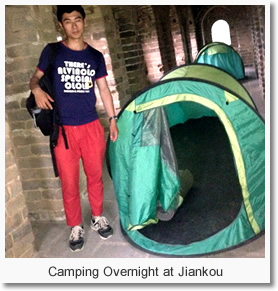 |
Departure: Daily Tour Type: A private tour for you, your family or your friends exclusively Duration: 2 Days Pick-up point and time: Your Hotel in Beijing around 12:30 at noon Finishing point and time: Your Hotel around 12:00 at noon next day Hiking Time: Day 1 = 4 hours, Day 2 = 1 hour Hiking Level: Intermediate Best Time: ( April - October ) Payment Types: Cash, Credit Cards Tour Code: ONGW-03 Price: Click Here |
| » Camping on Gubeikou Great Wall and Hiking on Jinshanling Great Wall
2 Day /1 Night Day Tour |
|
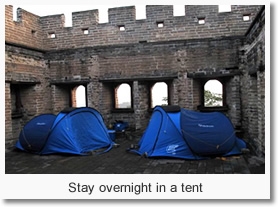 |
Departure: Daily Tour Type: A private tour for you, your family or your friends exclusively Duration: 2 Days Pick-up point and time: Your Hotel in Beijing around 10:30am Finishing point and time: Your Hotel around 12:00am in 2 days Hiking Time: Day 1 = 3-4 hours, Day 2 = 1-2 hours Hiking Level: Intermediate Best Time: ( Spring, and Autumn) Payment Types: Cash, Credit Cards Tour Code: ONGW-01 Price: Click Here |
| » Camping on Gubeikou Great Wall and Hiking on Jinshanling,Jiankou
and Mutianyu Great Wall 2 Day /1 Night Day Tour |
|
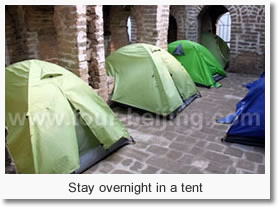 |
Departure: Daily Tour Type: A private tour for you, your family or your friends exclusively Duration: 2 Days Pick-up point and time: Your Hotel in Beijing around 10:30am Finishing point and time: Your Hotel around 6:00pm in 2 days Hiking Time: Day 1 = 3-4 hours, Day 2 = 5 hours ( 1+4 ) Hiking Level: Intermediate Best Time: ( Spring, and Autumn) Payment Types: Cash, Credit Cards Tour Code: ONGW-02 Price: Click Here |
Seeing the Great Wall of China from the air by helicoper is an exciting adventure and delivers unrivaled photo opportunities to capture images of China's iconic landmark.
|
|||
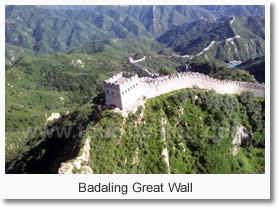 |
Aerial Tour: 15 Minutes over the Badaling Great Wall Service: Entrance fees + Private car or van + Private tour guide Tour Code: BHTP-01A Price: Click Here |
||
|
|||
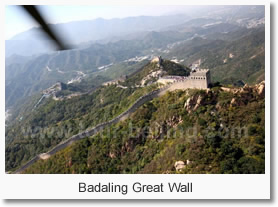 |
Aerial Tour: 15 Minutes over the Badaling Great Wall and other scenic spots! Great Wall Walking Tour: Ride up and down the Badaling Great Wall by cable car for a private walking tour Meal: 1 Chinese lunch Service: Entrance fees + Private car or van + Private tour guide Tour Code: BHTP-01 Price: Click Here |
||
Great Wall Sidecar & Bike
We improvise the sidecar or the bike tours with you, taking you to see the Great Wall and the villages in the countryside.
|
|||
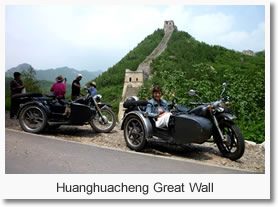 |
Tour Type: A small group sidecar tour Duration: Approx.8 hoursPick-up point and time: Your Hotel around 8:00am - 9:00amSidecar: Only one passenger for one sidecarTour Code: BSC-05Price: Click Here |
||
|
|||
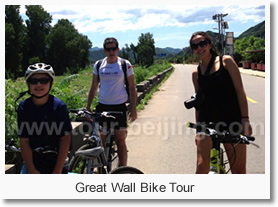 |
Tour Type: A private tourDistance: Approxi. 15kmRide time: 2-3 HoursBike Start point: Huanghuazhen Village in Huirou DistrictBike Finish Point: Huanghuacheng Great WallPick up place and time: 8:00am your hotel in downtown BeijingFinish Place & Time: Your hotel in Beijing around 5:00pmTour Code: BB-06Price: Click Here |
||
Hire a car or van with a driver and explore the Great Wall around Beijing on your own and at your own pace!
 |
Hire a car or van with a driver and explore the Great Wall around Beijing on your own and at your own pace! Your rental car and licensed driver in Beijing will help you see what you are going to see and see it all! All our chauffeurs have received strict training in the limo service professionalism. They will offer you the quick and safe limo service. |
Take a local Great Wall group tour to split up the cost, a good way of having excursions to the different sections of the Great Wall around Beijing.
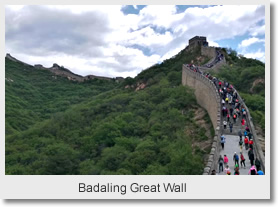 |
Great Wall Bus Tours - Our open group sightseeing tours of Beijing are a great way of traveling Beijing including excursions to the different sections of the Great Wall around Beijing. These tours are available every day all the year round. Mutianyu Great Wall Group Tour ( No Shopping ) 150 RMB Beijing City Highlight Bus Day Tour No Shopping 260 RMB Jinshanling Great Wall Tour No Shopping 400 RMB |
| » Mutianyu Great Wall Tour | |
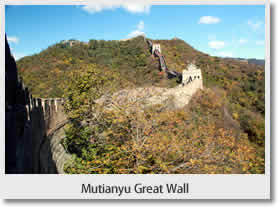 |
Mutianyu Great Wall has an beautiful natural landscape. This section of the Great Wall is comparatively smoother than most of other sections. There are 20 towers on the Mutianyu Great Wall snaking the ridge for about 3000 meters. The watch towers at the Mutianyu Great Wall are distributed at short intervals.
Mutianyu Private Day Tours: Mutianyu Great Wall Half Day Tour from US$ 65 p/p Mutianyu Great Wall & Underground Palace Tour from US$75 p/p Mutianyu Great Wall & Summer Palace Day Tour from US$75 p/p Mutianyu Great Wall, Forbidden City & Tiananmen Tour from US$79 p/p Mutianyu Great Wall & the Schoolhouse Day Trip from US$85 p/pMutianyu Group Day Tour: Mutianyu Great Wall Group Tour ( No Shopping ) 150 RMB |
| » Badaling Great Wall Tour | |
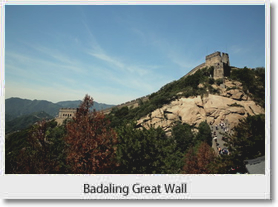 |
Many first-time travelers choose the Great Wall at Badaling. It is one of the most gorgeous and magnificent part of the Great Wall in Beijing. The Badaling Great Wall is the well preserved Ming Dynasty Great Wall with original appearance. Badaling Private Day Tours: Badaling Great Wall Half Day Tour from US$55 p/p Badaling Great Wall & Underground Palace Day Tour from $75 p/p Badaling Great Wall & Summer Palace Day Tour from US$ 75 p/p Badaling Great Wall Forbidden City & Tiananmen Tour from US$79 p/p |
| » Jinshanling Great Wall Tour | |
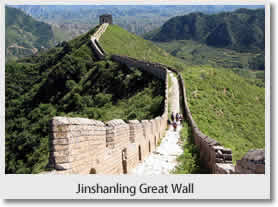 |
Jinshanling Great Wall is located about 150 km from downtown Beijing. To its east stands the Simatai Great Wall, its west Gubeikou Great Wall. Jinshangling Great Wall was named after the mountain called Jinshan Mountain. It is one of the most challenging part of the Great Wall for hiking (ruined, preserved and original). Jinshanling Great Wall Private Day Tour from US$ 75  Gubeikou Jinshanling Great Wall Day Tour from US$ 82 Gubeikou Jinshanling Great Wall 2 Day Tour from US$ 149 Jinshanling Great Wall 2 Day Tour from US$ 135 Jinshanling Great Wall Tour No Shopping 400 RMB Gubeikou Jinshanling Great Wall Day Tour from US$ 82 Gubeikou Jinshanling Great Wall 2 Day Tour from US$ 149 Jinshanling Great Wall 2 Day Tour from US$ 135 Jinshanling Great Wall Tour No Shopping 400 RMB |
| » Juyongguan Great Wall Tour | |
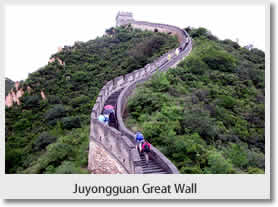 |
The Pass we see today was planned by General Xuda and completed in the first year of the reign of the Emperor Hongwu of the Ming Dynasty ( 1368 ) and the years that followed, it was renovated again and again. The Great Wall around the Pass extends over 4 km snaking the ridge of the mountains forming the valley. Juyongguan Great Wall Half Day Tour from US$ 55 Juyongguan Great Wall and Underground Palace Day Tour from US$ 75 Badaling & Juyongguan Great Wall Day Tour from US$ 75 Juyongguan-Badaling-Mutianyu Great Wall Day Tour from US$ 85 |
| » Gubeikou Great Wall Tour | |
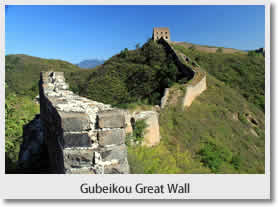 |
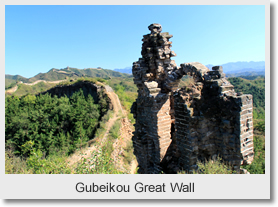
Gubeikou Great Wall is mainly composed of two parts – Panlongshan Great Wall and Wohushan Great Wall. Wohushan Great Wall is now still completely wild and unrestored, not officially opened to the public while Panlongshan Great Wall is partially opened by the local government. So when people talk about Gubeikou Great Wall, very often they refer to Panlongshan Great Wall. The entry to Panlongshan Great Wall is inside the Gubeikou Village under the administration of Gubeikou Township, which boasts one of the most beautiful villages around Beijing. Gubeikou Great Wall Day Tour US$ 75 Gubeikou Jinshanling Great Wall Day Tour US$ 82 Gubeikou Jinshanling Great Wall 2 Day Tour US$ 149 |
| » Simatai Great Wall Tour | |
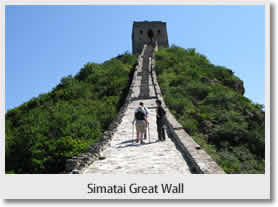 |
The Simatai section of the Great Wall is located in the northeast of Miyun County, 140 kilometers from downtown Beijing. Simatai is one of the few stretches of the Wall that still preserve the original look of that period. You can hike Simatai Great Wall now! Simatai Great Wall is reopened to the public on a trial operation from Jan 01 to Sept 30, 2014. It will be officially reopened from October 1, 2014.
Jinshanling & Simatai Great Wall Day Tour from US$79 p/p Simatai Great Wall Private Day Tour from US$ 85 P/P Simatai Great Wall & Chateau Changyu AFIP Day Trip from US$ 80 |
| » Jiankou Great Wall Tour | |
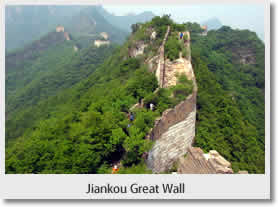 |
Jiankou Great Wall is the greatest and most photogenic section of the Great Wall around Beijing. It is wild and totally unrestored. The tumbledown and crumbling brickwork snakes along a narrow mountain ridge Hike from Jiankou to Mutianyu Great Wall Day Tour from US$75 p/p Jiankou, Mutianyu, Jinshanling and Simatai West 2 Day Hikingfrom US$ 149 p/p Jiankou, Mutianyu, Gubeikou, Jinshanling and Simatai West 3 Day Hikingfrom US$ 275 p/p Shixiaguan, Jiankou, Mutianyu, Gubeikou, Jinshanling and Simatai West 4 Day Hiking from US$ 395 p/p Jinshanling Great Wall Tour No Shopping 400 RMB |
| » Huanghuacheng Great Wall Tour | |
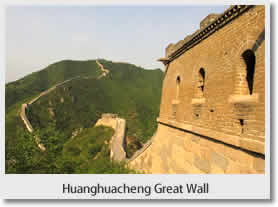 |
Huanghuacheng (literally meaning "Yellow Flower City") Great Wall, about 85 km north of downtown Beijing, is one of the most ruined sections of the wall in Beijing. It has become popular with hikers in recent years. It is an informal section of the Wall. To its west is Xiaoxihu Great Wall ( or the Great Wall of Huanghuacheng Reservior). Huanghuacheng Great Wall Half Day Tour from US$ 52 |
| » Ruined Badaling Great Wall Tour | |
|
Ruined Badaling Great Wall ( now popularly known as Shixiaguan Great Wall ) is 10km southwest of the Badaling Great Wall. So, as its name hints, this section of the Great Wall is partially restored and more adventurous, not easy to climb. It is the least touristy section of the Great Wall around Beijing, which is offically opened to the public. Ruined Badaling Great Wall Day Tour from US$ 69 |
| » Yunmengshan Great Wall Tour | |
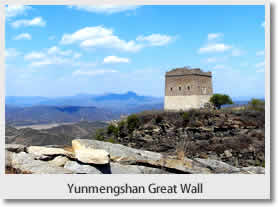 |
Yunmengshan Great Wall is such named because it is located to the east of Mt. Yunmeng ( Yunmengshan Mountain ). Yunmengshan Great Wall is a small bit of the Wall around Beijing. It was built under the General Qi Jiguang during the Ming Dynaty (1368 -1644). To its west, is located Mutianyu Great Wall, to its east Gubeikou Great Wall and Jinshanling Great Wall. Yunmengshan Great Wall Hiking Day Trip from US$ 40 |
| » Xiangshuihu Great Wall Tour | |
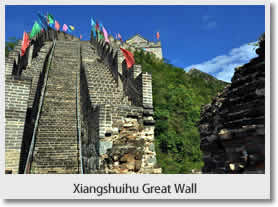 |
The bit of the Great Wall east of Moshikou Pass is locally referred as Xiangshuihu Great Wall perched on a steep slope over 1000 meters long with 5 towers. "Xiangshuihu" literally means "the gurgling lake Great Wall", named after the the rippling sound of water flowing through the ancient pass in the valley below the Great Wall. Xianshuihu Great Wall Day Tour from US$ 69 |
| » Luanling Great Wall Tour | |
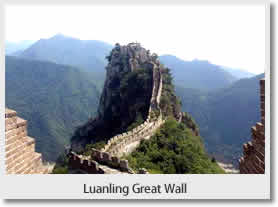 |
Luanling Great Wall ( Or Lu An ling Great Wall) has two sections – east and west. Its west section is forbbiden for hiking due to treacherousness and wildness. Standing on the east section of Luanling Great Wall, you have better views of its west section, as well as Lianyunling Great Wall and Xuangshuihu Great Wall. Luanling literally means "Donkey Saddle’s Mountain". Luanling Great Wall Hiking Day Trip from US$ 35 |
| » Zhuangdaokou Great Wall Tour | |
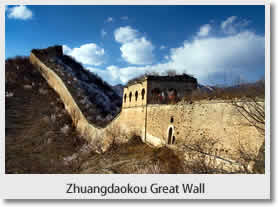 |
Zhuangdaokou Great Wall Pass is located on the mountain sandwiched by Zhuang Dao Kou Village down in the south and Er Dao Guan Village down in the north. So to cross the Zhuagdaokou Great Wall Pass, we are required to hike south from Zhuang Dao Kou Village, climb up to the mountain valley, pass through the Zhuangdaokou Great Wall through the gateway (Zhuang Dao Kou Pass), then continue to trek on the mountain north of the Great Wall, before we reach Er Dao Guan Village down the mountain. Crossing Zhuangdaokou Great Wall Pass Hiking Day Trip from US$ 52 |
| » Xiaoxihu Great Wall Tour | |
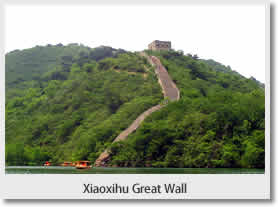 |
Xiaoxihu Great Wall is actually is the extended Huanghuacheng Great Wall at the Reservoir Section. Xiaoxihu Great Wall is located in the Xishuiyu Village of Jiuduhe Township where the Huanghucheng Reservoir is located. The Huanghuacheng Reservoir cuts the Great Wall into three sections. Xiao Xi Hu Circuit Hiking Day Trip from US$ 35 |
| » Jiangjunguan Great Wall Tour | |
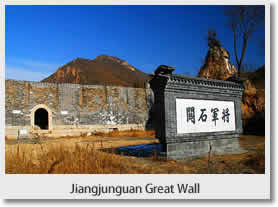 |
Lying on the north of Jiangjunguan Village is a section of the Great Wall built in Ming Dynasty, locally referred as “Jiangjunguan Great Wall”. “Jiangjunguan” literally means “a general’s pass”. This place used to be an important pass with military importance, the reason why the fort was built here. Jiangjunguan Great Wall is the first Great Wall pass (fort) in Beijing from the east. Jiangjunguan Great Wall and Village Day Tour from US$ 35 |
| » Bolitai Great Wall Tour | |
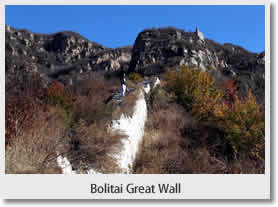 |
The bit of the Wall in Bolitai Village, or we call it "Bolitai Great Wall" is quite different from Badaling Great Wall and Mutianyu Great Wall. The Great Wall here is made of slabs and stones, not bricks made in kilns. Only one section of the wall around the Village has been cleared and cleaned, bushes and saplings removed from the wall for easy walking. The cleaned wall here takes you about 2 hours's walking. Sightseeing Driving and Bolitai Great Wall Day Tour from US$ 35 |
| » Changyucheng Great Wall Tour | |
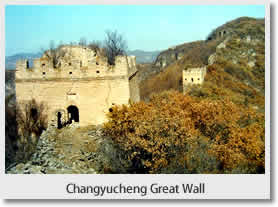 |
Changyucheng Village is named after one of the famous military city circlng an important pass of the Great Wall called "Changyucheng", which literally means “长峪城 – Long Valley City”. Bordering Hebei Province, Changyucheng Great Wall boasts to have one of Beijing's highest Great Wall towers at the sea-level of 1400 meters with stunning views. Changyucheng Village & Changyucheng Great Wall Day Tour from US$ 35 |
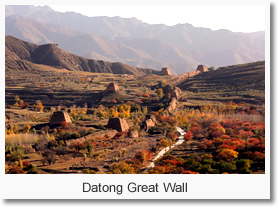 |
If you have seen the images of the Great Wall near Beijing, you may believe the Great Wall of China is mainly made of majestic bricks and stones. No, much of the Great Wall we see today were built in Ming Dynasty (1368-1644), which is not stone but earth! For the 6700 km Ming Dynasty Great Wall, only over 1000 km section of the Wall is stone. Datong Great Wall is the epitome of the tamped earth wall in the northern China. Datong Great Wall Hike Day Tour from US$ 105 p/p Datong Great Wall Hike 2 Day Tour from US$ 195 p/p Datong Great Wall Hike 3 Day Tour from US$ 290 p/p |
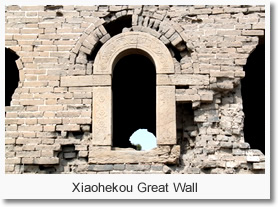 |
Hebei Great Wall ( namely the Wall east of Beijing to the Sea) including the Wall near Beijing are the most luxuary sections of the Great Wall in China's history, which are made of majestic bricks and stones with a length of over 1000km while other chunks of the Great Wall of China are mainly made of tamped earth such as Datong Great Wall west of Beijing. Hebei Great Wall 2 Day Tour from US$ 220 p/p Hebei Great Wall 3 Day Tour from US$ 310 p/p |
Great Wall Maps & Videos
We provide 8 tourist maps and videos for the 8 sections of the Great Wall around Beijing for a better understanding of the Great Wall you are going to visit.For your glimpse of the Great Wall around Beijing, we provide 8 tourist maps for the 8 sections of the Great Wall around Beijing including Simatai (partially restored), Jinshanling (partially restored), Gubeikou (partially restored), Mutianyu (restored), Jiankou (unrestored), Huanghuacheng (unrestored), Badaling (restoresd) and Juyongguan (restored).
Badaling Great Wall Map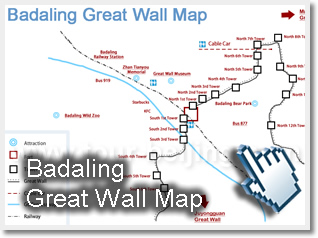 |
Juyongguan Great Wall Map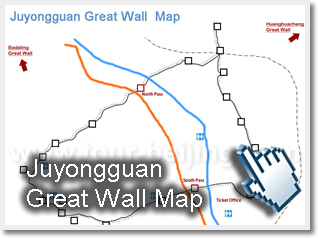 |
Huanghuacheng Great Wall Map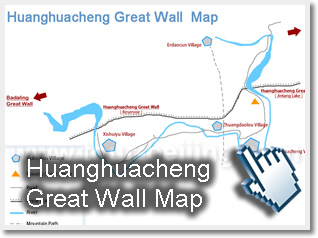 |
Jiankou Great Wall Map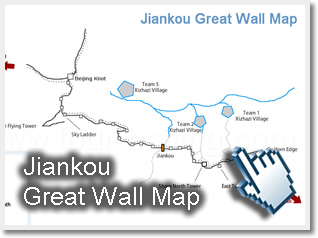 |
Mutianyu Great Wall Map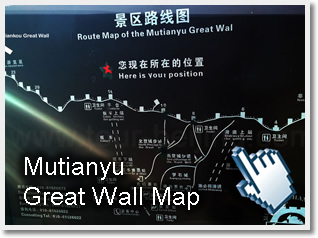 |
Gubeikou Great Wall Map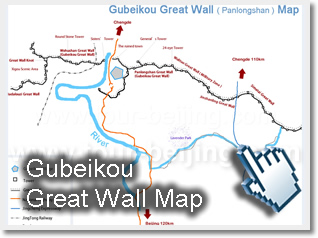 |
Jinshanling Great Wall Map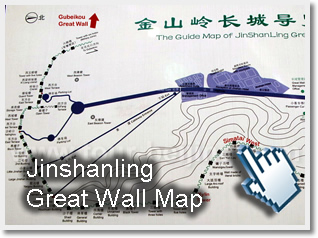 |
Simatai Great Wall Map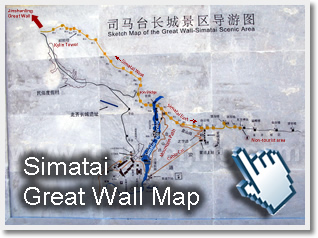 |
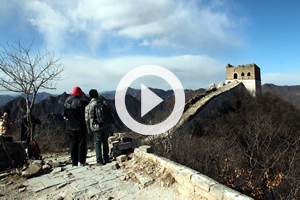
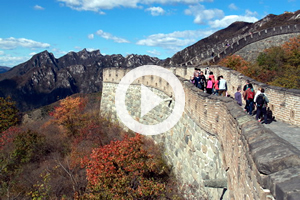
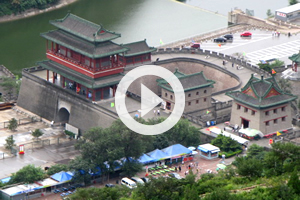
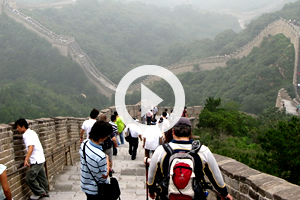
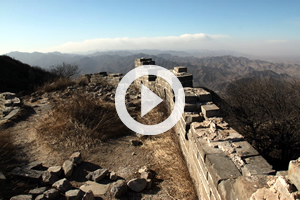
The Great Wall around Beijing is mainly sectioned into 8 bits - Juyongguan Pass Great Wall, Shixiaguan Great Wall, Badaling Great Wall, Mutianyu Great Wall, Jiankou Great Wall, Gubeikou Great Wall, Jinshanling Great Wall and Simatai Great Wall.
| Jiankou Great Wall | Mutianyu Great Wall | Juyonguan Pass Great Wall | Badaling Great Wall |
 |
 |
 |
 |
| Shixiaguan Great Wall | Gubeikou Great Wall | Jinshangling Great Wall | Simatai Great Wall |
 |
 |
 |
 |
For Great Wall visitors as well as independent travelers who want to have more international travel experience with a strong desire for individual travel.
Basic Knowledge on the Great Wall sections around Beijing.
Most of the sections people see around Beijing are twentieth-century restorations of an original that is about 500 years old dating back to Ming Dynasty (1368 - 1644), an era of the huge 17-year reconstruction led by Qi Jiguang(1528 –1588), prime architect of the Great Wall.In 1568, at the age of 40, Qi found himself given the task of the upgrading the Great Wall along the northern frontier from Beijing to the eastern sea at Shanhaiguan. Qi Jinguang retired in 1585 and died in 1588. Work on the Wall continued steadily for the next 60 years, till the end of Ming Dynasty. The coming of the Qing Dynasty (1644-1911), ruled by "barbarians" the Manchus, halted the Wall construction which was supposed to keep them out.
The sections of the Great Wall around Beijing can be divided into three categories - "Formal", "Informal" and "Wild" in terms of the local administration and management on the walls.
"Formal Great Wall" sections are tamed, repaired and controlled by a local Great Wall administration bureau with facilities like parking lots, guardrails if necessary, restaurants, toilets and more. Within its administration, the entrance fees are collected, a police station is set up and security guides are dotted along Wall.
"Informal Great Wall" sections are softly open to the hikers with limited repairs and renovations from the local villages and jurisdictions.
"Wild Great Wall" sections are officially "forbidden" for hiking to protect the original Great Wall as well as for safery reason because they are crumbling, overgrown, barred to walkers without any repairs in many areas. In the recent years these "Wild Great Wall" sections are sought after by the Great Wall hikers. Trekkers are responsible for their own safety while hiking wild Great Wall.
There are over a dozen of "formal","informal" and "wild" sections of the Great Wall snaking across the northen mountains around Beijing. Most of the sections of the remaining Great Wall have their own names. Usually their names are given with regard to geographic location, historical factor or just the necessity of the local tourism promotion.
Starting from west to east, the major sections of the Great Wall around Beijing are listed below:
• Changyucheng Great Wall: 100km northwest of Beijing downtown (wild)
• Badaling Great Wall: 80km northwest from Beijing, busy, popular, breathtaking veiw of the wall winding (formal)
• Shixiaguan Great Wall: 90 northwest from Beijing, ruined and broken (formal)
• Juyongguan Great Wall: 60km northwest from Beijing, closest section, heavily renovated, steep (formal)
• Xishuiyu Great Wall: 90km Northwest of Beijing (informal)
• Zhuangdaokou Great Wall: 90km north of Beijing (wild)
• Huanghuacheng Great Wall: 85km north from Beijing, original, broken, steep (informal)
• Luanling Great Wall: 90km north of Beijing downtown (informal)
• Xiangshuihu Great Wall: 90km north of Beijing (formal)
• Jiankou Great Wall: 90km north from Beijing, original, broken, ruined, treacherous (wild)
• Mutianyu Great Wall: 85km north of Beijing, green, wonderful scenery (formal)
• Yunmengshan Great Wall: 120km northeast of Beijing (informal)
• Gubeikou Great Wall: 110km northeast from Beijing, broken, original, risky (formal)
• Simatai Great Wall: 140km northeast of Beijing, rugged, steep and hazardous (formal)
• Jinshanling Great Wall: 150km northeast of Beijing, wild, rugged, steep and hazardous (formal)
• Bolitai Great Wall: 120km northeast of Beijing (wild)
• Jiangjunguan Great Wall: 110km northeast of Beijing (wild)
Which section of the Great Wall should I visit?
People are often torn by the question which section to hike. Below are our suggestions only for your reference:1) If you don't have much time, but you still want to have a glimpse of the Wall, especially on a busy day, choose Juyongguan Great Wall.
2) If you want to see the gorgeous section of the Wall in Beijing and don't mind the tourist crowd, go to Badaling Great Wall.
3) If you want to visit the Great Wall with a beautiful green scenery and environment, visit Mutianyu Great Wall.
4) If you travel with kids or seniors, go to visit Mutianyu Great Wall.
5) If you want to hike the wild and original bits of the Wall, go to hikeJiankou,Huanghuacheng,Gubeikou,Jinshanling,Yunmengshan and Simatai Great Wall.
6) If you don't want to see "people watching people", and look for a least tourist section, then go to Shixiaguan Great Wall.
7) If you want to hike the Wall with a short visit to the local ancient villages, you may choose Changyucheng, Zhuangdaokou, Luanling, Xiangshuihu, Bolitai and Jiangjunguang Great Wall.
Which section is touristy and less touristy?
Jinshanling, Gubeikou, Simatai and Shixiaguan Great Wall are less touristy. Badaling Great Wall is most crowded and Mutianyu Great Wall is becoming more and more crowded too. It is better to hike the Great Wall during the weekdays instead of weekends.Strongly advise you not to visit the Great Wall during China public holidays. On these special days you will waste much of your valuable time on the way from your hotel to the Wall. On the Wall, you have to take group photos since there are a great number of people on the Wall.
Do you offer sleeping on the Great Wall tour? Which sections?
Overnight on the Wall under the stars or in a tent inside a watchtower, a unique and unforgettable life experience. At present we offer camping on Gubeikou Great Wall.Hotels or inns near the Great Wall
If you want to stay overnight close the Great Wall around Beijing, below are some of the inns and hotels for your consideration. Many of the inns and courtyard hotels are still open in winter by the Great Wall. • Juyongguan Great Wall Hotel
• the Cummune by the Great Wall
• Great Wall Courtyard Inn
• Huanghuacheng Fuwang Courtyard Farmhouse
• the Schoolhouse by the Mutianyu Great Wall
• Jinshanling Hotel
• Simatai Great Wall Courtyard Hotel
• the Chateau Changyu AFIP Global Beijing
Best Timet to Visit Great Wall
In Beijing, all the formal sections of the Wall are open to tourists all year round. The ideal months for the Great Wall hike fall on spring, early summer, autumn (later March, April, May, June, September, October and early November). If you happen to visit the Great Wall in summer ( later June, July and August), be prepared for heat stroke prevention – sunglasses, sun cream, sun block, hat, water. Summer is the rain season and bring waterproofs in case.
Winter Great Wall Hike is a bit challenging mainly due to the frozen weather in later December, January and early early February each year in Beijing. You are advised to dress warmly – winter hat with ear flap, ear warmers, gloves, scarf, warm jackets and ther winter accessories. The Great Wall hike is impossible only because the road access to sections is blocked due to the heavy snow. If you plan to do the hike in winter, we do suggest you check the weather report. Check out How to Dress for Visiting Great Wall in Winter.
Accessible section of the Great Wall for wheelchair users
Badaling Great Wall and Mutianyu are wheelchair-friendly, the only two accessible section of the Wall around Beijing (but only on some limited areas).Beijing Great Wall Public Transport
There are several ways of traveling to the Beijing Great Wall using public trasnport.1) To Badaling Great Wall by bus
Badaling Bus No.877 (Bus Fare: RMB 12)
To:
Deshengmen (德胜门)- Badaling (八达岭)
Operating Hours:
06:00-12:00(Apr.1-Oct.31)
06:00-12:30 (Nov.1-Mar.31)
Return:
Badaling (八达岭)- Deshengmen (德胜门)
10:30-17:00(Apr.1-Oct.31)
11:00-16:30(Nov.1-Mar.31)
2) To Badaling Great Wall by Train
Badaling Great Wall is the only Wall that you can directly reach by train: 12 daily "S trains" from Beijing North Railway Station to Badaling Great Wall and 12 daily trains from Badaling Great Wall back to Beijing North Railway Station.
It takes about one hour and 20 minutes to get to Badaling Great Wall from downtown Beijing. Tickets are available and easy to get at the ticketing office in the main building of Beijing North Railway Station. The train ticket costs RMB 6. The entrance to the Badaling Great Wall is a 20- minute walk from Badaling Railway Station.
3) To Mutianyu Great Wall by Bus
Tourist Bus No.867
Directly running to Mutianyu Great Wall 慕田峪长城
The Tourist Bus 867 operates two daily departures: Start at 7:00am and 8:30am; return at 2:00pm and 4:00pm
Valid time: from March 15 – Nov 15 each year.
Bus No. 916 Express (916快)To:
Mutianyu Great Wall 慕田峪长城
Important Notice: The final destination of the Bus 916 Express is actually Huairou Beidajie (怀柔北大街)in Huairou District, then you have to change for the local bus No.936 (Huairou - Dongtai 怀柔至洞台), continue to take the bus 936 (936路支线) for another 18.6km, pass 8 stops and get off at Mutianyu Great Wall finally.
Bus 916 Express (916快)Fare: RMB 12
Bus 936 (936路支线) Fare: RMB 8
Bus Operation Time: 6:00-17:00 ( every 20 minutes )
4) Bus No. 980 Express (980快) To Jinshanling Great Wall:
Destination: Jinshanling Great Wall 金山岭长城.
Very Important Notice: Actually the Bus 980 Express stops at Miyun County ( 密云汽车站 ), and then you take a mini bus from the downtown Miyun to Jinshanling.
Bus Fare: RMB 15
Minibus Fare: about RMB 50 ( you have to share a mini-bus for Jinshanling Great Wall)
5) Take a taxi to the Great Wall
You can also charter a taxi for day trips to the Great Wall. The drive ranges from 1.5 hour to 2.5 hours from the city center according to the different sections of the Great Wall. Below are the approximate taxi fares to the different sections of the Great Wall with waiting for about 2-3 hours while touring the wall:
Beijing Mutianyu Great Wall: 85km – RMB 600
Beijing Badaling Great Wall: 80km – RMB 500
Beijing Simatai Great Wall: 140km – RMB 700
Beijing Juyongguan Great Wall: 60km – RMB 400
Beijing Jinshanling Great Wall: 160km RMB 800
Beijing Gubeikou Great Wall: 150km – RMB 750
Beijing Jiankou Great Wall: 85km – RMB 650
Beijing Huanghuacheng Great Wall 85km – RMB 600
Great Wall Hiking Level
It is a beginning (1-2 hours) - intermediate level (3-4 hours). The hike from Jiankou to Mutianyu, Gubeikou to Jinshanling and Jinshangling to Simatai, take about 4-6 hours respectively, the toughest hike. Don't forget to bring a mobile phone, water, hiking boots, sunscreen, sun-glasses, insect repellent, cap and some snacks etc.Cable Car up to the Great Wall
The cable car is available on Badaling, Mutianyu, Jinshanling and Simatai. If you don't have strong legs, we suggest you take the cable up the wall and walk down.Tips on What Dress to Visit the Great Wall
April, October, and earlier November: long shorts, overcoat; May, June, July and August: Summer dress - many T-shirts shorts; December, January and early early February: winter hat with ear flap, ear warmers, gloves, scarf, warm jackets and ther winter accessories.Questions & Answers:
 Here is only for Questions and Answers. ( For anyone who wants to have an enquiry or customized tour, please email us to
  . )
. )