


Xinjiang Trip
Changji Trip
Burjin Trip
Kanas Trip
Kelamayi Trip
Urumqi Trip
Turpan Trip
Southern Xinjiang Trip
Luntai Trip
Kuqa Trip
Aksu Trip
Artux Trip
Kashgar Trip
Kizilsu Trip

Changji Trip
Burjin Trip
Kanas Trip
Kelamayi Trip
Urumqi Trip
Turpan Trip
Southern Xinjiang Trip
Luntai Trip
Kuqa Trip
Aksu Trip
Artux Trip
Kashgar Trip
Kizilsu Trip

Silk Road Travel Guide
Top Attractions on the Silk Road
Silk Road Travel Tips
Xian Travel Guide
Tianshui Travel Guide
Lanzhou Travel Guide
Xiahe Travel Guide
Wuwei Travel Guide
Zhangye Travel Guide
Jiayuguan Travel Guide
Dunhuang Travel Guide
Turpan Travel Guide
Urumqi Travel Guide
Fuyun Travel Guide
Altay Travel Guide
Altay Travel Guide
Burjin Travel Guide
Karamy Travel Guide
Bole Travel Guide
Yining Travel Guide
Bayanbulak Travel Guide
Korla Travel Guide
Luntai Travel Guide
Kuqa Travel Guide
Aksu Travel Guide
Kashgar Travel Guide
Artux Travel Guide
Tashkurgan Travel Guide
Yarkan Travel Guide
Hotan Travel Guide
Mingfeng Travel Guide
Xining Travel Guide
Yinchuan Travel Guide
Zhongwei Travel Guide
Silk Road Travel Tips
Xian Travel Guide
Tianshui Travel Guide
Lanzhou Travel Guide
Xiahe Travel Guide
Wuwei Travel Guide
Zhangye Travel Guide
Jiayuguan Travel Guide
Dunhuang Travel Guide
Turpan Travel Guide
Urumqi Travel Guide
Fuyun Travel Guide
Altay Travel Guide
Altay Travel Guide
Burjin Travel Guide
Karamy Travel Guide
Bole Travel Guide
Yining Travel Guide
Bayanbulak Travel Guide
Korla Travel Guide
Luntai Travel Guide
Kuqa Travel Guide
Aksu Travel Guide
Kashgar Travel Guide
Artux Travel Guide
Tashkurgan Travel Guide
Yarkan Travel Guide
Hotan Travel Guide
Mingfeng Travel Guide
Xining Travel Guide
Yinchuan Travel Guide
Zhongwei Travel Guide
Beijing Tour
Xian Tour
Shanghai Tour
Guilin Tour
Datong Tour
Chengde Tour
Chengdu Tour
Chongqing Tour
Hong Kong Tour
Luoyang Tour
Lijiang Tour
Pingyao Tour
Inner Mongolia Tour
Harbin Tour
Hangzhou Tour
Huangshan Tour
Tianjin Tour
Qufu Tour
Mt.Taishan Tour
Jinan Tour
Qingdao Tour
Qinhuangdao Tour
Jiuzhaigou Tour
Zhangjiajie Tour
Xian Tour
Shanghai Tour
Guilin Tour
Datong Tour
Chengde Tour
Chengdu Tour
Chongqing Tour
Hong Kong Tour
Luoyang Tour
Lijiang Tour
Pingyao Tour
Inner Mongolia Tour
Harbin Tour
Hangzhou Tour
Huangshan Tour
Tianjin Tour
Qufu Tour
Mt.Taishan Tour
Jinan Tour
Qingdao Tour
Qinhuangdao Tour
Jiuzhaigou Tour
Zhangjiajie Tour
China Province Tour
Tibet Tour
Shandong Tour
Guangdong Tour
Fujian Tour
Qinghai Tour
Ninxia Tour
Guizhou Tour
Inner Mongolia Tour
Shandong Tour
Guangdong Tour
Fujian Tour
Qinghai Tour
Ninxia Tour
Guizhou Tour
Inner Mongolia Tour
Beijing Trip
Xian Trip
Shanghai Trip
Guilin Trip
Chengdu Trip
Chengde Trip
Inner Mongolia Trip
Datong Trip
Harbin Trip
Pingyao Trip
Luoyang Trip
Qufu Trip
Shangdong Trip
Hangzhou Trip
Lhasa Trip
Yangtze River Trip
Huangshan Trip
Xian Trip
Shanghai Trip
Guilin Trip
Chengdu Trip
Chengde Trip
Inner Mongolia Trip
Datong Trip
Harbin Trip
Pingyao Trip
Luoyang Trip
Qufu Trip
Shangdong Trip
Hangzhou Trip
Lhasa Trip
Yangtze River Trip
Huangshan Trip
- - - - - - - - - - - - - - - - - - - -
Beijing Travel Service
China Travel Agency
Beijing Travel Tips
Beijing Information
Beijing Travel Service
China Travel Agency
Beijing Travel Tips
Beijing Information
Home → China Tours → Silk Road Tours → Kuqa Travel Guide
Kuqa Travel Guide
Location: in the west of Xinjiang, north edge of Tarim Basin
Population: 405,894
Area: 14,528 sq km
Nationalities: Han, Hui, Kazakstan, Mongolia, Russia, Machu, Uygur, and Uzbek
History: According to the Book of Han, Kuqa was the largest of the “Thirty-six kingdoms of the Western Regions”. Kuqa was strongly influenced by Indian and Scythian thought, and Indian kings are said to have reigned there. For a long time Kuqa was the most populous oasis in the Tarim Basin. The language, as evidenced by ancient records, was Tocharian, an Indo-European language. Kuqan music was very popular in China during the Tang Dynasty, particularly the lute which became known in Chinese as pipa.
Climate: Kuqa has a dry and cold winter, a hot summer. It has great temperature between daylight and night. The annual average temperature is 11.4℃ with a annual precipitation of 65 millimeter.
Transportation: Kuqa Airport is about 2km from Kuqa county, only offer airlines to Urumqi, unfixed. Kuqa Coach Station is on Tianshan Road. Most of the vehicles pass by the coach station.
Local Specialties: cantaloup, Kuqa white apricot
Local Food: kabob, grilled fish, grilled chicken intestines, grilled chicken liver, grilled bean curd
Major Attraction:
Grand Kuqa Mosque – It lies in the north of Kuqa county, is the second Islamic mosque inferior to ld Kah Mosque, spiritual court has been founded in the temple, the Islamic mosque began to found in 1922, total area is 1,165 sq meters. It holds 5,000 Muslims to go to church. Whole architecture of the temple looks magnificent, the circumstance is more sequestered, is center of religious activities in Kuqa.
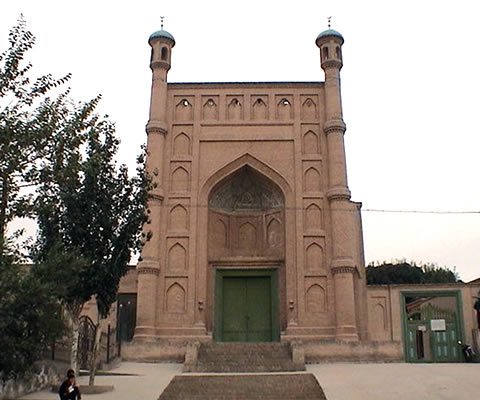
Qiuci Ancient City Ruins - The Qiuci Ruins is located in Pilang Village, about two kilometers to the west of Kuqa County. The ancient city of Qiuci was in the shape of an irregular square. The city wall was about 8000 meters in perimeter and two to seven meters in height. The northern, southern and eastern part of the wall was 2000, 1806 and 1646 meters long respectively. Judging from the remnants of the western part, it was about 2200 meters long. The city wall was built with rammed earth. Every 40 meters or so, there was a rampart on the wall.
Subashi Ruins - Subashi Ruins, located 23 kilometers northwest of Kuqa County, Xinjiang Province are the ruins of the Subashi Temple. The Ruins are divided by Kuqa River into eastern and western areas. These large area ruins reflect the temple's past brilliance. Subashi Temple was a Buddhism temple, which was built in the first century and reached its peak during the sixth to the eighth centuries in the Sui and Tang dynasties.
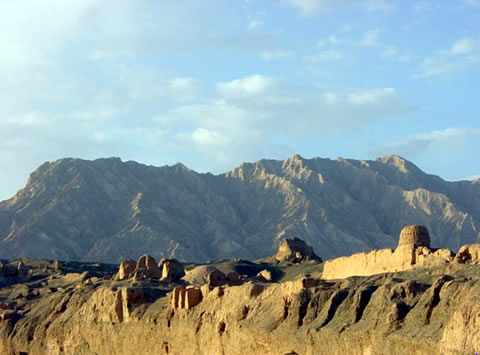
Kizil Thousand-Buddha Caves - Kizil Thousand-Buddha Caves is one of the key national cultural protection units. Kizil means red in the Uigur. The caves are dug between the cliffs of Mingwu Dage Mountain in the north bank of Muzhadi River. Some existing caves retain the number serial such as the No.236 caves, and about one-third of the caves retain relatively complete shape and murals. According to the characteristic of the layout of the caves, the subjects and art style of murals and the radioactive carbon examination, the time of most of the caves ranges from the fourth to the eighth century, and can be generally divided into the early, middle and the late stage. They are the representatives of Qiuzi grottos.
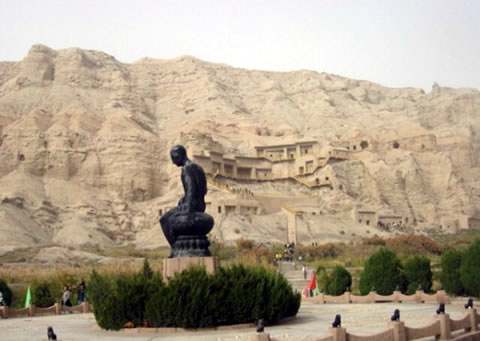
Dragon Lake - The Big Dragon lake and Small Dragon Lake is 120 kilometers north of Kuqa, deep in the Tianshan Mountains. It is a mountain lake with an area of 2 square km. It is located on the way from Byanbulak Grassland to Kuqa.
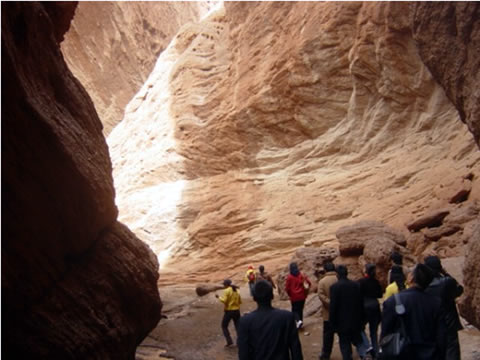
Tianshan Grand Canyon - Tianshan Kuche Grand Canyon is located in the north of Aksu kuche county. It is about 5.5 kilometers from the east to the west.It is made of Reddish-brown rocks.The average elevation of the canyon is 1600 meters, and its peak is 2048 meters.
Travel Tips:
The working time of Administration Department is from 10:00-14:00
Here is only for Questions and Answers. ( For anyone who wants to have an enquiry or tour booking, please fill in our Online Enquiry. )
Kuqa Travel Guide
Location: in the west of Xinjiang, north edge of Tarim Basin
Population: 405,894
Area: 14,528 sq km
Nationalities: Han, Hui, Kazakstan, Mongolia, Russia, Machu, Uygur, and Uzbek
History: According to the Book of Han, Kuqa was the largest of the “Thirty-six kingdoms of the Western Regions”. Kuqa was strongly influenced by Indian and Scythian thought, and Indian kings are said to have reigned there. For a long time Kuqa was the most populous oasis in the Tarim Basin. The language, as evidenced by ancient records, was Tocharian, an Indo-European language. Kuqan music was very popular in China during the Tang Dynasty, particularly the lute which became known in Chinese as pipa.
Climate: Kuqa has a dry and cold winter, a hot summer. It has great temperature between daylight and night. The annual average temperature is 11.4℃ with a annual precipitation of 65 millimeter.
Transportation: Kuqa Airport is about 2km from Kuqa county, only offer airlines to Urumqi, unfixed. Kuqa Coach Station is on Tianshan Road. Most of the vehicles pass by the coach station.
Local Specialties: cantaloup, Kuqa white apricot
Local Food: kabob, grilled fish, grilled chicken intestines, grilled chicken liver, grilled bean curd
Major Attraction:
Grand Kuqa Mosque – It lies in the north of Kuqa county, is the second Islamic mosque inferior to ld Kah Mosque, spiritual court has been founded in the temple, the Islamic mosque began to found in 1922, total area is 1,165 sq meters. It holds 5,000 Muslims to go to church. Whole architecture of the temple looks magnificent, the circumstance is more sequestered, is center of religious activities in Kuqa.

Qiuci Ancient City Ruins - The Qiuci Ruins is located in Pilang Village, about two kilometers to the west of Kuqa County. The ancient city of Qiuci was in the shape of an irregular square. The city wall was about 8000 meters in perimeter and two to seven meters in height. The northern, southern and eastern part of the wall was 2000, 1806 and 1646 meters long respectively. Judging from the remnants of the western part, it was about 2200 meters long. The city wall was built with rammed earth. Every 40 meters or so, there was a rampart on the wall.
Subashi Ruins - Subashi Ruins, located 23 kilometers northwest of Kuqa County, Xinjiang Province are the ruins of the Subashi Temple. The Ruins are divided by Kuqa River into eastern and western areas. These large area ruins reflect the temple's past brilliance. Subashi Temple was a Buddhism temple, which was built in the first century and reached its peak during the sixth to the eighth centuries in the Sui and Tang dynasties.

Kizil Thousand-Buddha Caves - Kizil Thousand-Buddha Caves is one of the key national cultural protection units. Kizil means red in the Uigur. The caves are dug between the cliffs of Mingwu Dage Mountain in the north bank of Muzhadi River. Some existing caves retain the number serial such as the No.236 caves, and about one-third of the caves retain relatively complete shape and murals. According to the characteristic of the layout of the caves, the subjects and art style of murals and the radioactive carbon examination, the time of most of the caves ranges from the fourth to the eighth century, and can be generally divided into the early, middle and the late stage. They are the representatives of Qiuzi grottos.

Dragon Lake - The Big Dragon lake and Small Dragon Lake is 120 kilometers north of Kuqa, deep in the Tianshan Mountains. It is a mountain lake with an area of 2 square km. It is located on the way from Byanbulak Grassland to Kuqa.
Tianshan Grand Canyon - Tianshan Kuche Grand Canyon is located in the north of Aksu kuche county. It is about 5.5 kilometers from the east to the west.It is made of Reddish-brown rocks.The average elevation of the canyon is 1600 meters, and its peak is 2048 meters.

Travel Tips:
The working time of Administration Department is from 10:00-14:00
| Questions & Answers: |