


Xinjiang Trip
Changji Trip
Burjin Trip
Kanas Trip
Kelamayi Trip
Urumqi Trip
Turpan Trip
Southern Xinjiang Trip
Luntai Trip
Kuqa Trip
Aksu Trip
Artux Trip
Kashgar Trip
Kizilsu Trip

Changji Trip
Burjin Trip
Kanas Trip
Kelamayi Trip
Urumqi Trip
Turpan Trip
Southern Xinjiang Trip
Luntai Trip
Kuqa Trip
Aksu Trip
Artux Trip
Kashgar Trip
Kizilsu Trip

Silk Road Travel Guide
Top Attractions on the Silk Road
Silk Road Travel Tips
Xian Travel Guide
Tianshui Travel Guide
Lanzhou Travel Guide
Xiahe Travel Guide
Wuwei Travel Guide
Zhangye Travel Guide
Jiayuguan Travel Guide
Dunhuang Travel Guide
Turpan Travel Guide
Urumqi Travel Guide
Fuyun Travel Guide
Altay Travel Guide
Altay Travel Guide
Burjin Travel Guide
Karamy Travel Guide
Bole Travel Guide
Yining Travel Guide
Bayanbulak Travel Guide
Korla Travel Guide
Luntai Travel Guide
Kuqa Travel Guide
Aksu Travel Guide
Kashgar Travel Guide
Artux Travel Guide
Tashkurgan Travel Guide
Yarkan Travel Guide
Hotan Travel Guide
Mingfeng Travel Guide
Xining Travel Guide
Yinchuan Travel Guide
Zhongwei Travel Guide
Silk Road Travel Tips
Xian Travel Guide
Tianshui Travel Guide
Lanzhou Travel Guide
Xiahe Travel Guide
Wuwei Travel Guide
Zhangye Travel Guide
Jiayuguan Travel Guide
Dunhuang Travel Guide
Turpan Travel Guide
Urumqi Travel Guide
Fuyun Travel Guide
Altay Travel Guide
Altay Travel Guide
Burjin Travel Guide
Karamy Travel Guide
Bole Travel Guide
Yining Travel Guide
Bayanbulak Travel Guide
Korla Travel Guide
Luntai Travel Guide
Kuqa Travel Guide
Aksu Travel Guide
Kashgar Travel Guide
Artux Travel Guide
Tashkurgan Travel Guide
Yarkan Travel Guide
Hotan Travel Guide
Mingfeng Travel Guide
Xining Travel Guide
Yinchuan Travel Guide
Zhongwei Travel Guide
Beijing Tour
Xian Tour
Shanghai Tour
Guilin Tour
Datong Tour
Chengde Tour
Chengdu Tour
Chongqing Tour
Hong Kong Tour
Luoyang Tour
Lijiang Tour
Pingyao Tour
Inner Mongolia Tour
Harbin Tour
Hangzhou Tour
Huangshan Tour
Tianjin Tour
Qufu Tour
Mt.Taishan Tour
Jinan Tour
Qingdao Tour
Qinhuangdao Tour
Jiuzhaigou Tour
Zhangjiajie Tour
Xian Tour
Shanghai Tour
Guilin Tour
Datong Tour
Chengde Tour
Chengdu Tour
Chongqing Tour
Hong Kong Tour
Luoyang Tour
Lijiang Tour
Pingyao Tour
Inner Mongolia Tour
Harbin Tour
Hangzhou Tour
Huangshan Tour
Tianjin Tour
Qufu Tour
Mt.Taishan Tour
Jinan Tour
Qingdao Tour
Qinhuangdao Tour
Jiuzhaigou Tour
Zhangjiajie Tour
China Province Tour
Tibet Tour
Shandong Tour
Guangdong Tour
Fujian Tour
Qinghai Tour
Ninxia Tour
Guizhou Tour
Inner Mongolia Tour
Shandong Tour
Guangdong Tour
Fujian Tour
Qinghai Tour
Ninxia Tour
Guizhou Tour
Inner Mongolia Tour
Beijing Trip
Xian Trip
Shanghai Trip
Guilin Trip
Chengdu Trip
Chengde Trip
Inner Mongolia Trip
Datong Trip
Harbin Trip
Pingyao Trip
Luoyang Trip
Qufu Trip
Shangdong Trip
Hangzhou Trip
Lhasa Trip
Yangtze River Trip
Huangshan Trip
Xian Trip
Shanghai Trip
Guilin Trip
Chengdu Trip
Chengde Trip
Inner Mongolia Trip
Datong Trip
Harbin Trip
Pingyao Trip
Luoyang Trip
Qufu Trip
Shangdong Trip
Hangzhou Trip
Lhasa Trip
Yangtze River Trip
Huangshan Trip
- - - - - - - - - - - - - - - - - - - -
Beijing Travel Service
China Travel Agency
Beijing Travel Tips
Beijing Information
Beijing Travel Service
China Travel Agency
Beijing Travel Tips
Beijing Information
Home → China Tours → Silk Road Tours → Altay Travel Guide
Altay Travel Guide
Location: Altay is on the north edge of Xinjiang, bordered on Mongolia country in the north.
Population: 568,300
Area: 10,800 sq km
Nationalities: Han, Kazakstan, Hui, Uygur, Mongolia, etc.
History: 'Altay' in Mongolian and Turkic means 'Gold Mountain', since Altay Mountain has been a producer of gold since ancient times, and 84 other ferrous and non-ferrous minerals have been found in Altay Prefecture. In the third century B.C., before the Sakas people were driving to this, descendants of the Huns, Hsian-peis and Turks had ruled here. During the Tang Dynasty (618-907AD), the khanate was governed by Grand Anxi Frontier Command of the Tang Empire. The Uyghurs, and in the 12th century the Kara-Khitai, took possession of it in turn. The Oirats controlled the area until 1755 as Jagatai Khanate, when Qianlong's Manchus annexed it.
Climate: Located in the typical continental climate area, the Altay has windy spring, rainy summer, cool autumn and cold and long winter. The annual average temperature is 3.7℃ and the annual precipitation is 171.5 millimeters.
Transportation: Altay Airport is in the southwest of Altay city, about 10kms from the city center. Nanhang Xinjing Company opens Urumqi-Altay airline, seven scheduled flight every week.
Altay long-distance bus station is on No.16, Tuanjie Road, leading to all counties in Urumqi and Altay city.
Local Specialties: woven carpets, traditional musical instrument, embroider, root carve, bijou picture.
Local Food: rice eaten by hand, baked stuffed bun, fried noodles.
Major Attractions:
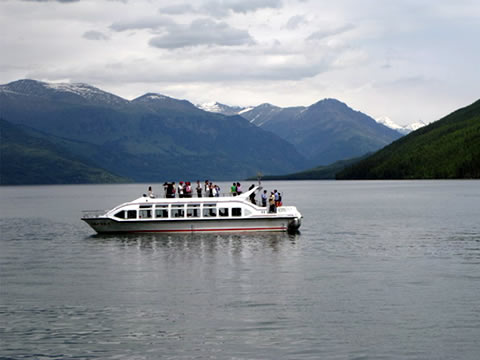
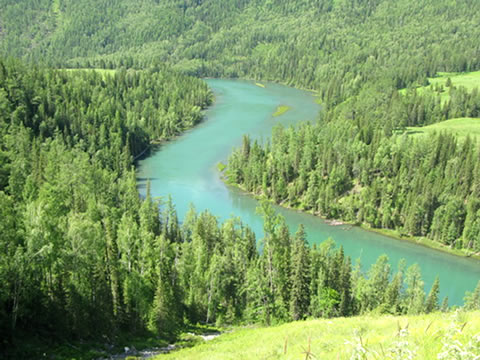
Kanas Lake – Kanas Lake lies near the Altay Mountain. It is China’s deepest freshwater lake. Kanas in Mongolian means lake in canyon. Nestled in the deep forests and mountains of Altay, the lake is 1,374 meters above sea level and covers an area of 45.73 square kilometers with the deepest point of 188.5 meters.
Travel Tips:
As a guest in kazakstan family, you must pay attention to the following items.
1. Do not move dishwares , food and lift pan cover, when host is cooking
2. Accept the meat and bedding sent by host appreciately, or the host will look down upon you.
3. Do not admire the owner’s gundog and livestocks
4. Do not point at somebody by finger or cudgel
5. Do not stay more than two days in Kazakstan’s family
Here is only for Questions and Answers. ( For anyone who wants to have an enquiry or tour booking, please fill in our Online Enquiry. )
Altay Travel Guide
Location: Altay is on the north edge of Xinjiang, bordered on Mongolia country in the north.
Population: 568,300
Area: 10,800 sq km
Nationalities: Han, Kazakstan, Hui, Uygur, Mongolia, etc.
History: 'Altay' in Mongolian and Turkic means 'Gold Mountain', since Altay Mountain has been a producer of gold since ancient times, and 84 other ferrous and non-ferrous minerals have been found in Altay Prefecture. In the third century B.C., before the Sakas people were driving to this, descendants of the Huns, Hsian-peis and Turks had ruled here. During the Tang Dynasty (618-907AD), the khanate was governed by Grand Anxi Frontier Command of the Tang Empire. The Uyghurs, and in the 12th century the Kara-Khitai, took possession of it in turn. The Oirats controlled the area until 1755 as Jagatai Khanate, when Qianlong's Manchus annexed it.
Climate: Located in the typical continental climate area, the Altay has windy spring, rainy summer, cool autumn and cold and long winter. The annual average temperature is 3.7℃ and the annual precipitation is 171.5 millimeters.
Transportation: Altay Airport is in the southwest of Altay city, about 10kms from the city center. Nanhang Xinjing Company opens Urumqi-Altay airline, seven scheduled flight every week.
Altay long-distance bus station is on No.16, Tuanjie Road, leading to all counties in Urumqi and Altay city.
Local Specialties: woven carpets, traditional musical instrument, embroider, root carve, bijou picture.
Local Food: rice eaten by hand, baked stuffed bun, fried noodles.
Major Attractions:
Kanas Lake – Kanas Lake lies near the Altay Mountain. It is China’s deepest freshwater lake. Kanas in Mongolian means lake in canyon. Nestled in the deep forests and mountains of Altay, the lake is 1,374 meters above sea level and covers an area of 45.73 square kilometers with the deepest point of 188.5 meters.


Travel Tips:
As a guest in kazakstan family, you must pay attention to the following items.
1. Do not move dishwares , food and lift pan cover, when host is cooking
2. Accept the meat and bedding sent by host appreciately, or the host will look down upon you.
3. Do not admire the owner’s gundog and livestocks
4. Do not point at somebody by finger or cudgel
5. Do not stay more than two days in Kazakstan’s family
| Questions & Answers: |