


Xinjiang Trip
Changji Trip
Burjin Trip
Kanas Trip
Kelamayi Trip
Urumqi Trip
Turpan Trip
Southern Xinjiang Trip
Luntai Trip
Kuqa Trip
Aksu Trip
Artux Trip
Kashgar Trip
Kizilsu Trip

Changji Trip
Burjin Trip
Kanas Trip
Kelamayi Trip
Urumqi Trip
Turpan Trip
Southern Xinjiang Trip
Luntai Trip
Kuqa Trip
Aksu Trip
Artux Trip
Kashgar Trip
Kizilsu Trip

Silk Road Travel Guide
Top Attractions on the Silk Road
Silk Road Travel Tips
Xian Travel Guide
Tianshui Travel Guide
Lanzhou Travel Guide
Xiahe Travel Guide
Wuwei Travel Guide
Zhangye Travel Guide
Jiayuguan Travel Guide
Dunhuang Travel Guide
Turpan Travel Guide
Urumqi Travel Guide
Fuyun Travel Guide
Altay Travel Guide
Altay Travel Guide
Burjin Travel Guide
Karamy Travel Guide
Bole Travel Guide
Yining Travel Guide
Bayanbulak Travel Guide
Korla Travel Guide
Luntai Travel Guide
Kuqa Travel Guide
Aksu Travel Guide
Kashgar Travel Guide
Artux Travel Guide
Tashkurgan Travel Guide
Yarkan Travel Guide
Hotan Travel Guide
Mingfeng Travel Guide
Xining Travel Guide
Yinchuan Travel Guide
Zhongwei Travel Guide
Silk Road Travel Tips
Xian Travel Guide
Tianshui Travel Guide
Lanzhou Travel Guide
Xiahe Travel Guide
Wuwei Travel Guide
Zhangye Travel Guide
Jiayuguan Travel Guide
Dunhuang Travel Guide
Turpan Travel Guide
Urumqi Travel Guide
Fuyun Travel Guide
Altay Travel Guide
Altay Travel Guide
Burjin Travel Guide
Karamy Travel Guide
Bole Travel Guide
Yining Travel Guide
Bayanbulak Travel Guide
Korla Travel Guide
Luntai Travel Guide
Kuqa Travel Guide
Aksu Travel Guide
Kashgar Travel Guide
Artux Travel Guide
Tashkurgan Travel Guide
Yarkan Travel Guide
Hotan Travel Guide
Mingfeng Travel Guide
Xining Travel Guide
Yinchuan Travel Guide
Zhongwei Travel Guide
Beijing Tour
Xian Tour
Shanghai Tour
Guilin Tour
Datong Tour
Chengde Tour
Chengdu Tour
Chongqing Tour
Hong Kong Tour
Luoyang Tour
Lijiang Tour
Pingyao Tour
Inner Mongolia Tour
Harbin Tour
Hangzhou Tour
Huangshan Tour
Tianjin Tour
Qufu Tour
Mt.Taishan Tour
Jinan Tour
Qingdao Tour
Qinhuangdao Tour
Jiuzhaigou Tour
Zhangjiajie Tour
Xian Tour
Shanghai Tour
Guilin Tour
Datong Tour
Chengde Tour
Chengdu Tour
Chongqing Tour
Hong Kong Tour
Luoyang Tour
Lijiang Tour
Pingyao Tour
Inner Mongolia Tour
Harbin Tour
Hangzhou Tour
Huangshan Tour
Tianjin Tour
Qufu Tour
Mt.Taishan Tour
Jinan Tour
Qingdao Tour
Qinhuangdao Tour
Jiuzhaigou Tour
Zhangjiajie Tour
China Province Tour
Tibet Tour
Shandong Tour
Guangdong Tour
Fujian Tour
Qinghai Tour
Ninxia Tour
Guizhou Tour
Inner Mongolia Tour
Shandong Tour
Guangdong Tour
Fujian Tour
Qinghai Tour
Ninxia Tour
Guizhou Tour
Inner Mongolia Tour
Beijing Trip
Xian Trip
Shanghai Trip
Guilin Trip
Chengdu Trip
Chengde Trip
Inner Mongolia Trip
Datong Trip
Harbin Trip
Pingyao Trip
Luoyang Trip
Qufu Trip
Shangdong Trip
Hangzhou Trip
Lhasa Trip
Yangtze River Trip
Huangshan Trip
Xian Trip
Shanghai Trip
Guilin Trip
Chengdu Trip
Chengde Trip
Inner Mongolia Trip
Datong Trip
Harbin Trip
Pingyao Trip
Luoyang Trip
Qufu Trip
Shangdong Trip
Hangzhou Trip
Lhasa Trip
Yangtze River Trip
Huangshan Trip
- - - - - - - - - - - - - - - - - - - -
Beijing Travel Service
China Travel Agency
Beijing Travel Tips
Beijing Information
Beijing Travel Service
China Travel Agency
Beijing Travel Tips
Beijing Information
Home → China Tours → Silk Road Tours → Yining Travel Guide
Yining Travel Guide
Location: in the west of Xijiang
Population: 430,000
Area: 629 sq km
Nationalities: Uyghur, Han, Kazakstan, Hui, Mongolia, Xibo, and Russia
History: From 12-15th century, it was under the control of Chagatai Khanate known as Almaligh. Another Mongolian empire—the Zunghar Khanate—established its capital in the area. In the 19th and early 20th century, the word Kuldja or Kulja was often used in Russia and in the West as the name for the entire Chinese part of the Ili River basin as well as for its two main cities. The usage of 1911 Encyclopedia Britannica is fairly characteristic: it defines Kulja as a "territory in north-west China" bounded by the Russian border and the mountains that surround the Ili basin, and it talks about two major cities of the region.
Climate: Yining enjoys a semi-hungriness climate. Its spring and winter is warm and humid. The summer and autumn is hot and dry. There is great temperature difference between day and night.
Transportation: Airline and highway are the main vehicles in Yining city. There is airline from Yining to Urumqi, taking about two hours. Wu-Yi Highway connects Yining, Shihezi and Urumqi. There are buses to Kuche and Kuerle southward.
Local Specialties: saddle, headgear, deer horn, carve, painting
Local Food: baked mutton chop, Michang, Mianfeizi
Major Attractions:
The Fruit Valley – About 28km long stretching along in the rough direction of the Urumqi-Yining Highway, the Fruit Valley is a natural storehouse of plant species with a wide range of fruits and herbs growing wild in the area. In the valley, wild fruits and apricot trees spread all over the valley, and the rare trees and exotic flowers are everywhere. The valley takes on different outlooks in different seasons.
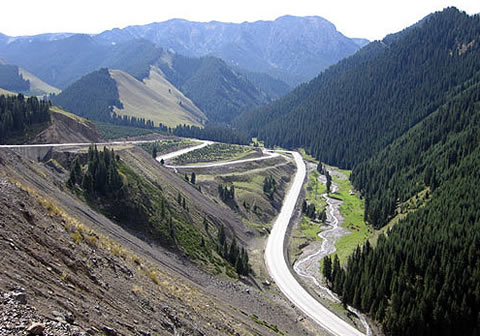
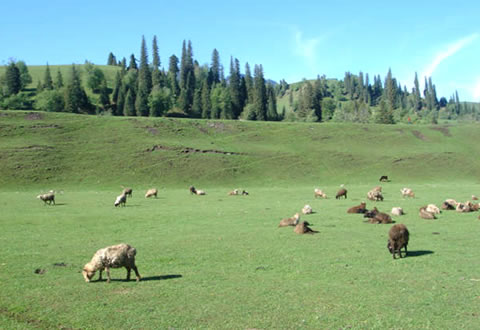
Nalati Grassland – Nalati Grassland is one of the four largest grassland of the world. The flourish grass covers the hill, the water and everywhere. It seems that the sky and the land are only connected with grass. The best time to visit Yining is from July to October, as the Nalati Grassland is dense with grasses at that time.
Here is only for Questions and Answers. ( For anyone who wants to have an enquiry or tour booking, please fill in our Online Enquiry. )
Yining Travel Guide
Location: in the west of Xijiang
Population: 430,000
Area: 629 sq km
Nationalities: Uyghur, Han, Kazakstan, Hui, Mongolia, Xibo, and Russia
History: From 12-15th century, it was under the control of Chagatai Khanate known as Almaligh. Another Mongolian empire—the Zunghar Khanate—established its capital in the area. In the 19th and early 20th century, the word Kuldja or Kulja was often used in Russia and in the West as the name for the entire Chinese part of the Ili River basin as well as for its two main cities. The usage of 1911 Encyclopedia Britannica is fairly characteristic: it defines Kulja as a "territory in north-west China" bounded by the Russian border and the mountains that surround the Ili basin, and it talks about two major cities of the region.
Climate: Yining enjoys a semi-hungriness climate. Its spring and winter is warm and humid. The summer and autumn is hot and dry. There is great temperature difference between day and night.
Transportation: Airline and highway are the main vehicles in Yining city. There is airline from Yining to Urumqi, taking about two hours. Wu-Yi Highway connects Yining, Shihezi and Urumqi. There are buses to Kuche and Kuerle southward.
Local Specialties: saddle, headgear, deer horn, carve, painting
Local Food: baked mutton chop, Michang, Mianfeizi
Major Attractions:
The Fruit Valley – About 28km long stretching along in the rough direction of the Urumqi-Yining Highway, the Fruit Valley is a natural storehouse of plant species with a wide range of fruits and herbs growing wild in the area. In the valley, wild fruits and apricot trees spread all over the valley, and the rare trees and exotic flowers are everywhere. The valley takes on different outlooks in different seasons.

Nalati Grassland – Nalati Grassland is one of the four largest grassland of the world. The flourish grass covers the hill, the water and everywhere. It seems that the sky and the land are only connected with grass. The best time to visit Yining is from July to October, as the Nalati Grassland is dense with grasses at that time.
| Questions & Answers: |