


Xinjiang Trip
Changji Trip
Burjin Trip
Kanas Trip
Kelamayi Trip
Urumqi Trip
Turpan Trip
Southern Xinjiang Trip
Luntai Trip
Kuqa Trip
Aksu Trip
Artux Trip
Kashgar Trip
Kizilsu Trip

Changji Trip
Burjin Trip
Kanas Trip
Kelamayi Trip
Urumqi Trip
Turpan Trip
Southern Xinjiang Trip
Luntai Trip
Kuqa Trip
Aksu Trip
Artux Trip
Kashgar Trip
Kizilsu Trip

Silk Road Travel Guide
Top Attractions on the Silk Road
Silk Road Travel Tips
Xian Travel Guide
Tianshui Travel Guide
Lanzhou Travel Guide
Xiahe Travel Guide
Wuwei Travel Guide
Zhangye Travel Guide
Jiayuguan Travel Guide
Dunhuang Travel Guide
Turpan Travel Guide
Urumqi Travel Guide
Fuyun Travel Guide
Altay Travel Guide
Altay Travel Guide
Burjin Travel Guide
Karamy Travel Guide
Bole Travel Guide
Yining Travel Guide
Bayanbulak Travel Guide
Korla Travel Guide
Luntai Travel Guide
Kuqa Travel Guide
Aksu Travel Guide
Kashgar Travel Guide
Artux Travel Guide
Tashkurgan Travel Guide
Yarkan Travel Guide
Hotan Travel Guide
Mingfeng Travel Guide
Xining Travel Guide
Yinchuan Travel Guide
Zhongwei Travel Guide
Silk Road Travel Tips
Xian Travel Guide
Tianshui Travel Guide
Lanzhou Travel Guide
Xiahe Travel Guide
Wuwei Travel Guide
Zhangye Travel Guide
Jiayuguan Travel Guide
Dunhuang Travel Guide
Turpan Travel Guide
Urumqi Travel Guide
Fuyun Travel Guide
Altay Travel Guide
Altay Travel Guide
Burjin Travel Guide
Karamy Travel Guide
Bole Travel Guide
Yining Travel Guide
Bayanbulak Travel Guide
Korla Travel Guide
Luntai Travel Guide
Kuqa Travel Guide
Aksu Travel Guide
Kashgar Travel Guide
Artux Travel Guide
Tashkurgan Travel Guide
Yarkan Travel Guide
Hotan Travel Guide
Mingfeng Travel Guide
Xining Travel Guide
Yinchuan Travel Guide
Zhongwei Travel Guide
Beijing Tour
Xian Tour
Shanghai Tour
Guilin Tour
Datong Tour
Chengde Tour
Chengdu Tour
Chongqing Tour
Hong Kong Tour
Luoyang Tour
Lijiang Tour
Pingyao Tour
Inner Mongolia Tour
Harbin Tour
Hangzhou Tour
Huangshan Tour
Tianjin Tour
Qufu Tour
Mt.Taishan Tour
Jinan Tour
Qingdao Tour
Qinhuangdao Tour
Jiuzhaigou Tour
Zhangjiajie Tour
Xian Tour
Shanghai Tour
Guilin Tour
Datong Tour
Chengde Tour
Chengdu Tour
Chongqing Tour
Hong Kong Tour
Luoyang Tour
Lijiang Tour
Pingyao Tour
Inner Mongolia Tour
Harbin Tour
Hangzhou Tour
Huangshan Tour
Tianjin Tour
Qufu Tour
Mt.Taishan Tour
Jinan Tour
Qingdao Tour
Qinhuangdao Tour
Jiuzhaigou Tour
Zhangjiajie Tour
China Province Tour
Tibet Tour
Shandong Tour
Guangdong Tour
Fujian Tour
Qinghai Tour
Ninxia Tour
Guizhou Tour
Inner Mongolia Tour
Shandong Tour
Guangdong Tour
Fujian Tour
Qinghai Tour
Ninxia Tour
Guizhou Tour
Inner Mongolia Tour
Beijing Trip
Xian Trip
Shanghai Trip
Guilin Trip
Chengdu Trip
Chengde Trip
Inner Mongolia Trip
Datong Trip
Harbin Trip
Pingyao Trip
Luoyang Trip
Qufu Trip
Shangdong Trip
Hangzhou Trip
Lhasa Trip
Yangtze River Trip
Huangshan Trip
Xian Trip
Shanghai Trip
Guilin Trip
Chengdu Trip
Chengde Trip
Inner Mongolia Trip
Datong Trip
Harbin Trip
Pingyao Trip
Luoyang Trip
Qufu Trip
Shangdong Trip
Hangzhou Trip
Lhasa Trip
Yangtze River Trip
Huangshan Trip
- - - - - - - - - - - - - - - - - - - -
Beijing Travel Service
China Travel Agency
Beijing Travel Tips
Beijing Information
Beijing Travel Service
China Travel Agency
Beijing Travel Tips
Beijing Information
Home → China Tours → Silk Road Tours → Yinchuan Travel Guide
Yinchuan Travel Guide
Location: Yinchuan lies in the middle of the Ningxia Plain, close to Yellow River and sheltered from Helan Mountain.
Population: 1,650,000
Area: 4,467 sq km
Nationalities: Hui, Han,
History: Yinchuan originally was a county under the name of Fuping in the 1st century BC; its name was changed to Huaiyuan in the 6th century AD. After the fall of the Tang dynasty in 907, it was occupied by the Tangut Peoples' Xi-Xia dynasty, of which it was the capital. After the destruction of the Xi-Xia dynasty by the Mongols in 1227, it came under the rule of the Mongol dynasty. Under the Ming (1368–1644) and Qing (1644–1911) dynasties, it was the fu (prefecture) of Ningxia. In 1928, when the province of Ningxia was formed from parts of Gansu and Inner Mongolia, it became the capital city.
Climate: Yinchuan has a temperate continental climate with an annual average temperature of 8.5C, and has 158 frost-free days. Annual rainfall averages 200 millimeters.
Transportation: It is served by a river port at Hengcheng, about 15 km to the east. Until the 1950s the river, which is navigable downstream as far as Baotou in the Inner Mongolian autonomous region and upstream to Zhongwei and Zhongning, was the chief communication link.
Ningxia has a civil aviation airport which is in the southeast of Yinchuan City and has direct flights to scores of cities, such as Beijing, Xian, Lanzhou and Baotou
Highways also link the city to Baotou along the river, to Lanzhou in Gansu province to the southwest, to Wuwei in Gansu to the west, and to Xi'an in Shaanxi province to the southeast.
Since 1958 the city has been on the railway from Lanzhou to Baotou and is thus linked to other parts of China by rail.
Local Specialties: Ningxia medlar, Helan stone
Local Food: Saute Cyprinoid with Sweet and Sour Sauce, Dove Fish, Plain Steamed Lamb Meat, Sweetbread of Lamb, Mutton Eaten by Hands, Baked Cake with Muttons Soup, Youxiang, Islamic Brioche and Masan White Water Chicken
Major Attractions:
Ningxia Hui Autonomous Region Museum – Ningxia Hui Autonomous Region Museum is in the gourds of the Chengtian Temple and uses the main building of the temple as the central hall. It was built in traditional manner in 1988 on the foundation of a Qing dynasty building; the rest of the buildings are auxiliary halls also built around 1988. The institution is a comprehensive-style museum that brings together Ningxia historical artifacts, items of people's customs, and art collections that have been passed down through the ages.
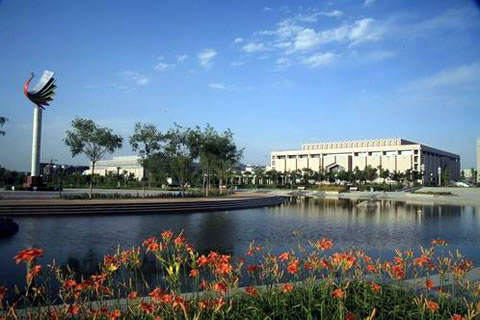
Haibao Ta – Haibao Ta (Haibao Pagoda) is a brick tower pavilion style construction of 9 storey and 11 levels. It was composed by the base, tower body and tower checks. Haibao Ta is also known as “Hertz Pagoda” and “Black Pagoda” in history. As the country’s outstanding historical building inheritance, it is reputed as “the ancient tower soaring to the cloud” and is listed as one of the “the north eight sceneries”.
Nanguan Mosque – The Nanguan Mosque is one of the largest mosques in the Ningxia Hui Autonomous Region in North China. It is located in Yinchuan City and has a high status among the Hui people. The Nanguan Mosque has a history of hundreds of years. It was destroyed by wars several times. Since 1949, with the help of the government, it has undergone several repairs. In 1981, the Muslims in Ningxia area raised funds for the reconstruction.
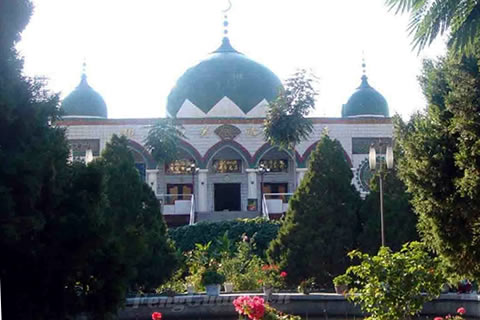
Western Film Studio - Set up by the famous Chinese writer - Zhang Xianliang, the film city is well known for the films depicting the landscape and culture of western China, such as the Red Sorghum. It is situated in the Zhenbei Castle 30 kms west of Yinchuan.
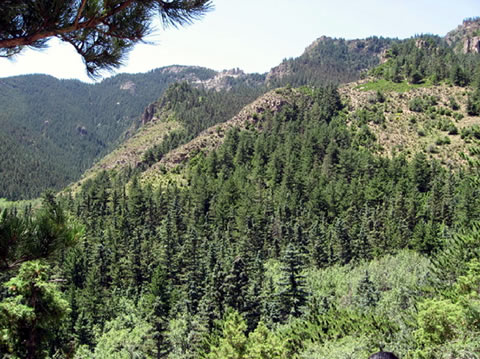
Helan Shan – The Halan Shan is clearly visible from the city of Yinchuan. It lies in the middle part between the Yinchuan Plain and the Inner Mongolia Prairie. There are forests of age-old and rare spruces, pines and aspens. Pine spindrift and snow in the sun are spectacular views there.
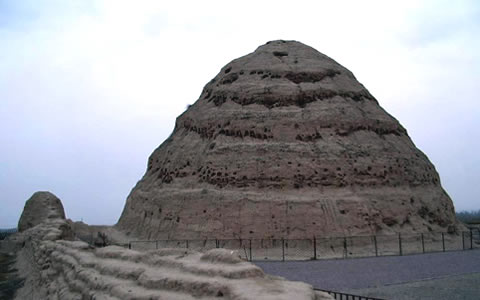
Western Xia Tombs - The mausoleum is one of the largest and best preserved imperial graveyards in China. The Western Xia Tombs is located at the eastern foot of Helan Mountain, close to Yinchuan city in Ningxia Autonomous Region, and measuring 10 kilometers north to south, 4 kilometers east to west, the Mausoleum contains the tombs of emperors of the Western Xia.
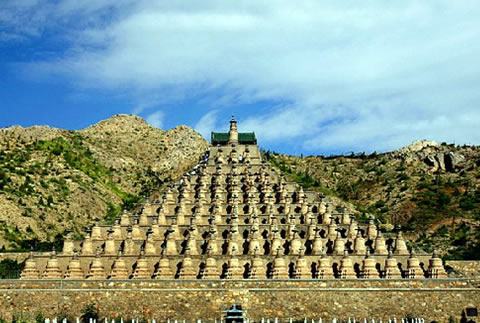
108 Dagobas – A group of one hundred eight dagobas in regular formation, they are different from pagoda forests beside temples. They are arranged in triangle of twelve rows. The dagoba at the tip of the triangle on top of the slope is bigger than the others. They are all Lamaist dagobas with an octagonal Sumeru pedestal supporting the inverte-bowl-style main body crowned with a bead. The brick dagobas are painted white.
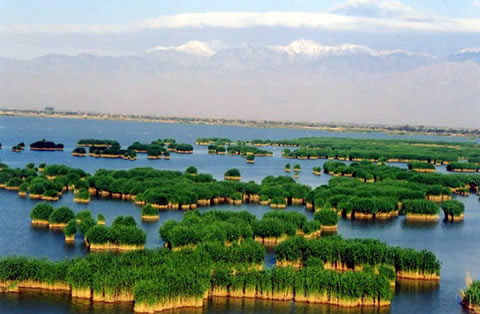
Ningxia Sand Lake Scenic Resort – Located at Pingluo County, 56km from Yinchuan City, it is a famous scenic area combining the scenes of watery region and desert. With well-combined six scenes, namely “sand, water, reed, bird, mountain and lotus flower”, it forms beautiful landscape with its own characteristics.
Travel Tips:
1. For Ningxia’s higher physiognomy, it has strong air pressure, so the tourist suffering from high blood pressure, heart disease, tracheitis, and asthma had better carry some medicine.
2. The climate in Ningxia is dry. It is essential to drink more water and taking more vegetable and fruit.
3. Remember to take umbrella, tope, sunglass, or sunscreen to keep out the strong sunlight in summer. In autumn or winter, you need to take heavy cloth for its great temperature difference out-door and in-door.
Here is only for Questions and Answers. ( For anyone who wants to have an enquiry or tour booking, please fill in our Online Enquiry. )
Yinchuan Travel Guide
Location: Yinchuan lies in the middle of the Ningxia Plain, close to Yellow River and sheltered from Helan Mountain.
Population: 1,650,000
Area: 4,467 sq km
Nationalities: Hui, Han,
History: Yinchuan originally was a county under the name of Fuping in the 1st century BC; its name was changed to Huaiyuan in the 6th century AD. After the fall of the Tang dynasty in 907, it was occupied by the Tangut Peoples' Xi-Xia dynasty, of which it was the capital. After the destruction of the Xi-Xia dynasty by the Mongols in 1227, it came under the rule of the Mongol dynasty. Under the Ming (1368–1644) and Qing (1644–1911) dynasties, it was the fu (prefecture) of Ningxia. In 1928, when the province of Ningxia was formed from parts of Gansu and Inner Mongolia, it became the capital city.
Climate: Yinchuan has a temperate continental climate with an annual average temperature of 8.5C, and has 158 frost-free days. Annual rainfall averages 200 millimeters.
Transportation: It is served by a river port at Hengcheng, about 15 km to the east. Until the 1950s the river, which is navigable downstream as far as Baotou in the Inner Mongolian autonomous region and upstream to Zhongwei and Zhongning, was the chief communication link.
Ningxia has a civil aviation airport which is in the southeast of Yinchuan City and has direct flights to scores of cities, such as Beijing, Xian, Lanzhou and Baotou
Highways also link the city to Baotou along the river, to Lanzhou in Gansu province to the southwest, to Wuwei in Gansu to the west, and to Xi'an in Shaanxi province to the southeast.
Since 1958 the city has been on the railway from Lanzhou to Baotou and is thus linked to other parts of China by rail.
Local Specialties: Ningxia medlar, Helan stone
Local Food: Saute Cyprinoid with Sweet and Sour Sauce, Dove Fish, Plain Steamed Lamb Meat, Sweetbread of Lamb, Mutton Eaten by Hands, Baked Cake with Muttons Soup, Youxiang, Islamic Brioche and Masan White Water Chicken
Major Attractions:
Ningxia Hui Autonomous Region Museum – Ningxia Hui Autonomous Region Museum is in the gourds of the Chengtian Temple and uses the main building of the temple as the central hall. It was built in traditional manner in 1988 on the foundation of a Qing dynasty building; the rest of the buildings are auxiliary halls also built around 1988. The institution is a comprehensive-style museum that brings together Ningxia historical artifacts, items of people's customs, and art collections that have been passed down through the ages.

Haibao Ta – Haibao Ta (Haibao Pagoda) is a brick tower pavilion style construction of 9 storey and 11 levels. It was composed by the base, tower body and tower checks. Haibao Ta is also known as “Hertz Pagoda” and “Black Pagoda” in history. As the country’s outstanding historical building inheritance, it is reputed as “the ancient tower soaring to the cloud” and is listed as one of the “the north eight sceneries”.
Nanguan Mosque – The Nanguan Mosque is one of the largest mosques in the Ningxia Hui Autonomous Region in North China. It is located in Yinchuan City and has a high status among the Hui people. The Nanguan Mosque has a history of hundreds of years. It was destroyed by wars several times. Since 1949, with the help of the government, it has undergone several repairs. In 1981, the Muslims in Ningxia area raised funds for the reconstruction.

Western Film Studio - Set up by the famous Chinese writer - Zhang Xianliang, the film city is well known for the films depicting the landscape and culture of western China, such as the Red Sorghum. It is situated in the Zhenbei Castle 30 kms west of Yinchuan.
Helan Shan – The Halan Shan is clearly visible from the city of Yinchuan. It lies in the middle part between the Yinchuan Plain and the Inner Mongolia Prairie. There are forests of age-old and rare spruces, pines and aspens. Pine spindrift and snow in the sun are spectacular views there.

Western Xia Tombs - The mausoleum is one of the largest and best preserved imperial graveyards in China. The Western Xia Tombs is located at the eastern foot of Helan Mountain, close to Yinchuan city in Ningxia Autonomous Region, and measuring 10 kilometers north to south, 4 kilometers east to west, the Mausoleum contains the tombs of emperors of the Western Xia.

108 Dagobas – A group of one hundred eight dagobas in regular formation, they are different from pagoda forests beside temples. They are arranged in triangle of twelve rows. The dagoba at the tip of the triangle on top of the slope is bigger than the others. They are all Lamaist dagobas with an octagonal Sumeru pedestal supporting the inverte-bowl-style main body crowned with a bead. The brick dagobas are painted white.

Ningxia Sand Lake Scenic Resort – Located at Pingluo County, 56km from Yinchuan City, it is a famous scenic area combining the scenes of watery region and desert. With well-combined six scenes, namely “sand, water, reed, bird, mountain and lotus flower”, it forms beautiful landscape with its own characteristics.

Travel Tips:
1. For Ningxia’s higher physiognomy, it has strong air pressure, so the tourist suffering from high blood pressure, heart disease, tracheitis, and asthma had better carry some medicine.
2. The climate in Ningxia is dry. It is essential to drink more water and taking more vegetable and fruit.
3. Remember to take umbrella, tope, sunglass, or sunscreen to keep out the strong sunlight in summer. In autumn or winter, you need to take heavy cloth for its great temperature difference out-door and in-door.
| Questions & Answers: |