




Guangdong Travel Guide
Guangzhou Travel Guide
Shenzhen Travel Guide
Kaiping Travel Guide
Shaoguan Travel Guide
Yingde Travel Guide
Qingyuan Travel Guide
Zhuhai Travel Guide
Dongguan Travel Guide
Humen Travel Guide
Shantou Travel Guide
Chaozhou Travel Guide
Meizhou Travel Guide
Zhaoqing Travel Guide
Zhongshan Travel guide
Foshan Travel Guide
Huizhou Travel Guide

Guangzhou Travel Guide
Shenzhen Travel Guide
Kaiping Travel Guide
Shaoguan Travel Guide
Yingde Travel Guide
Qingyuan Travel Guide
Zhuhai Travel Guide
Dongguan Travel Guide
Humen Travel Guide
Shantou Travel Guide
Chaozhou Travel Guide
Meizhou Travel Guide
Zhaoqing Travel Guide
Zhongshan Travel guide
Foshan Travel Guide
Huizhou Travel Guide

Online Booking Steps
1. Select a tour & submit
Browser a tour that most suits you and send us the tour with your custom request.
2. Quote for your tour
Receive our tour proposal with rates in one working day.
3. Adjust your tour
Modify your itinerary with new quotes for free until it fits you.
4. Confirm & deposit
Finalise your tour after receiving your deposit.
5. Final payment
Pay the balance before or upon arrival.
Browser a tour that most suits you and send us the tour with your custom request.
2. Quote for your tour
Receive our tour proposal with rates in one working day.
3. Adjust your tour
Modify your itinerary with new quotes for free until it fits you.
4. Confirm & deposit
Finalise your tour after receiving your deposit.
5. Final payment
Pay the balance before or upon arrival.
Beijing Tour
Xian Tour
Shanghai Tour
Guilin Tour
Datong Tour
Chengde Tour
Chengdu Tour
Chongqing Tour
Hong Kong Tour
Luoyang Tour
Lijiang Tour
Pingyao Tour
Inner Mongolia Tour
Harbin Tour
Hangzhou Tour
Huangshan Tour
Tianjin Tour
Qufu Tour
Mt.Taishan Tour
Jinan Tour
Qingdao Tour
Qinhuangdao Tour
Jiuzhaigou Tour
Zhangjiajie Tour
Xian Tour
Shanghai Tour
Guilin Tour
Datong Tour
Chengde Tour
Chengdu Tour
Chongqing Tour
Hong Kong Tour
Luoyang Tour
Lijiang Tour
Pingyao Tour
Inner Mongolia Tour
Harbin Tour
Hangzhou Tour
Huangshan Tour
Tianjin Tour
Qufu Tour
Mt.Taishan Tour
Jinan Tour
Qingdao Tour
Qinhuangdao Tour
Jiuzhaigou Tour
Zhangjiajie Tour
China Province Tour
Tibet Tour
Shandong Tour
Guangdong Tour
Fujian Tour
Qinghai Tour
Ninxia Tour
Guizhou Tour
Inner Mongolia Tour
Shandong Tour
Guangdong Tour
Fujian Tour
Qinghai Tour
Ninxia Tour
Guizhou Tour
Inner Mongolia Tour
Beijing Trip
Xian Trip
Shanghai Trip
Guilin Trip
Chengdu Trip
Chengde Trip
Inner Mongolia Trip
Datong Trip
Harbin Trip
Pingyao Trip
Luoyang Trip
Qufu Trip
Shangdong Trip
Hangzhou Trip
Lhasa Trip
Yangtze River Trip
Huangshan Trip
Xian Trip
Shanghai Trip
Guilin Trip
Chengdu Trip
Chengde Trip
Inner Mongolia Trip
Datong Trip
Harbin Trip
Pingyao Trip
Luoyang Trip
Qufu Trip
Shangdong Trip
Hangzhou Trip
Lhasa Trip
Yangtze River Trip
Huangshan Trip
- - - - - - - - - - - - - - - - - - - -
Beijing Travel Service
China Travel Agency
Beijing Travel Tips
Beijing Information
Beijing Travel Service
China Travel Agency
Beijing Travel Tips
Beijing Information
Home → China Travel Guide → Guangdong Travel Guide → Shantou Travel Guide
Shantou Travel Guide
Location:
Shantou, a coastal city and Special Economic Zone in Guangdong Province, is situated in the southeastern corner of East Asia, on the west coast of the Pacific Ocean.
History:
Shantou was a fishing village part of Tuojiang City, Jieyang District during the Song Dynasty. It came to be Xialing during the Yuan Dynasty.
In 1563, Shantou was a part of Chenghai District in Chao Prefecture (Chaozhou). As early as 1574, Shantou had been called Shashan Ping.
In the seventeenth century, a cannon platform called Shashan Toupaotai was made here, and the placename later was shortened to "Shantou".
Shantou became a city in 1919, and was separated from Chenghai in 1921. 1922 saw the devastating Swatow Typhoon, which killed 50,000 out of the 65,000 people then inhabiting the city.
In the 1930s, Shantou Port was a transport hub and merchandise distribution centre for Southeast China; its cargo throughput ranked third in the nation.
Transportation:
The airport which serves Shantou is Shantou Waisha Airport, which has domestic connections with most of the major Chinese cities. It also serves international flights to Hong Kong and Bangkok as well as to Singapore on Jetstar Asia.
Shantou Railway Station is one of the most important transport centers of Guangdong Province. You can get there from many cities, including Guangzhou, Jiujiang, Maoming, Shenzhen, Wuchang and Nanchang.
There are six long distance bus stations, of which the most important is the Shantou Central Long Distance Bus Station。
Shantou Port is the most important one where you can go to Hong Kong, Xiamen, Quanzhou, Shanghai, Guangzhou, Tianjin, etc.
Hotels:
Shantou has various hotels from luxury ones to budget ones to meet for different visitors. You can choose a proper hotel.
Dining:
Chao cuisine is very popular in Shantou. Many famous snacks are in Shantou, including Steamed Abalone in Condensed Soup, Beef Pellet, Baked Oyster, Stewed Goose, etc.
Nightlife:
Shantou locals enjoy a healthy, colorful and fashionable nightlife. When night comes, People throng to the tea houses, bars, gyms, KTV centers and other amusement places to relax themselves after a whole day of hard work.
Weather:
Shantou weather is blessed with mild and humid air as well as abundant sunshine because the city belongs to the subtropical marine and monsoon climate zone.
The average temperature per year is about 22℃. The hottest months are July and August with maximum temperatures of 36℃ to 40℃. Winter in Shantou is relatively warm with temperatures of above 0℃.
The climate is thus pleasant almost all year round, except for in summer. You can arrange your trip to avoid the hottest months.
Attractions:
Nan Ao Island
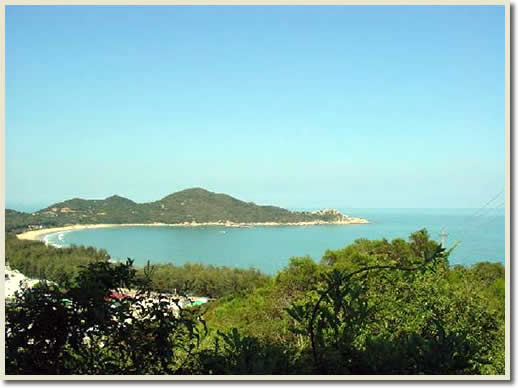
Nan Ao is situated on the border of Guangdong and Fujiang Provinces, covers a total area of 109 square kilometers, and is a huge eco-tourist zone of thousands different plants and numerous migration birds.
The area is composed of the main island and then another 22 smaller surrounding islands, all covering an area of approximately 130 square kilometers (32,000 acres). Nan Ao Island has much to offer tourists: blue skies, white waves, sandy beaches, beautiful mountain scenery, historic temples and parks rich in wildlife.
The climate is warm in the winter yet cool in the summer in Nan Ao Island.
Queshi Scenic Area
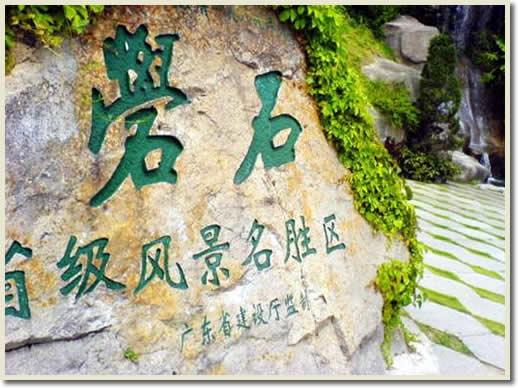
As the first of Shantou's Eight Sights, Queshi Scenery Area is one of the tourist resorts first listed as provincial tourist resorts in Guangdong and first ranked as national AAAA attractions in Chaoshan region.
Queshi Scenery Area is located between the south and north sections of urban Shantou, leaning against the south section and separated from the north section by the sea. There are 43 mountains, big or small, wandering continuously in this area.
Climbing up and standing on the top of the hills, you can have a bird's-eye view of the entire gulf and will be captivated by the picturesque marine beauty.
In Queshi Scenery Area, all the caves, rocks and steps are quiet and peaceful, and in the Rainbow Cave of Mount Tashan and the Pine Valley of Mount Yanfeng, you can best savor the quietness.
The Former Residence of Chen Cihong
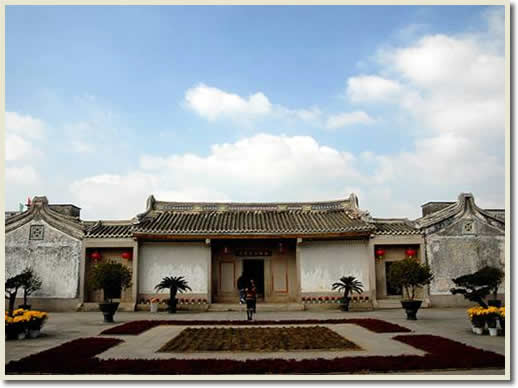
Chen Cihong was a wealthy overseas Chinese who once managed rice selling in Hong Kong and Thailand during the 19th century. Chen Cihong Former Residence was first built in 1910.
The residence consists of houses like: Lang Zhong Di, Shou Kang Li, Shan Ju Shi and Sn Lu. It occupies an area of 25,400 m2, within which there are 506 halls and rooms altogether. The most typical house Shan Ju Shi was first built in 1930 and was under construction for 9 years till the time the Japanese captured Shantou. With an area of 6,861m2, the house includes 202 halls and rooms.
The building of Chen Cihong Former Residence is a good combination of Chinese and western element. Your tour to Chen Cihong Former Residence will uncover the mystery of Chaoshan people and their culture.
Here is only for Questions and Answers. ( For anyone who wants to have an enquiry or tour booking, please fill in our Online Enquiry. )
Shantou Travel Guide
Location:
Shantou, a coastal city and Special Economic Zone in Guangdong Province, is situated in the southeastern corner of East Asia, on the west coast of the Pacific Ocean.
History:
Shantou was a fishing village part of Tuojiang City, Jieyang District during the Song Dynasty. It came to be Xialing during the Yuan Dynasty.
In 1563, Shantou was a part of Chenghai District in Chao Prefecture (Chaozhou). As early as 1574, Shantou had been called Shashan Ping.
In the seventeenth century, a cannon platform called Shashan Toupaotai was made here, and the placename later was shortened to "Shantou".
Shantou became a city in 1919, and was separated from Chenghai in 1921. 1922 saw the devastating Swatow Typhoon, which killed 50,000 out of the 65,000 people then inhabiting the city.
In the 1930s, Shantou Port was a transport hub and merchandise distribution centre for Southeast China; its cargo throughput ranked third in the nation.
Transportation:
The airport which serves Shantou is Shantou Waisha Airport, which has domestic connections with most of the major Chinese cities. It also serves international flights to Hong Kong and Bangkok as well as to Singapore on Jetstar Asia.
Shantou Railway Station is one of the most important transport centers of Guangdong Province. You can get there from many cities, including Guangzhou, Jiujiang, Maoming, Shenzhen, Wuchang and Nanchang.
There are six long distance bus stations, of which the most important is the Shantou Central Long Distance Bus Station。
Shantou Port is the most important one where you can go to Hong Kong, Xiamen, Quanzhou, Shanghai, Guangzhou, Tianjin, etc.
Hotels:
Shantou has various hotels from luxury ones to budget ones to meet for different visitors. You can choose a proper hotel.
Dining:
Chao cuisine is very popular in Shantou. Many famous snacks are in Shantou, including Steamed Abalone in Condensed Soup, Beef Pellet, Baked Oyster, Stewed Goose, etc.
Nightlife:
Shantou locals enjoy a healthy, colorful and fashionable nightlife. When night comes, People throng to the tea houses, bars, gyms, KTV centers and other amusement places to relax themselves after a whole day of hard work.
Weather:
Shantou weather is blessed with mild and humid air as well as abundant sunshine because the city belongs to the subtropical marine and monsoon climate zone.
The average temperature per year is about 22℃. The hottest months are July and August with maximum temperatures of 36℃ to 40℃. Winter in Shantou is relatively warm with temperatures of above 0℃.
The climate is thus pleasant almost all year round, except for in summer. You can arrange your trip to avoid the hottest months.
Attractions:
Nan Ao Island
Nan Ao is situated on the border of Guangdong and Fujiang Provinces, covers a total area of 109 square kilometers, and is a huge eco-tourist zone of thousands different plants and numerous migration birds.
The area is composed of the main island and then another 22 smaller surrounding islands, all covering an area of approximately 130 square kilometers (32,000 acres). Nan Ao Island has much to offer tourists: blue skies, white waves, sandy beaches, beautiful mountain scenery, historic temples and parks rich in wildlife.
The climate is warm in the winter yet cool in the summer in Nan Ao Island.

Queshi Scenic Area
As the first of Shantou's Eight Sights, Queshi Scenery Area is one of the tourist resorts first listed as provincial tourist resorts in Guangdong and first ranked as national AAAA attractions in Chaoshan region.
Queshi Scenery Area is located between the south and north sections of urban Shantou, leaning against the south section and separated from the north section by the sea. There are 43 mountains, big or small, wandering continuously in this area.
Climbing up and standing on the top of the hills, you can have a bird's-eye view of the entire gulf and will be captivated by the picturesque marine beauty.
In Queshi Scenery Area, all the caves, rocks and steps are quiet and peaceful, and in the Rainbow Cave of Mount Tashan and the Pine Valley of Mount Yanfeng, you can best savor the quietness.

The Former Residence of Chen Cihong
Chen Cihong was a wealthy overseas Chinese who once managed rice selling in Hong Kong and Thailand during the 19th century. Chen Cihong Former Residence was first built in 1910.
The residence consists of houses like: Lang Zhong Di, Shou Kang Li, Shan Ju Shi and Sn Lu. It occupies an area of 25,400 m2, within which there are 506 halls and rooms altogether. The most typical house Shan Ju Shi was first built in 1930 and was under construction for 9 years till the time the Japanese captured Shantou. With an area of 6,861m2, the house includes 202 halls and rooms.
The building of Chen Cihong Former Residence is a good combination of Chinese and western element. Your tour to Chen Cihong Former Residence will uncover the mystery of Chaoshan people and their culture.

| Questions & Answers: |