



Home » Beijing Tours » Beijing Travel Guide » Beijing Attractions » Beijing Museums » Capital Museum
Capital Museum
The former address of Capital Museum (首都博物馆) was inside the Confucius Temple. In order to house more collections, the capital Museum was rebuilt in extension line of West Changan Street in 2001. the new Capital Museum was opened to public in 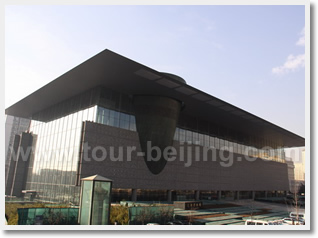 2006.
2006.
With its magnificent architecture, abundant exhibitions, advanced technology and complete functions, the Capital Museum, large and modern, makes its contribution to the titles such as “famous historical and cultural city”, “cultural center” and “international metropolis” of Beijing and ranks among the first class museums both at home and abroad.
Ever since the establishment of Beijing Capital Museum, it held hundreds exhibitions in different types concerning the history, cultural relics, revolutionary history and folk custom, etc. Moreover, it also held different types of exhibition in Japan, America, Singapore, Malaysia and other countries so that it carried forward Chinese culture and expanded international communication and received deep concern and warmly welcome by the foreign and domestic peoples.
Visiting Beijing Capital Museum, you may enjoy the elaborate works in the world, experiences artistic leisure, recognize the Chinese broad and deep culture and long history.
Add.: No.16, Fuxingmenwai Street, Xicheng District, Beijing
Ticket Price: free
Tel.: 63393339/63370458
How to get there: Take Bus No. 1, 52, 728, get off at Gonghui Dalou Stop
Take Bus No. 114,308, 337, get off at Muxidi East Stop
Take Subway Line 1, get off at Muxidi Station.
Website: http://en.capitalmuseum.org.cn/
Questions & Answers:
 Here is only for Questions and Answers. ( For anyone who wants to have an enquiry or customized tour, please email us to
  . )
. )