


Genghis Khan’s Mausoleum, Inner-Mongolia
Genghis Khan is a Mongolian hero who reunified the chaotic Inner-Mongolia prairie, made great contribution to the founding of the powerful Yuan Dynasty and enhanced greatly the interaction of the people of China.
Until today, Genghis Khan is still worshipped by people for his great feat. After Genghis Khan died, his coffin was carried to central Mongolia. According to his will, he was buried without any markings, so the real mausoleum is still a puzzle. However, whether it is true or not, the mausoleum in Inner-Mongolia remains a sacred place with great significance for Mongolian people.
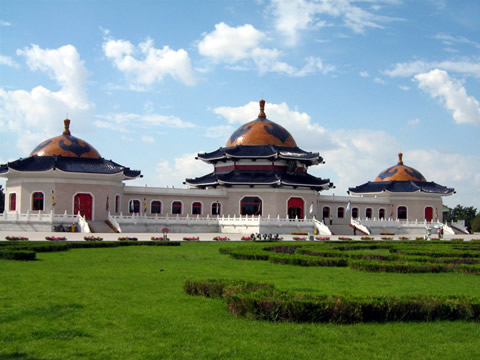
 The Genghis Khan’s Mausoleum is about 15kms southeast of Atengxilian town of Ikinholo Banner in Inner-Mongolia. The Mausoleum was completed in 1954, but destroyed by Red Guards in the Cultural Revolution (1966-1976) and after many years’ restoration, the site takes on the present appearance.
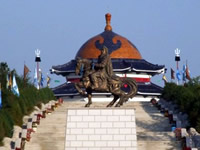
 The main structures of the mausoleum are three grand halls in the shape of Mongolian yurt, which are linked by a corridor. The middle one is the main hall, sacrificing the statue of Genghis Khan with a height of more than 4 meters. A map of the Yuan Dynasty hung on the wall behind the statue. The east hall place the coffins of one of Genghis Khan’s wives and his fourth son and the west hall exhibits Genghis Khan’s arms. The corridors frescos depict the great deeds of Genghis Khan in his life and his grandson, Kublai Khan, who was also a great cacique.
Ceremonies dedicated to Genghis Khan and the cult that has grown up around him take place four times a year. The ceremonies are attended by various Mongol monks, some from the Republic of Mongolia, and various peoples of the Daur Minority. Most of the ceremony takes place in the main hall. Outside Mongolians take part in traditional horse racing, archery, and wrestling, as a means of showing respect to their powerful ancestor.
Ticket Price: RMB80
Opening Time: 08:00-18:00
Questions & Answers:
 Here is only for Questions and Answers. ( For anyone who wants to have an enquiry or customized tour, please email us to
  . )
. )