



Beijing Xian Day Tour
China Private Tours
China Group Tours
Yangtze River Cruises
Beijing Lhasa Tibet Tour
China Silk Road Tour
China Train Tours
Xian Tour, Xian Tours
Shanghai Tours
Guilin Tour, Guilin Tours

China Private Tours
China Group Tours
Yangtze River Cruises
Beijing Lhasa Tibet Tour
China Silk Road Tour
China Train Tours
Xian Tour, Xian Tours
Shanghai Tours
Guilin Tour, Guilin Tours

Enquiry, Tour Quotation, Booking, Way of Payment, Exchange Rate, Individual Travel, Group Travel, Hotels, Transportation,
Restaurants, Cancellation,
Insurance, Liability...
Dear Ms. Mary Ma,
I am back from China now and would like to take a moment out of my busy schedule to let you know that your company and your guide Rogin Lee are fantastic. Rogine made my tour of China, his depth of knowledge is incredible and his presentations and introductions were indepth and interesting. Rogin presented China's past and present in a new light. This China tour with Rogin surpassed what I was expecting from any China tour company. I would like to extend my thanks to yourself, Rogin Lee and Mr. Wong, the driver.
Sincerely,
Lee A. Gravesen
lee@directdoor.com
I am back from China now and would like to take a moment out of my busy schedule to let you know that your company and your guide Rogin Lee are fantastic. Rogine made my tour of China, his depth of knowledge is incredible and his presentations and introductions were indepth and interesting. Rogin presented China's past and present in a new light. This China tour with Rogin surpassed what I was expecting from any China tour company. I would like to extend my thanks to yourself, Rogin Lee and Mr. Wong, the driver.
Sincerely,
Lee A. Gravesen
lee@directdoor.com
You will be updated with the
little and common things often
unseen by the real foreign
travelers in their trips to
Beijing China. Also send
your Beijing China travel
blogs to us and have your
blog posted for others to share.
Beijing China travelogues
from the clients having
used our Beijing China
travel service from all
over the world, with happily
slanted insights! Copious
photos and travel Reviews
and travel tips plus inside
tour information.
Are you expecting a Beijing
China trip advisor to design
a tailor-made Beijing China
holiday tour package?
We offer free Beijing China travel
advice as well as arranging
your guided Beijing China tour.
Are you looking for a resourceful
and helpful Beijing tour guide?
With most of them university
graduates, our Beijing tour guides
have received very good professional
training in hospitality industry.
We have arranged yummy
Chinese lunches and dinners
at nice restaurants during
your trip in Beijing China.
Very often we skip the dinners,
but we do include lunches in your
Beijing China tour packages.
Usually you can have a relaxing
dinner on your own at your hotel a
fter a day's tiring sightseeing.
What are you expecting for
the tourist vehicles in Beijing
China for your sightseeing or
your business? We are committed
to offer you the quality service
you need when you come to
Beijing China either as a
visitor or businessman.
We provide comfortable
vehicles like sedan, limousine,
van & coach services per your request.
Online Booking Steps
1. Select a tour & submit
Browser a tour that most suits you and send us the tour with your custom request.
2. Quote for your tour
Receive our tour proposal with rates in one working day.
3. Adjust your tour
Modify your itinerary with new quotes for free until it fits you.
4. Confirm & deposit
Finalise your tour after receiving your deposit.
5. Final payment
Pay the balance before or upon arrival.
Browser a tour that most suits you and send us the tour with your custom request.
2. Quote for your tour
Receive our tour proposal with rates in one working day.
3. Adjust your tour
Modify your itinerary with new quotes for free until it fits you.
4. Confirm & deposit
Finalise your tour after receiving your deposit.
5. Final payment
Pay the balance before or upon arrival.
Home → China Travel Guide → China Facts → Chinese Taiji Quan
Chinese Taiji Quan
Health Benefits – Chinese Folklore
Taiji is often promoted as a low-impact form of geriatric exercise. Outdoor practice is the most common in China, as opposed to he Western concept of exercise in a gym.
The studies show some reduced pain, stress and anxiety in healthy subjects. Other studies also indicated improved cardiovascular and respiratory function in healthy subjects as well as those who had undergone coronary artery bypass surgery.
Paints that suffer from heart failure, high blood pressure, heart attacks, arthritis, multiple sclerosis, Parkinson’s and Alzheimer’s may also benefit from taiji.
Now that the majority of health studies have displayed a tangible benefit to the practice of taiji, some health professionals have called for more in-depth studies to determine mitigating factors, recommended duration of practice to show the best results, and whether taiji is equally effective as other forms of exercise.
Modern Taiji – Chinese Folklore
Taiji has become very popular in the last twenty years or so: many hospitals , clinics, community and senior centers host classes in communities around the world. As a result of this popularity, there has been some divergence between the flowers.
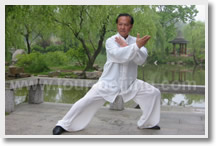
Some say they practice taiji primarily for self-defense, those who practices it for its aesthetic appeal, and those who are more interested in its benefits to physical and mental health. The wushu aspect of Taiji Chi is primarily for show; the forms taught for this purpose are designed to earn points in competition and are mostly unconcerned with either health maintenance or martial ability.
More traditional masters still see the two aspects of health and martial arts as equally necessary. The taiji “family” schools therefore still present their teachings in a martial art context whatever the intention of their students in studying the art. Along with yoga, it is one of the fastest growing health maintenance activities, including from the increasing number of students enrolling in classes in the first place.
Overview of Taiji Quan – Chinese Folklore
Paradoxically, while the image of taili in popular culture is typified by exceedingly slow movement, many taiji styles have secondary forms of a faster pace. The other characteristic of traditional taiji training are partner exercises known “hands pushing”.
Taiji was a form of traditional martial arts of the Neijia “soft or internal” branch. Since the first widespread promotion of taiji’s health benefits by Yang Chengfu in the early Twentieth century, it has developed a worldwide following among people with little or no interest in martial training for its benefit to health.
Some call it a form of moving meditation, as focusing the mind solely on the movements of the form purportedly helps to bring about a state of mental calmness and clarity. Besides general health benefits and relieving attributed to taiji training, aspects of traditional Chinese medicine are taught to advanced taiji students in some traditional schools. Taiji schools do no generally requie a uniform, but both traditional and modern teachers often advocate loose, comfortable clothing and flatsoled shoes.
Chinese Taiji Quan
Health Benefits – Chinese Folklore
Taiji is often promoted as a low-impact form of geriatric exercise. Outdoor practice is the most common in China, as opposed to he Western concept of exercise in a gym.
The studies show some reduced pain, stress and anxiety in healthy subjects. Other studies also indicated improved cardiovascular and respiratory function in healthy subjects as well as those who had undergone coronary artery bypass surgery.
Paints that suffer from heart failure, high blood pressure, heart attacks, arthritis, multiple sclerosis, Parkinson’s and Alzheimer’s may also benefit from taiji.
Now that the majority of health studies have displayed a tangible benefit to the practice of taiji, some health professionals have called for more in-depth studies to determine mitigating factors, recommended duration of practice to show the best results, and whether taiji is equally effective as other forms of exercise.
Modern Taiji – Chinese Folklore
Taiji has become very popular in the last twenty years or so: many hospitals , clinics, community and senior centers host classes in communities around the world. As a result of this popularity, there has been some divergence between the flowers.

Some say they practice taiji primarily for self-defense, those who practices it for its aesthetic appeal, and those who are more interested in its benefits to physical and mental health. The wushu aspect of Taiji Chi is primarily for show; the forms taught for this purpose are designed to earn points in competition and are mostly unconcerned with either health maintenance or martial ability.
More traditional masters still see the two aspects of health and martial arts as equally necessary. The taiji “family” schools therefore still present their teachings in a martial art context whatever the intention of their students in studying the art. Along with yoga, it is one of the fastest growing health maintenance activities, including from the increasing number of students enrolling in classes in the first place.
Overview of Taiji Quan – Chinese Folklore
Paradoxically, while the image of taili in popular culture is typified by exceedingly slow movement, many taiji styles have secondary forms of a faster pace. The other characteristic of traditional taiji training are partner exercises known “hands pushing”.
Taiji was a form of traditional martial arts of the Neijia “soft or internal” branch. Since the first widespread promotion of taiji’s health benefits by Yang Chengfu in the early Twentieth century, it has developed a worldwide following among people with little or no interest in martial training for its benefit to health.
Some call it a form of moving meditation, as focusing the mind solely on the movements of the form purportedly helps to bring about a state of mental calmness and clarity. Besides general health benefits and relieving attributed to taiji training, aspects of traditional Chinese medicine are taught to advanced taiji students in some traditional schools. Taiji schools do no generally requie a uniform, but both traditional and modern teachers often advocate loose, comfortable clothing and flatsoled shoes.