



Beijing Xian Day Tour
China Private Tours
China Group Tours
Yangtze River Cruises
Beijing Lhasa Tibet Tour
China Silk Road Tour
China Train Tours
Xian Tour, Xian Tours
Shanghai Tours
Guilin Tour, Guilin Tours

China Private Tours
China Group Tours
Yangtze River Cruises
Beijing Lhasa Tibet Tour
China Silk Road Tour
China Train Tours
Xian Tour, Xian Tours
Shanghai Tours
Guilin Tour, Guilin Tours

Enquiry, Tour Quotation, Booking, Way of Payment, Exchange Rate, Individual Travel, Group Travel, Hotels, Transportation,
Restaurants, Cancellation,
Insurance, Liability...
Dear Ms. Mary Ma,
I am back from China now and would like to take a moment out of my busy schedule to let you know that your company and your guide Rogin Lee are fantastic. Rogine made my tour of China, his depth of knowledge is incredible and his presentations and introductions were indepth and interesting. Rogin presented China's past and present in a new light. This China tour with Rogin surpassed what I was expecting from any China tour company. I would like to extend my thanks to yourself, Rogin Lee and Mr. Wong, the driver.
Sincerely,
Lee A. Gravesen
lee@directdoor.com
I am back from China now and would like to take a moment out of my busy schedule to let you know that your company and your guide Rogin Lee are fantastic. Rogine made my tour of China, his depth of knowledge is incredible and his presentations and introductions were indepth and interesting. Rogin presented China's past and present in a new light. This China tour with Rogin surpassed what I was expecting from any China tour company. I would like to extend my thanks to yourself, Rogin Lee and Mr. Wong, the driver.
Sincerely,
Lee A. Gravesen
lee@directdoor.com
You will be updated with the
little and common things often
unseen by the real foreign
travelers in their trips to
Beijing China. Also send
your Beijing China travel
blogs to us and have your
blog posted for others to share.
Beijing China travelogues
from the clients having
used our Beijing China
travel service from all
over the world, with happily
slanted insights! Copious
photos and travel Reviews
and travel tips plus inside
tour information.
Are you expecting a Beijing
China trip advisor to design
a tailor-made Beijing China
holiday tour package?
We offer free Beijing China travel
advice as well as arranging
your guided Beijing China tour.
Are you looking for a resourceful
and helpful Beijing tour guide?
With most of them university
graduates, our Beijing tour guides
have received very good professional
training in hospitality industry.
We have arranged yummy
Chinese lunches and dinners
at nice restaurants during
your trip in Beijing China.
Very often we skip the dinners,
but we do include lunches in your
Beijing China tour packages.
Usually you can have a relaxing
dinner on your own at your hotel a
fter a day's tiring sightseeing.
What are you expecting for
the tourist vehicles in Beijing
China for your sightseeing or
your business? We are committed
to offer you the quality service
you need when you come to
Beijing China either as a
visitor or businessman.
We provide comfortable
vehicles like sedan, limousine,
van & coach services per your request.
Online Booking Steps
1. Select a tour & submit
Browser a tour that most suits you and send us the tour with your custom request.
2. Quote for your tour
Receive our tour proposal with rates in one working day.
3. Adjust your tour
Modify your itinerary with new quotes for free until it fits you.
4. Confirm & deposit
Finalise your tour after receiving your deposit.
5. Final payment
Pay the balance before or upon arrival.
Browser a tour that most suits you and send us the tour with your custom request.
2. Quote for your tour
Receive our tour proposal with rates in one working day.
3. Adjust your tour
Modify your itinerary with new quotes for free until it fits you.
4. Confirm & deposit
Finalise your tour after receiving your deposit.
5. Final payment
Pay the balance before or upon arrival.
Home → China Travel Guide → China Facts → China 56 Ethnic Groups
China 56 Ethnic Groups
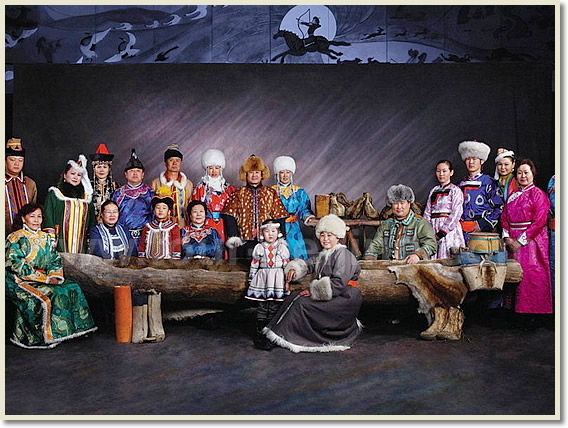
Ewenki – China 56 Ethnic Groups
“Ewenki” is the self-given name, meaning people living in big mountains and forests. They used to be called “Suolun”, “Tonggusi”, “Yakut” and so on after their dwellings during different periods. In 1957, they were officially named Ewenk in accord with their own will.
The Ewenkis are widely distributed across Ewenki Autonomous Banner, Chenbaerhu Banner, Stadt Zalantun, Arong Banner, Genhe City, Morin Dawa Daur Autonomous Banner, etc.
The Ewenki have no written script but a spoken language composed of three dialects belonging ot the Man-Tungusic branch of the Altaic language family. The schools in pastoral area use Mongolian script, while others in agricultural and mountain areas use the Han language.
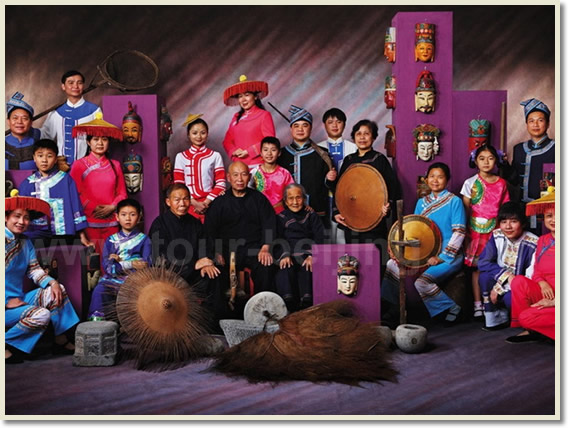
Maonan – China 56 Ethnic Groups
The Maonan are aborigines in the western aprt of Nanling Range. They call themselves “A-Nan”, meaning “locals”. The Maonan developed from the ancient tribe “Yue”. Studues show that the Maonan has some historical connections with the “Liao” that existed before the Tang Dynasty and the “Ling” that exist during the Song, Yuan and Ming period. In 1986, they agreed upon the official name of the Maonan.
The Maonan are distributed mainly in Huanjiang Manonan Autonomous County in Hechi, Guangxi Zhuang Autonomous Region.
The Maonan has their own language, which belongs to the Dong-Shui subbranch of the Zhuang-Dong branch of the Sino-Tibetan language family. Having no scrip of their own, almost all the Maonans know both the Han and the Zhuang languages.
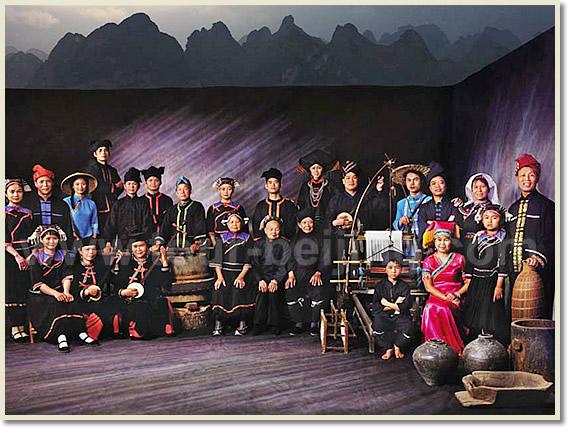
Zhuang – China 56 Ethnic Groups
The Zhuang was developed from one branch of the ancient Chinese “Yue” people, and has a close kinship relationship with the “Xi’ou”, “Luoue” people in the Zhou-Qin period, the “Liao”, “Li”, and “Wuhu” people in the Han and Tang Dynasties. In 1965, it was officially named the Zhuang ethnic minority.
The Zhuang has its own language which belongs to the Zhuang-Dong branch of the Sino-Tibetan language family. It has an ancient square Zhuang script, created on the basis of the Chinese characters, which is not popularized and mainly used in writing place names and folk songs, ect. In 1955, a zhuang script based on Latin alphabet was established. In 1982, the script was revised.
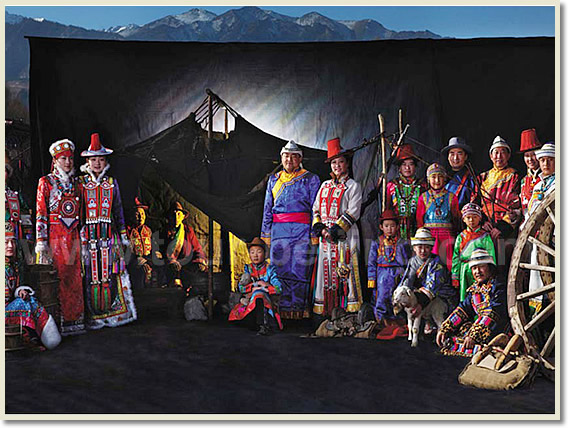
Yugur – China 56 Ethnic Groups
“Raohui” is what the Yugurs refer to themselves, whose origins can be traced back to the nomadic ancient Ouigurs in the Erhun River valley during the Tang Dynasty. In 1953, following consultation with the Yugur representatives, the official name of “Yugur” was fixed, which is similar to “Raohui” in pronunciation and means “rich and stable” in Chinese.
The Yugurs are mainly concentrated in the Su’nan Yugur Autonomous County of Zhangye city, Gansu Province. According to the fifth national census in 2000, the Yugur population was 13,719.
The Yugurs use two languages: a Turkic branch of the Altaic language family used by the Yugurs in the western part of the Sunan Yugur Autonomous County; a Mongolian branch of the same language family by those in the eastern part of the county. Having no written script, they use Chinese as a common medium of communication.
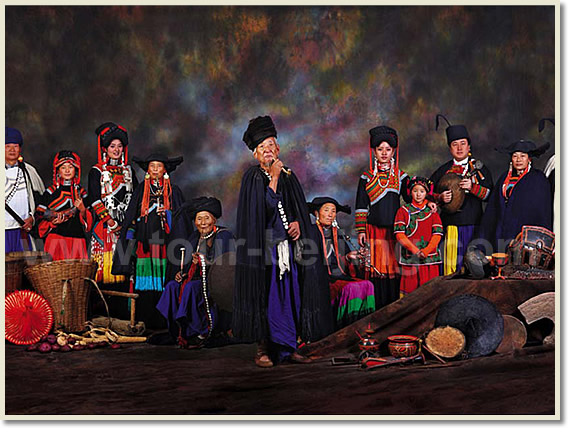
Yi – China 56 Ethnic Groups
The Yis have a long history and wide distribution. They are descended from the old tribe “Qiang”, who married the aborigines during their southward migration. In the long process of development, they over large areas in central Yunnan, Sichuan, Guizhou provinces and some parts of Guangxi, and concentrate at the borderline of the three provinces.
According to the fifth national census in 2000, the Yi had a population of 7,762,2836.
The Yis have their own language belonging to Yi subbranch of Tibetan-Burmese branch of the Sino-Tibetan family, which has six dialects in the east, west, south, north, center and southeast part.
They have their own script, which is a syllabic writing created in the 13th century. In 1975, Rules and Regulations on Yi Script was established in Sichuan. It set specifications for 819 standardized Yi scripts, which was put into application in Liangshan Yi Autonomous Prefecture in Sichuan Province.
China 56 Ethnic Groups
Ewenki – China 56 Ethnic Groups
“Ewenki” is the self-given name, meaning people living in big mountains and forests. They used to be called “Suolun”, “Tonggusi”, “Yakut” and so on after their dwellings during different periods. In 1957, they were officially named Ewenk in accord with their own will.
The Ewenkis are widely distributed across Ewenki Autonomous Banner, Chenbaerhu Banner, Stadt Zalantun, Arong Banner, Genhe City, Morin Dawa Daur Autonomous Banner, etc.
The Ewenki have no written script but a spoken language composed of three dialects belonging ot the Man-Tungusic branch of the Altaic language family. The schools in pastoral area use Mongolian script, while others in agricultural and mountain areas use the Han language.

Maonan – China 56 Ethnic Groups
The Maonan are aborigines in the western aprt of Nanling Range. They call themselves “A-Nan”, meaning “locals”. The Maonan developed from the ancient tribe “Yue”. Studues show that the Maonan has some historical connections with the “Liao” that existed before the Tang Dynasty and the “Ling” that exist during the Song, Yuan and Ming period. In 1986, they agreed upon the official name of the Maonan.
The Maonan are distributed mainly in Huanjiang Manonan Autonomous County in Hechi, Guangxi Zhuang Autonomous Region.
The Maonan has their own language, which belongs to the Dong-Shui subbranch of the Zhuang-Dong branch of the Sino-Tibetan language family. Having no scrip of their own, almost all the Maonans know both the Han and the Zhuang languages.

Zhuang – China 56 Ethnic Groups
The Zhuang was developed from one branch of the ancient Chinese “Yue” people, and has a close kinship relationship with the “Xi’ou”, “Luoue” people in the Zhou-Qin period, the “Liao”, “Li”, and “Wuhu” people in the Han and Tang Dynasties. In 1965, it was officially named the Zhuang ethnic minority.
The Zhuang has its own language which belongs to the Zhuang-Dong branch of the Sino-Tibetan language family. It has an ancient square Zhuang script, created on the basis of the Chinese characters, which is not popularized and mainly used in writing place names and folk songs, ect. In 1955, a zhuang script based on Latin alphabet was established. In 1982, the script was revised.

Yugur – China 56 Ethnic Groups
“Raohui” is what the Yugurs refer to themselves, whose origins can be traced back to the nomadic ancient Ouigurs in the Erhun River valley during the Tang Dynasty. In 1953, following consultation with the Yugur representatives, the official name of “Yugur” was fixed, which is similar to “Raohui” in pronunciation and means “rich and stable” in Chinese.
The Yugurs are mainly concentrated in the Su’nan Yugur Autonomous County of Zhangye city, Gansu Province. According to the fifth national census in 2000, the Yugur population was 13,719.
The Yugurs use two languages: a Turkic branch of the Altaic language family used by the Yugurs in the western part of the Sunan Yugur Autonomous County; a Mongolian branch of the same language family by those in the eastern part of the county. Having no written script, they use Chinese as a common medium of communication.

Yi – China 56 Ethnic Groups
The Yis have a long history and wide distribution. They are descended from the old tribe “Qiang”, who married the aborigines during their southward migration. In the long process of development, they over large areas in central Yunnan, Sichuan, Guizhou provinces and some parts of Guangxi, and concentrate at the borderline of the three provinces.
According to the fifth national census in 2000, the Yi had a population of 7,762,2836.
The Yis have their own language belonging to Yi subbranch of Tibetan-Burmese branch of the Sino-Tibetan family, which has six dialects in the east, west, south, north, center and southeast part.
They have their own script, which is a syllabic writing created in the 13th century. In 1975, Rules and Regulations on Yi Script was established in Sichuan. It set specifications for 819 standardized Yi scripts, which was put into application in Liangshan Yi Autonomous Prefecture in Sichuan Province.