Tibet Travel Guide
Lhasa Attractions
Lhasa Tours
Lhasa Hotels
Lhasa Food
Lhasa Shopping
Lhasa Nightlife
Lhasa Transportation
Lhasa Tours
Lhasa Hotels
Lhasa Food
Lhasa Shopping
Lhasa Nightlife
Lhasa Transportation
Dear Floria Zhao,
I'm writting you to say thanks for all your help in organizing our Tibet tour. We enjoy every second of them and also our tour guides were excelent!!! You, your tour agency and the tour guides made our trip to Lhasa a facinating one! We love your organization skills and every place you take us! Keep up the excelent work!!!
One again, thanks a lot!
Aranza Torrado
I'm writting you to say thanks for all your help in organizing our Tibet tour. We enjoy every second of them and also our tour guides were excelent!!! You, your tour agency and the tour guides made our trip to Lhasa a facinating one! We love your organization skills and every place you take us! Keep up the excelent work!!!
One again, thanks a lot!
Aranza Torrado
Beijing Tour
Xian Tour
Shanghai Tour
Guilin Tour
Datong Tour
Chengde Tour
Chengdu Tour
Chongqing Tour
Hong Kong Tour
Luoyang Tour
Lijiang Tour
Pingyao Tour
Inner Mongolia Tour
Harbin Tour
Hangzhou Tour
Huangshan Tour
Tianjin Tour
Qufu Tour
Mt.Taishan Tour
Jinan Tour
Qingdao Tour
Qinhuangdao Tour
Jiuzhaigou Tour
Zhangjiajie Tour
Xian Tour
Shanghai Tour
Guilin Tour
Datong Tour
Chengde Tour
Chengdu Tour
Chongqing Tour
Hong Kong Tour
Luoyang Tour
Lijiang Tour
Pingyao Tour
Inner Mongolia Tour
Harbin Tour
Hangzhou Tour
Huangshan Tour
Tianjin Tour
Qufu Tour
Mt.Taishan Tour
Jinan Tour
Qingdao Tour
Qinhuangdao Tour
Jiuzhaigou Tour
Zhangjiajie Tour
China Province Tour
Tibet Tour
Shandong Tour
Guangdong Tour
Fujian Tour
Qinghai Tour
Ninxia Tour
Guizhou Tour
Inner Mongolia Tour
Shandong Tour
Guangdong Tour
Fujian Tour
Qinghai Tour
Ninxia Tour
Guizhou Tour
Inner Mongolia Tour
Beijing Trip
Xian Trip
Shanghai Trip
Guilin Trip
Chengdu Trip
Chengde Trip
Inner Mongolia Trip
Datong Trip
Harbin Trip
Pingyao Trip
Luoyang Trip
Qufu Trip
Shangdong Trip
Hangzhou Trip
Lhasa Trip
Yangtze River Trip
Huangshan Trip
Xian Trip
Shanghai Trip
Guilin Trip
Chengdu Trip
Chengde Trip
Inner Mongolia Trip
Datong Trip
Harbin Trip
Pingyao Trip
Luoyang Trip
Qufu Trip
Shangdong Trip
Hangzhou Trip
Lhasa Trip
Yangtze River Trip
Huangshan Trip
- - - - - - - - - - - - - - - - - - - -
Beijing Travel Service
China Travel Agency
Beijing Travel Tips
Beijing Information
Beijing Travel Service
China Travel Agency
Beijing Travel Tips
Beijing Information
Home → China Tour → Tibet Tour → Tibet Trip (3)
Tibet Trip on Oct 26,2007
Oct 26,2007
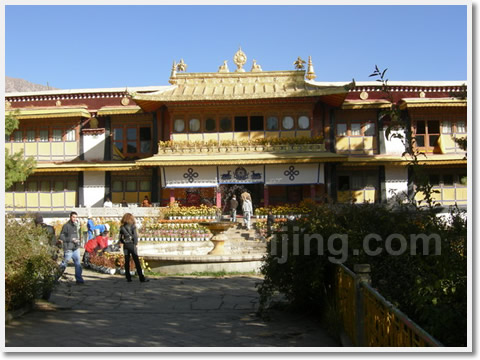
Norbulingka Park is our today's first hightlight. It is located in the western suburbs of Lhasa city. "Norbu" in Tibetan language means " treasure". "Lingka" means a park with beautiful trees and flowers. It once served as the summer palace for dalai lamas from 7th Dalai Lama who first built the palace. Each summer time, dalai lama would come here to handle political affairs. They also had their own living palace there.
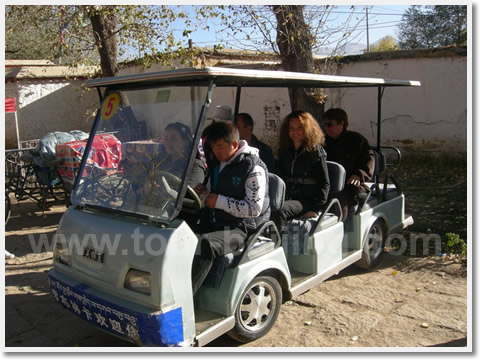
From the outside gate to the main entrance to the Norbulingka, it is about 200 meters. The park has some small buses ready for those who are too tired. 4 of our tour group paid RMB 10 to take the small bus to get to the main entrance.
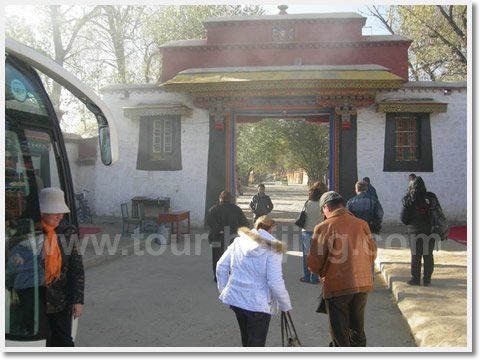
We first visit the 7th Dalai Lama's palace.
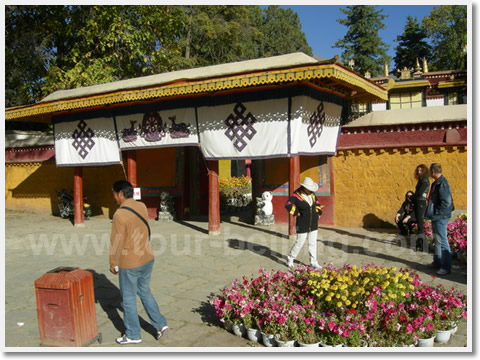
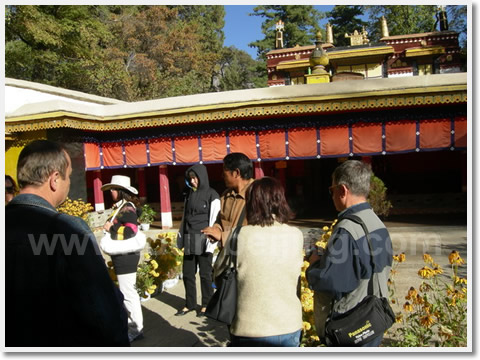
Then come out to visit the 14th Dalai Lama's palace through another gate. The 14th Dalai Lama went to India in 1959. We visited the rooms in the palace one by one. I still cannot believe now I could see and touch the living place of 14th Dalai Lama! When he left Tibet in 1959, he was only 25 years old. Now he should be 74 years old. From the picture hanging on the wall of the assembly room, he was once a handsome man.
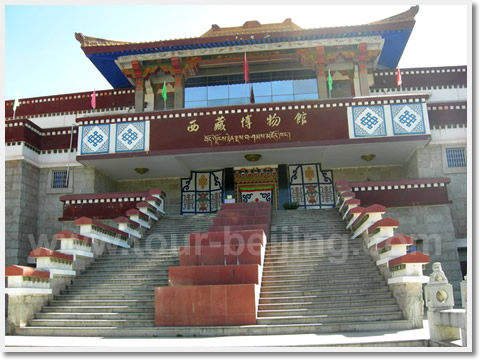
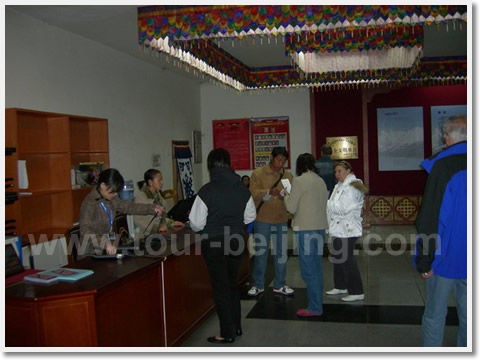
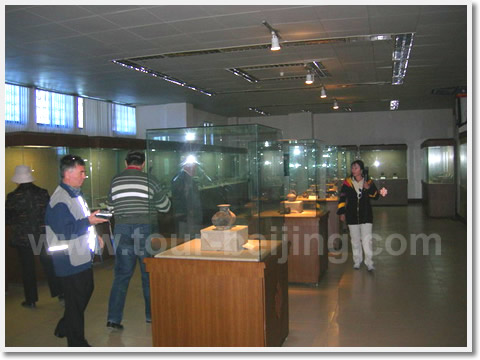
Then we visit Tibet Museum. It is located to the south-east of Norbulingka. It is a Tibetan structure museum. It has three exhibition floors. It has abundant historical relics and treasures including prehistoric culture, united culture, culture and art, customs. They offer the audio guide service. You can use the audio to get a better understanding of the some important history and relics. It is a must for those who is interested in Tibetan history.
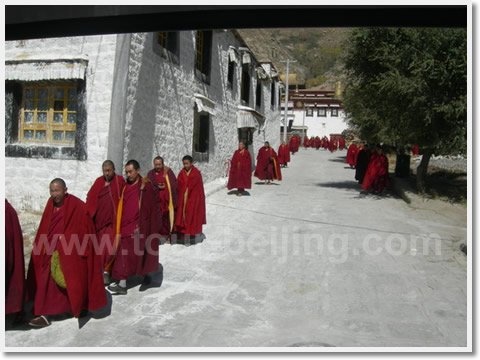
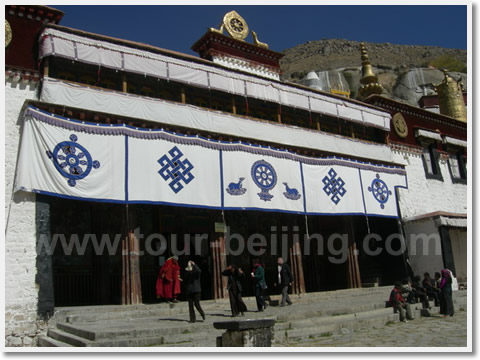
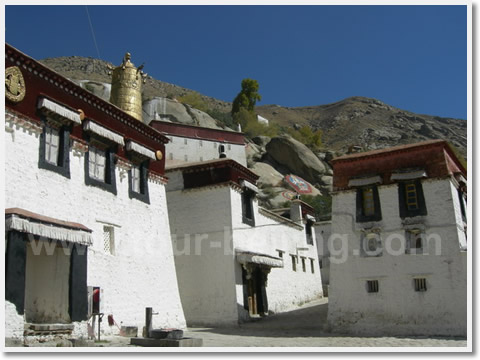
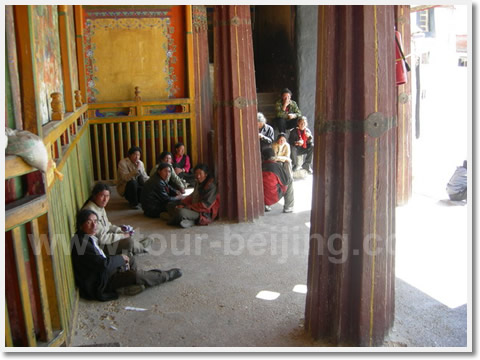
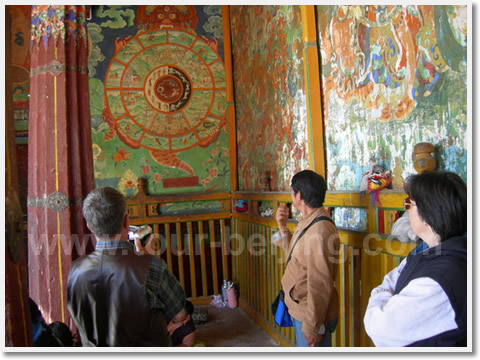
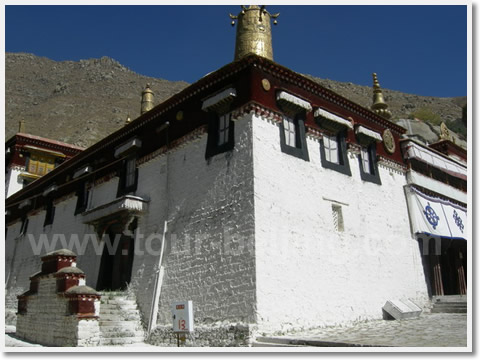
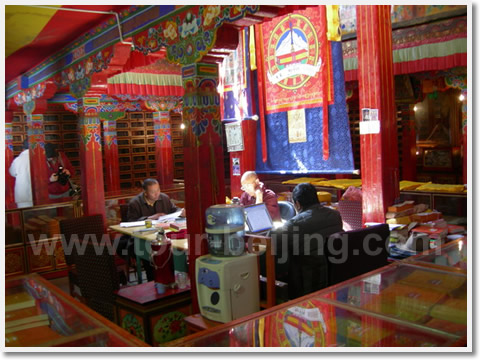
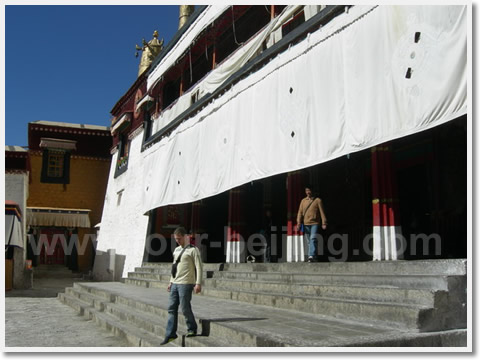
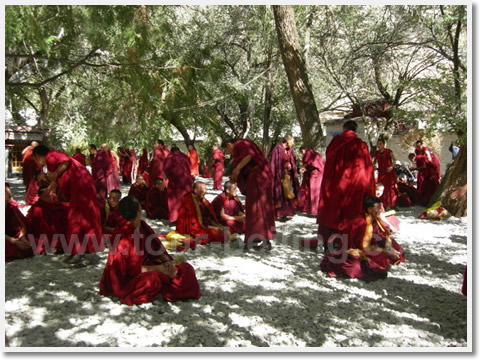
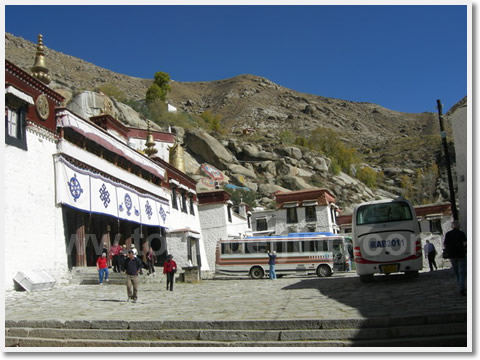
After lunch, we drive to the north suburbs of the city and visit the Sera Monastery. It is built on the slope of the Tatipu Mountain. It is named "Sera" due to the fact that lot of roses were once found on the mountains. "Sera" in Tibetan Language means"rose".
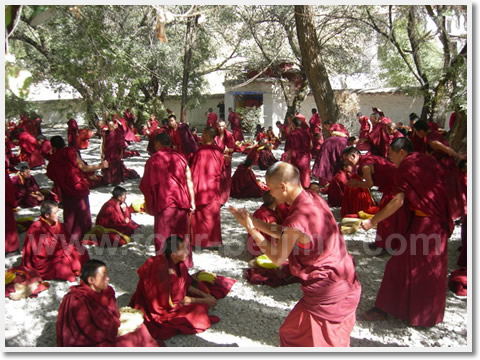
It has an assembley hall. three collegea. Sera is most famous for lamas debating activity each afternoon from 3:000pm. The Sera Monastery is dedicated to the Gelugpa or Yellow Hat Sect, a branch of Tibetan Buddhism, founded by Tsong Khapa.
Jamchen Chojey, one of Tsong Khapa's disciples built the monastery in 1419 during the Ming Dynasty (1368-1644). The Gelugpa or Yellow Hat Sect of Tibetan Buddhism studies Buddhist doctrines by using a slow but systemic process. As a part of their study, lamas must take part in debates to further their learning and get to more advanced levels of study.
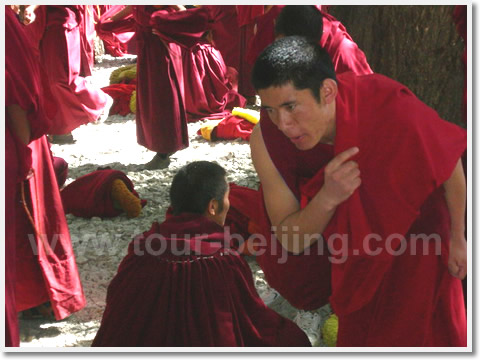
The debating traditions in the Sera Monastery are unique among the three famous monasteries in Lhasa. Debates are practised by the lamas in the monastery every day from 3.a.m. In a battle of words, they further their efforts by using a variety of gestures including clapping their hands, pushing their partners for an answer and more gestures.
For a fast answer, fill the email-form below and we'll get back to you by e-mail within 24 hours.
Tibet Trip on Oct 26,2007
Oct 26,2007
Norbulingka Park is our today's first hightlight. It is located in the western suburbs of Lhasa city. "Norbu" in Tibetan language means " treasure". "Lingka" means a park with beautiful trees and flowers. It once served as the summer palace for dalai lamas from 7th Dalai Lama who first built the palace. Each summer time, dalai lama would come here to handle political affairs. They also had their own living palace there.
From the outside gate to the main entrance to the Norbulingka, it is about 200 meters. The park has some small buses ready for those who are too tired. 4 of our tour group paid RMB 10 to take the small bus to get to the main entrance.


We first visit the 7th Dalai Lama's palace.


Then come out to visit the 14th Dalai Lama's palace through another gate. The 14th Dalai Lama went to India in 1959. We visited the rooms in the palace one by one. I still cannot believe now I could see and touch the living place of 14th Dalai Lama! When he left Tibet in 1959, he was only 25 years old. Now he should be 74 years old. From the picture hanging on the wall of the assembly room, he was once a handsome man.

Then we visit Tibet Museum. It is located to the south-east of Norbulingka. It is a Tibetan structure museum. It has three exhibition floors. It has abundant historical relics and treasures including prehistoric culture, united culture, culture and art, customs. They offer the audio guide service. You can use the audio to get a better understanding of the some important history and relics. It is a must for those who is interested in Tibetan history.


After lunch, we drive to the north suburbs of the city and visit the Sera Monastery. It is built on the slope of the Tatipu Mountain. It is named "Sera" due to the fact that lot of roses were once found on the mountains. "Sera" in Tibetan Language means"rose".
It has an assembley hall. three collegea. Sera is most famous for lamas debating activity each afternoon from 3:000pm. The Sera Monastery is dedicated to the Gelugpa or Yellow Hat Sect, a branch of Tibetan Buddhism, founded by Tsong Khapa.
Jamchen Chojey, one of Tsong Khapa's disciples built the monastery in 1419 during the Ming Dynasty (1368-1644). The Gelugpa or Yellow Hat Sect of Tibetan Buddhism studies Buddhist doctrines by using a slow but systemic process. As a part of their study, lamas must take part in debates to further their learning and get to more advanced levels of study.
The debating traditions in the Sera Monastery are unique among the three famous monasteries in Lhasa. Debates are practised by the lamas in the monastery every day from 3.a.m. In a battle of words, they further their efforts by using a variety of gestures including clapping their hands, pushing their partners for an answer and more gestures.


| Previous | 1 | 2 | 3 | Next |
| Want a quick enquiry ? |