



Beijing Xian Day Tour
China Private Tours
China Group Tours
Yangtze River Cruises
Beijing Lhasa Tibet Tour
China Silk Road Tour
China Train Tours
Xian Tour, Xian Tours
Shanghai Tours
Guilin Tour, Guilin Tours

China Private Tours
China Group Tours
Yangtze River Cruises
Beijing Lhasa Tibet Tour
China Silk Road Tour
China Train Tours
Xian Tour, Xian Tours
Shanghai Tours
Guilin Tour, Guilin Tours

Enquiry, Tour Quotation, Booking, Way of Payment, Exchange Rate, Individual Travel, Group Travel, Hotels, Transportation,
Restaurants, Cancellation,
Insurance, Liability...
Dear Ms. Mary Ma,
I am back from China now and would like to take a moment out of my busy schedule to let you know that your company and your guide Rogin Lee are fantastic. Rogine made my tour of China, his depth of knowledge is incredible and his presentations and introductions were indepth and interesting. Rogin presented China's past and present in a new light. This China tour with Rogin surpassed what I was expecting from any China tour company. I would like to extend my thanks to yourself, Rogin Lee and Mr. Wong, the driver.
Sincerely,
Lee A. Gravesen
lee@directdoor.com
I am back from China now and would like to take a moment out of my busy schedule to let you know that your company and your guide Rogin Lee are fantastic. Rogine made my tour of China, his depth of knowledge is incredible and his presentations and introductions were indepth and interesting. Rogin presented China's past and present in a new light. This China tour with Rogin surpassed what I was expecting from any China tour company. I would like to extend my thanks to yourself, Rogin Lee and Mr. Wong, the driver.
Sincerely,
Lee A. Gravesen
lee@directdoor.com
You will be updated with the
little and common things often
unseen by the real foreign
travelers in their trips to
Beijing China. Also send
your Beijing China travel
blogs to us and have your
blog posted for others to share.
Beijing China travelogues
from the clients having
used our Beijing China
travel service from all
over the world, with happily
slanted insights! Copious
photos and travel Reviews
and travel tips plus inside
tour information.
Are you expecting a Beijing
China trip advisor to design
a tailor-made Beijing China
holiday tour package?
We offer free Beijing China travel
advice as well as arranging
your guided Beijing China tour.
Are you looking for a resourceful
and helpful Beijing tour guide?
With most of them university
graduates, our Beijing tour guides
have received very good professional
training in hospitality industry.
We have arranged yummy
Chinese lunches and dinners
at nice restaurants during
your trip in Beijing China.
Very often we skip the dinners,
but we do include lunches in your
Beijing China tour packages.
Usually you can have a relaxing
dinner on your own at your hotel a
fter a day's tiring sightseeing.
What are you expecting for
the tourist vehicles in Beijing
China for your sightseeing or
your business? We are committed
to offer you the quality service
you need when you come to
Beijing China either as a
visitor or businessman.
We provide comfortable
vehicles like sedan, limousine,
van & coach services per your request.
Online Booking Steps
1. Select a tour & submit
Browser a tour that most suits you and send us the tour with your custom request.
2. Quote for your tour
Receive our tour proposal with rates in one working day.
3. Adjust your tour
Modify your itinerary with new quotes for free until it fits you.
4. Confirm & deposit
Finalise your tour after receiving your deposit.
5. Final payment
Pay the balance before or upon arrival.
Browser a tour that most suits you and send us the tour with your custom request.
2. Quote for your tour
Receive our tour proposal with rates in one working day.
3. Adjust your tour
Modify your itinerary with new quotes for free until it fits you.
4. Confirm & deposit
Finalise your tour after receiving your deposit.
5. Final payment
Pay the balance before or upon arrival.
Home → China Travel Guide → China Facts → Chinese Residence
Chinese Residence
Ayiwang – Chinese Folklore
Ayiwang is the Uygur residence. The house are all connected together, with yard around them. The front room with a skylight is called Ayiwang, also known as summer room, which serves as the living room as well as reception room. The back house called winter room is the bedroom, usually without a skylight. The plane arrangement is very ingenious.
Mongolian yurts – Chinese Folklore
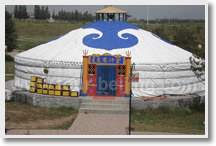
The Mongolian felt tent in northwest China is called Mongolian yurts. The wooden wattles are fastened with leather thongs and studs to form a fence-like structure. Each part of the yurt is ingenious and quite convenient to dissemble and carry.
The diameter of a small yurt is about four to six meters, with no pillar inside, while the bigger one needs two to four poles to support the yurt. There are thick felts on ground of yurts. Every yurt has an opening on the top, and there is usually a stove under it.
Diaofang – Chinese Folklore
Disofang (Stone Chamber) is the most popular kind of dwellings in Tibet and some areas in Inner Mongolia. The height of the dwelling varies from two the three storey. Built mostly of stone and earth, they look like Diaolou (blockhouse), and hence got the name of Diaofang.
The first floor is often used for livestock and poultry, and the second is retained as bedrooms, living rooms, kitchen and storehouse. Some have a third floor for the family sutra hall and the balcony.
The nomadic Mongolians and Tibetans also live in tents, which are convenient to assemble and unassembled.
Cave Dwelling of Northwest China – Chinese Folklore
Cave dwellings are mainly distributed in central and west provinces like Henan, Shanxi, Shaanxi, Gansu and Qinghai, where the loess is of great depth. The loess has little seepage and a very strong vertical nature, which provides a very good precondition for the development of cave dwellings.
The cliff cave dwelling is an earth cave dug horizontally along the vertical earth cliff. Residence built in this way saves raw materials and requires less complicated technology. The cave dwelling is cool in summer and warm in winter.
Chinese Residence
Ayiwang – Chinese Folklore
Ayiwang is the Uygur residence. The house are all connected together, with yard around them. The front room with a skylight is called Ayiwang, also known as summer room, which serves as the living room as well as reception room. The back house called winter room is the bedroom, usually without a skylight. The plane arrangement is very ingenious.
Mongolian yurts – Chinese Folklore
The Mongolian felt tent in northwest China is called Mongolian yurts. The wooden wattles are fastened with leather thongs and studs to form a fence-like structure. Each part of the yurt is ingenious and quite convenient to dissemble and carry.
The diameter of a small yurt is about four to six meters, with no pillar inside, while the bigger one needs two to four poles to support the yurt. There are thick felts on ground of yurts. Every yurt has an opening on the top, and there is usually a stove under it.
Diaofang – Chinese Folklore
Disofang (Stone Chamber) is the most popular kind of dwellings in Tibet and some areas in Inner Mongolia. The height of the dwelling varies from two the three storey. Built mostly of stone and earth, they look like Diaolou (blockhouse), and hence got the name of Diaofang.
The first floor is often used for livestock and poultry, and the second is retained as bedrooms, living rooms, kitchen and storehouse. Some have a third floor for the family sutra hall and the balcony.
The nomadic Mongolians and Tibetans also live in tents, which are convenient to assemble and unassembled.
Cave Dwelling of Northwest China – Chinese Folklore
Cave dwellings are mainly distributed in central and west provinces like Henan, Shanxi, Shaanxi, Gansu and Qinghai, where the loess is of great depth. The loess has little seepage and a very strong vertical nature, which provides a very good precondition for the development of cave dwellings.
The cliff cave dwelling is an earth cave dug horizontally along the vertical earth cliff. Residence built in this way saves raw materials and requires less complicated technology. The cave dwelling is cool in summer and warm in winter.