



Beijing Xian Day Tour
China Private Tours
China Group Tours
Yangtze River Cruises
Beijing Lhasa Tibet Tour
China Silk Road Tour
China Train Tours
Xian Tour, Xian Tours
Shanghai Tours
Guilin Tour, Guilin Tours

China Private Tours
China Group Tours
Yangtze River Cruises
Beijing Lhasa Tibet Tour
China Silk Road Tour
China Train Tours
Xian Tour, Xian Tours
Shanghai Tours
Guilin Tour, Guilin Tours

Enquiry, Tour Quotation, Booking, Way of Payment, Exchange Rate, Individual Travel, Group Travel, Hotels, Transportation,
Restaurants, Cancellation,
Insurance, Liability...
Dear Ms. Mary Ma,
I am back from China now and would like to take a moment out of my busy schedule to let you know that your company and your guide Rogin Lee are fantastic. Rogine made my tour of China, his depth of knowledge is incredible and his presentations and introductions were indepth and interesting. Rogin presented China's past and present in a new light. This China tour with Rogin surpassed what I was expecting from any China tour company. I would like to extend my thanks to yourself, Rogin Lee and Mr. Wong, the driver.
Sincerely,
Lee A. Gravesen
lee@directdoor.com
I am back from China now and would like to take a moment out of my busy schedule to let you know that your company and your guide Rogin Lee are fantastic. Rogine made my tour of China, his depth of knowledge is incredible and his presentations and introductions were indepth and interesting. Rogin presented China's past and present in a new light. This China tour with Rogin surpassed what I was expecting from any China tour company. I would like to extend my thanks to yourself, Rogin Lee and Mr. Wong, the driver.
Sincerely,
Lee A. Gravesen
lee@directdoor.com
You will be updated with the
little and common things often
unseen by the real foreign
travelers in their trips to
Beijing China. Also send
your Beijing China travel
blogs to us and have your
blog posted for others to share.
Beijing China travelogues
from the clients having
used our Beijing China
travel service from all
over the world, with happily
slanted insights! Copious
photos and travel Reviews
and travel tips plus inside
tour information.
Are you expecting a Beijing
China trip advisor to design
a tailor-made Beijing China
holiday tour package?
We offer free Beijing China travel
advice as well as arranging
your guided Beijing China tour.
Are you looking for a resourceful
and helpful Beijing tour guide?
With most of them university
graduates, our Beijing tour guides
have received very good professional
training in hospitality industry.
We have arranged yummy
Chinese lunches and dinners
at nice restaurants during
your trip in Beijing China.
Very often we skip the dinners,
but we do include lunches in your
Beijing China tour packages.
Usually you can have a relaxing
dinner on your own at your hotel a
fter a day's tiring sightseeing.
What are you expecting for
the tourist vehicles in Beijing
China for your sightseeing or
your business? We are committed
to offer you the quality service
you need when you come to
Beijing China either as a
visitor or businessman.
We provide comfortable
vehicles like sedan, limousine,
van & coach services per your request.
Online Booking Steps
1. Select a tour & submit
Browser a tour that most suits you and send us the tour with your custom request.
2. Quote for your tour
Receive our tour proposal with rates in one working day.
3. Adjust your tour
Modify your itinerary with new quotes for free until it fits you.
4. Confirm & deposit
Finalise your tour after receiving your deposit.
5. Final payment
Pay the balance before or upon arrival.
Browser a tour that most suits you and send us the tour with your custom request.
2. Quote for your tour
Receive our tour proposal with rates in one working day.
3. Adjust your tour
Modify your itinerary with new quotes for free until it fits you.
4. Confirm & deposit
Finalise your tour after receiving your deposit.
5. Final payment
Pay the balance before or upon arrival.
Home → China Travel Guide → China Facts → Chinese Dining Etiquette
Chinese Dining Etiquette
What is the proper way to use chopsticks – Chinese Folklore
The chopsticks is a miracle among the creations of Chinese food culture. It is difficult to describe how to use chopsticks.
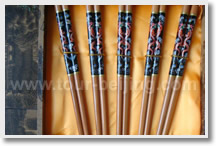
First, place one chopstick on the third finger and clip it with the thumb; then clip the other between the index finger and the middle finger. When picking up food, use the upper chopstick and keep it flexible like a clipper.
But, as the saying goes, it is easier said than done, and practice makes perfect. You may wonder if there is any yardstick by which to measure your proficiency of using chopsticks. Well, try peanuts. If you can pick up a peanut, then you are fine; if you can pick up two, then, congratulations!
Toothpicks – Chinese Folklore
The use of toothpick at a table is another standard practice. As in most Asian countries, the polite way to deal with lodged fragments of food is to cover one’s mouth with one hand while the toothpicks are frequently used between courses as it is believed that the tastes of one course should not be allowed to mar one’s enjoyment of the next course.
The Guest Gets the Best – Chinese Folklore
The guest of honor naturally receives the choicest morsels, and is expected to lead the way when necessary. With a fish course, the fish head would be left for the guest of honor-and it is the most nutritious part. The platter holding the fish will always be laid on the table on such a way that the fish head points towards the guest.
If visitors find that they are the guest of honor and are unwilling to accept the duties involved, they should always delegate the honor to the person on their left, or politely turn the platter so that the fish head faces the host.
In a restaurant, the signs that a meal is ending are quite obvious. A bowl of fruit will be presented, fresh towels will be provided or cleaning mouths and hands, and the final pot of tea-a ceremonial farewell not be refilled.
Chinese table manners include: – Chinese Folklore
Don’s “jump the gun”—always eat after your host.
When the host proposes a “gan bei”, or “bottoms up” be careful if you are not a good drinker. Extra care should be taken when liquor is served. One way of getting away from such a situation is to tell your host “sui yi”, which means “cheers…but I will drink only a little.”
Don’t forget to toast your host, wishing him or her good health, friendship, appreciation and the like At the end of the banquet, your host may utter typical Chinese modesties such a “Please forgive us for the inconsiderate entertainment” or “sorry for the mediocre food.” “Don’t take it seriously. Go ahead and express your appreciation.”
Seating & Dinning Customs – Chinese Folklore
If a Chinese dinner has been arranged in a restaurant, the host will usually sit nearest the kitchen or service door. Then he will be in the least-favored position-sitting where the waiter will stand while serving individual portions of food. Some hosts, however, seat their most junior guests or family members at this slightly awkward spot so that the host can talk more easily to guests on either side of honor.
At the beginning of the banquet, the host will make a brief speech to welcome the guest. As the guest of honor, you are expected to make a reciprocal speech expressing appreciation and wishes for friendship, cooperation and prosperity.
Chinese Dining Etiquette
What is the proper way to use chopsticks – Chinese Folklore
The chopsticks is a miracle among the creations of Chinese food culture. It is difficult to describe how to use chopsticks.

First, place one chopstick on the third finger and clip it with the thumb; then clip the other between the index finger and the middle finger. When picking up food, use the upper chopstick and keep it flexible like a clipper.
But, as the saying goes, it is easier said than done, and practice makes perfect. You may wonder if there is any yardstick by which to measure your proficiency of using chopsticks. Well, try peanuts. If you can pick up a peanut, then you are fine; if you can pick up two, then, congratulations!
Toothpicks – Chinese Folklore
The use of toothpick at a table is another standard practice. As in most Asian countries, the polite way to deal with lodged fragments of food is to cover one’s mouth with one hand while the toothpicks are frequently used between courses as it is believed that the tastes of one course should not be allowed to mar one’s enjoyment of the next course.
The Guest Gets the Best – Chinese Folklore
The guest of honor naturally receives the choicest morsels, and is expected to lead the way when necessary. With a fish course, the fish head would be left for the guest of honor-and it is the most nutritious part. The platter holding the fish will always be laid on the table on such a way that the fish head points towards the guest.
If visitors find that they are the guest of honor and are unwilling to accept the duties involved, they should always delegate the honor to the person on their left, or politely turn the platter so that the fish head faces the host.
In a restaurant, the signs that a meal is ending are quite obvious. A bowl of fruit will be presented, fresh towels will be provided or cleaning mouths and hands, and the final pot of tea-a ceremonial farewell not be refilled.
Chinese table manners include: – Chinese Folklore
Don’s “jump the gun”—always eat after your host.
When the host proposes a “gan bei”, or “bottoms up” be careful if you are not a good drinker. Extra care should be taken when liquor is served. One way of getting away from such a situation is to tell your host “sui yi”, which means “cheers…but I will drink only a little.”
Don’t forget to toast your host, wishing him or her good health, friendship, appreciation and the like At the end of the banquet, your host may utter typical Chinese modesties such a “Please forgive us for the inconsiderate entertainment” or “sorry for the mediocre food.” “Don’t take it seriously. Go ahead and express your appreciation.”
Seating & Dinning Customs – Chinese Folklore
If a Chinese dinner has been arranged in a restaurant, the host will usually sit nearest the kitchen or service door. Then he will be in the least-favored position-sitting where the waiter will stand while serving individual portions of food. Some hosts, however, seat their most junior guests or family members at this slightly awkward spot so that the host can talk more easily to guests on either side of honor.
At the beginning of the banquet, the host will make a brief speech to welcome the guest. As the guest of honor, you are expected to make a reciprocal speech expressing appreciation and wishes for friendship, cooperation and prosperity.