

Beijing Yesterday and Today One Day Tour
Overview:
|
 |
Tour Description
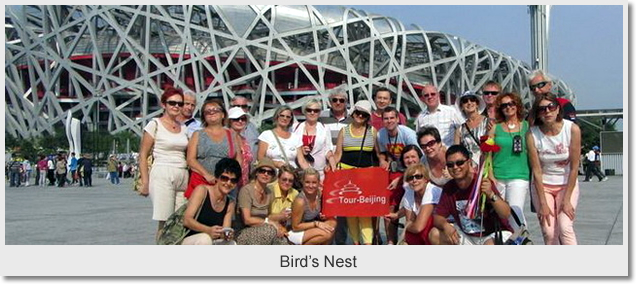
Pick up from your midtown hotel in Beijing and head to the The Olympic Green, an Olympic Park in Beijing, constructed for the 2008 Summer Olympics. Visit National Stadium ( bird's nest) from its outside (If you like to go inside the stadium, please pay the entrance fee on your own). The twig-like structure and the bowl-shaped roof are the masterpiece of the project. It is designed by Herzog and DeMeuron.
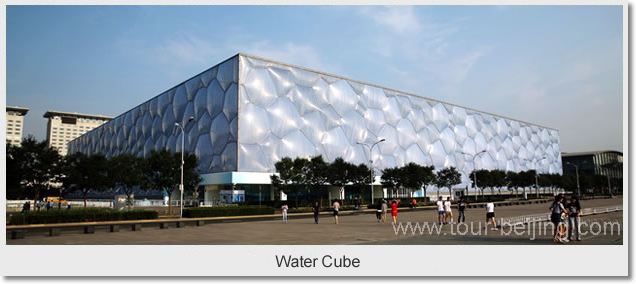
Then move on to the National Aquatics Center (the Water Cube) from its outside (If you would like to go inside the center, please pay the entrance fee on your own). The National Swimming Center is an important Olympic venue that is built by donations from compatriots from Hong Kong and Macao. It is dubbed "cube" because of its semi-transparent "bubbles" spread out all over its surface with a shape very similar to the structure of "H2O".
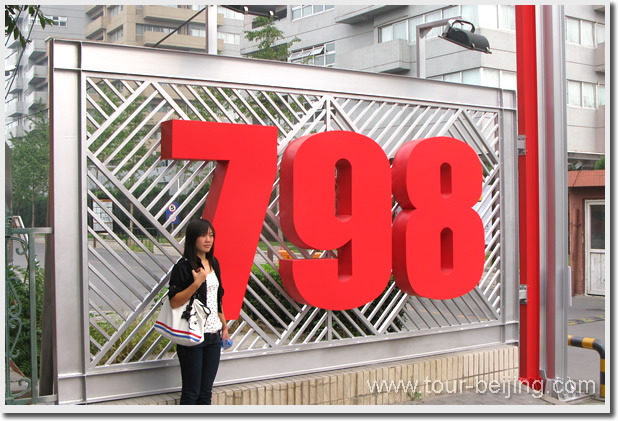
Afterwards, go to visit 798 Art Zone, or Factory 798, the Beijing "Greenwich Village" or "SoHo", a part of Dashanzi in the Chaoyang District of Beijing that holds a rich artist community. It is located in a 50-year old out of service military factory complex with a functional Bauhaus-influenced design.
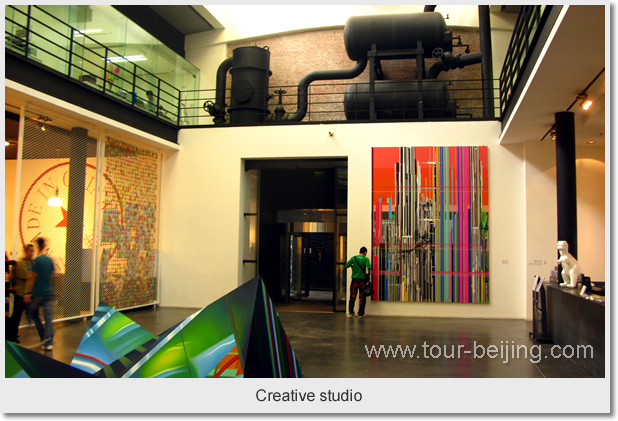
Factory 798 is one of several structures within a complex formerly known as Joint Factory 718. The factory was originally built startng from the year 1954. At the height of the construction effort, more than 100 East German foreign experts worked on the project. By the late 1980s and early 1990s, most sub-factories had ceased production. Now many artists and organizations have set up studios or offices in the area.
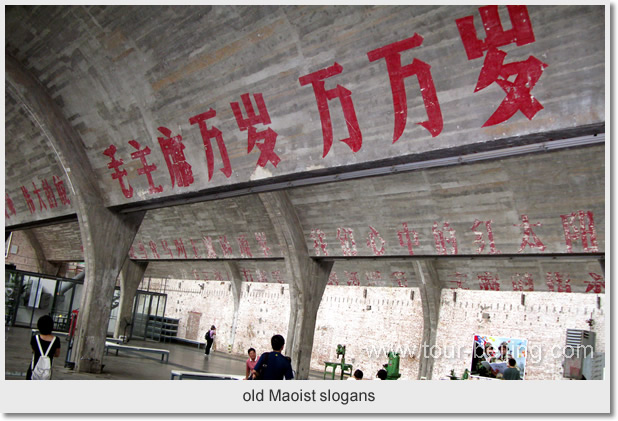
In the 798 Space gallery, old Maoist slogans are visible on the ceiling arches.
One of the old machine tools in front of the contemporary art space, a former workshop.
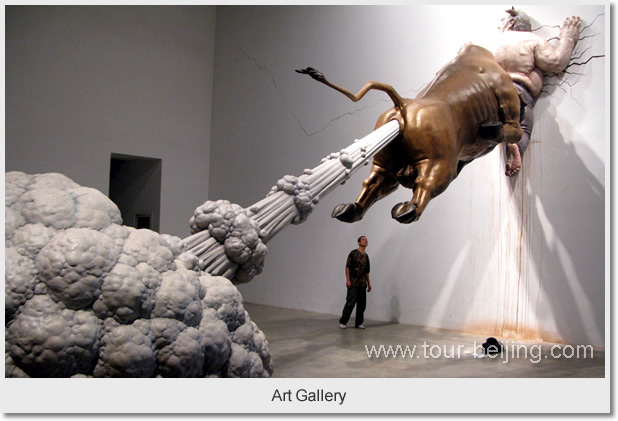
Some of the workshops are still operational on a small scale. But people are not allowed to go inside. There are quite a number of art exhibitions in the workshop-turned showrooms in the Factory 798
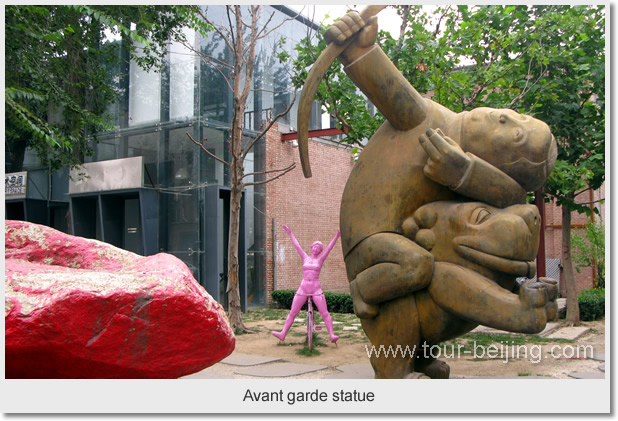
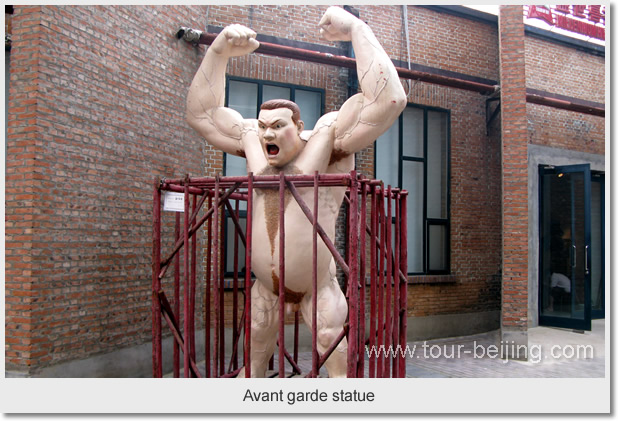
Outside some of the galleries and spaces in the Factory 798, there are many and abstract Avant-garde statues.
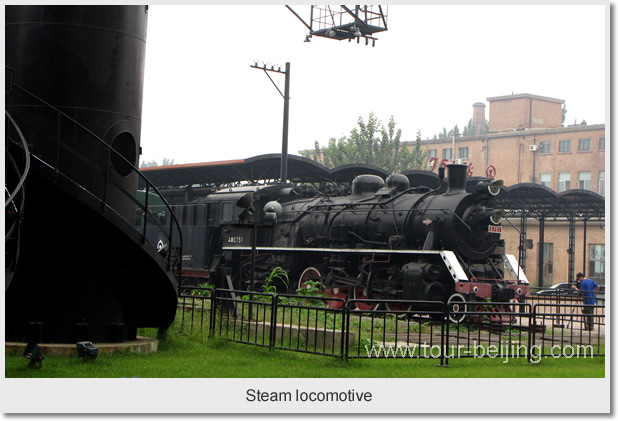
The the former huge joint factory 719 ( later split into more manageable components, such as sub-Factories 706, 707, 751, 761, 797 and 798) once had its own steam locomotives.
After lunch at Baguobuyi Restaurant, head to the Shichahai Area - the old part of Beijing.
With the help of your English speaking tour guide of the courtyard, you will have a detailed explanation of the old courtyard ( Siheyuan ) - its history, its layout, its Fengshui, and its traditiona Chinese culture involved. The photos below tells you partly what you will see on the one hour courtyard tour.
1. This courtyard is a private residence of the Zhu family. It can be dated to the Ming dynasty (1368 - 1644 ), and it is also one of the most complete existing courtyards in Beijing.
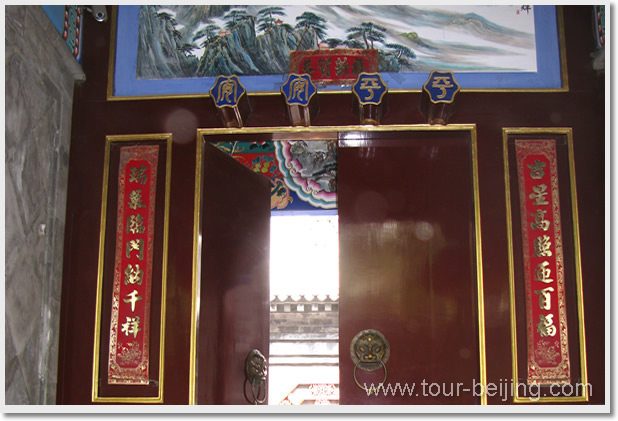
First let's look at its Ming Dynasty front gate and high steps. In the feudal society the number of the steps and the hexagonal poles protruding from the top beam were strictly regulated as a symbol of social rank. You can find the 4 steps leading up to the main gate, and the 4 poles protruding from the top beams, indicating the owner was a 3-rank army officer at that time. The gate is painted vermilion with copper door knockers. The gate is located at the southeastern corner of the courtyard built according to Fengshui.
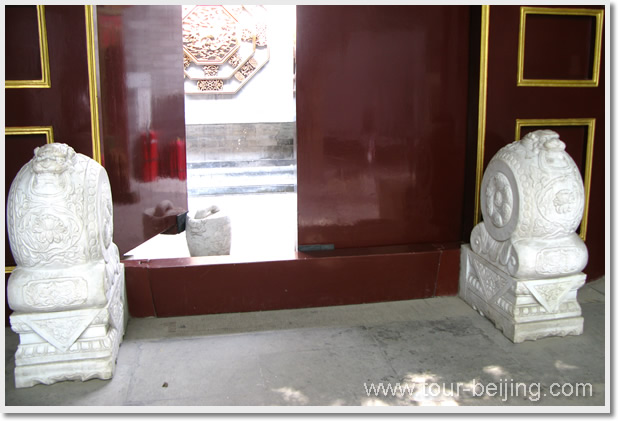
2. Why the owner was an army officer, not a civil official? The stone piers ( mendun ) are an indication of position and wealth of the former occupants of a old hutong courtyard home in Beijing. If the stone piers were circular, then host was an army officer. If square, the host was a civil official. So the host of the Zhu Family was an army officer.
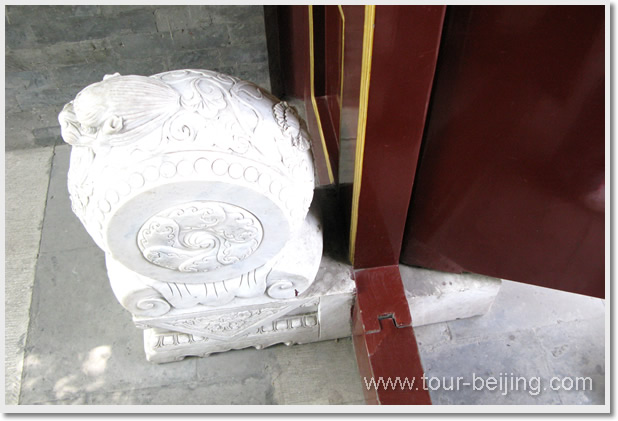
The rear parts of the stone piers are set astride the gate to either hold the gate and serve as the central axis.
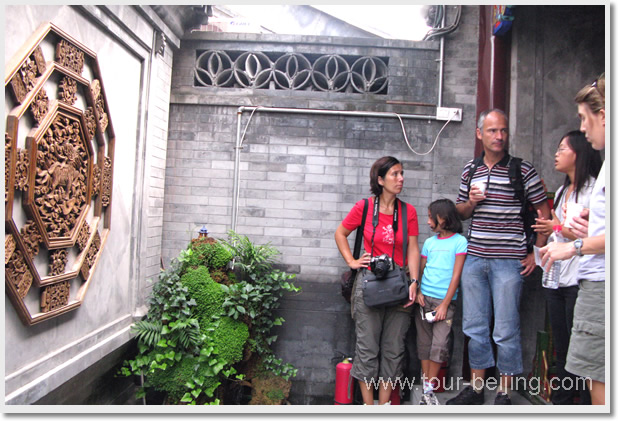
3. Entering the front gate, you find a screen wall to shield the house from outsiders'view for privacy. Superstition holds that it also protects the house from evil spirits. Remember both the front gate and the screen wall are located in the southeast corner of the courtyard. Turn left, you enter the yard of the old courtyard.
4. The layout of the 300-year old courtyard
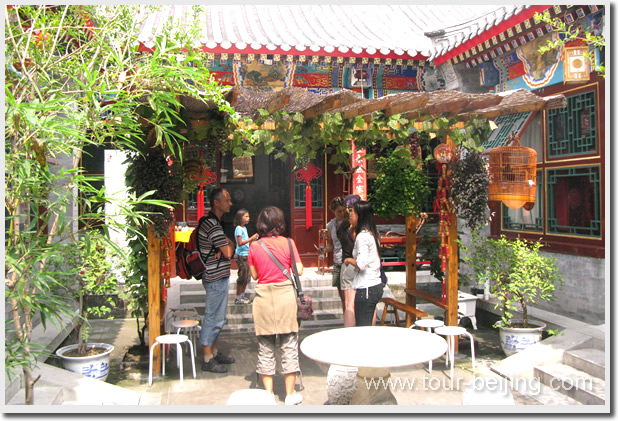
5. The building positioned to the north and facing the south is considered the main house. The main house receives the most sunlight, thus serving as the living room and bedroom of the owner or head of the family.
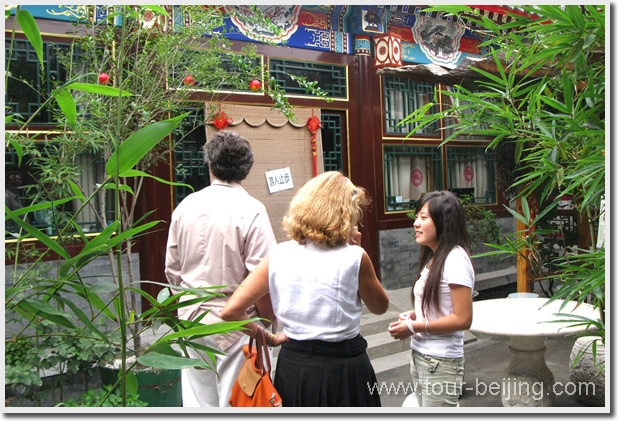
6. The western side rooms receive less sunshine, and serve as the rooms for eldest children or less important members of the family. Now the descendants of the courtyard still live in the the west rooms. You can see the western rooms from the outside.
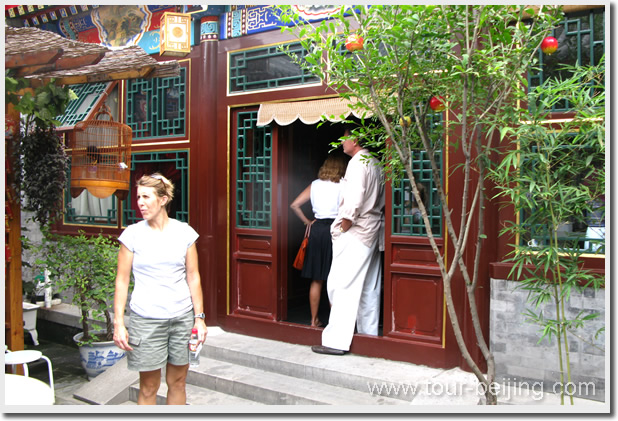
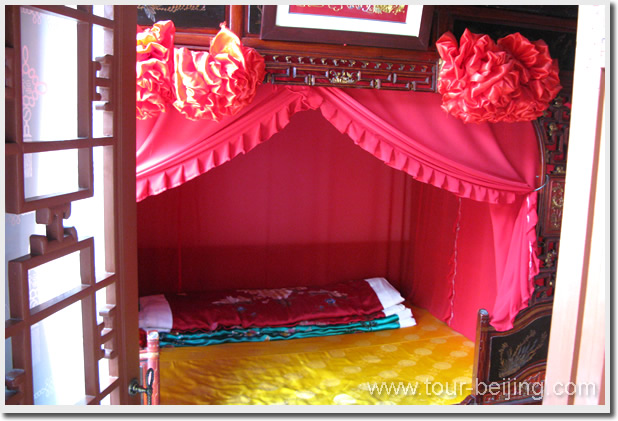
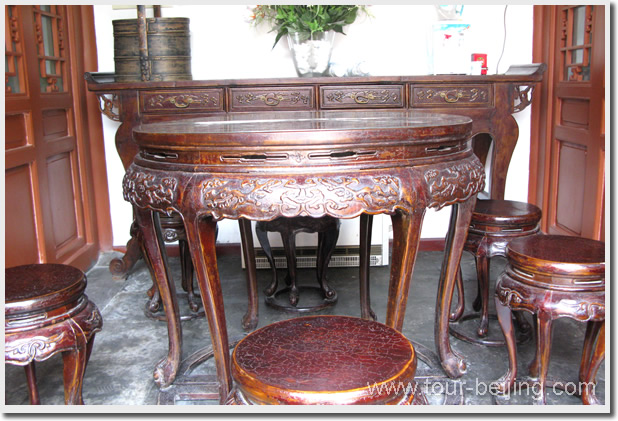
7. The eastern side rooms receive the second less sunshine, and serve as the rooms for younger children or less important members of the family. Now most of the eatern rooms are vacant as showrooms. Still one of the eastern rooms is now used as a kitchen room.
8. The opposite rooms (or southern side rooms). The southern side rooms receive the least sunlight, and usually serve as a reception room and the servants' dwelling, or where the family would gather to relax, eat or study.
After visiting the old courtyard, take a 20-minute pedicab drive through the zigzag and narrow alleys or hutongs. Two people share one rickshaw. You are not supposed to tip the pedicab driver since the tour cost includes the tip.
Drop off at the the Silver Ingot Bridge ( Yinding Bridge ), a narrow channel joining Qianhai Lake and the Houhai Lake, the hub of Shichhai area with surrounding quiet hutongs. Walking along the Yandai Xiejie ( Tobacco Pipe Lean Street ), a quaint 800-year-old hutong located directly north of Yinding Bridge between Qianhai and Houhai and the south of the Drum Tower, used to be well-known for sellers of long-stemmed pipes, hence the name.
Ascending the 67-meter high and two-story Drum Tower dating from 1420 is sure to bring you back to the old Beijing by seeing the big drum tower and having bird's eye view of the surrounding communities of hutongs and siheyuan - existing traditional courtyards in Beijing.
Return to your midtown hotel in Beijing after the half day tour.
Optional add-on:
If you are interested in the Chinese tea culture, after the day tour, you are transferred to a nice tea market in the center of Beijing. There you see a tea performance and learn how to conduct your own kungfu tea ritual. The knowledge of tea, tea selection, steeping and savoring will be explained. After a simple tea ceremony, you are free on your own in choosing your favorite tea, teapots and teacups.
 |
Then move on to the National Aquatics Center (the Water Cube) from its outside (If you would like to go inside the center, please pay the entrance fee on your own). The National Swimming Center is an important Olympic venue that is built by donations from compatriots from Hong Kong and Macao. It is dubbed "cube" because of its semi-transparent "bubbles" spread out all over its surface with a shape very similar to the structure of "H2O".
 |
Afterwards, go to visit 798 Art Zone, or Factory 798, the Beijing "Greenwich Village" or "SoHo", a part of Dashanzi in the Chaoyang District of Beijing that holds a rich artist community. It is located in a 50-year old out of service military factory complex with a functional Bauhaus-influenced design.
 |
Factory 798 is one of several structures within a complex formerly known as Joint Factory 718. The factory was originally built startng from the year 1954. At the height of the construction effort, more than 100 East German foreign experts worked on the project. By the late 1980s and early 1990s, most sub-factories had ceased production. Now many artists and organizations have set up studios or offices in the area.
 |
In the 798 Space gallery, old Maoist slogans are visible on the ceiling arches.
 |
One of the old machine tools in front of the contemporary art space, a former workshop.
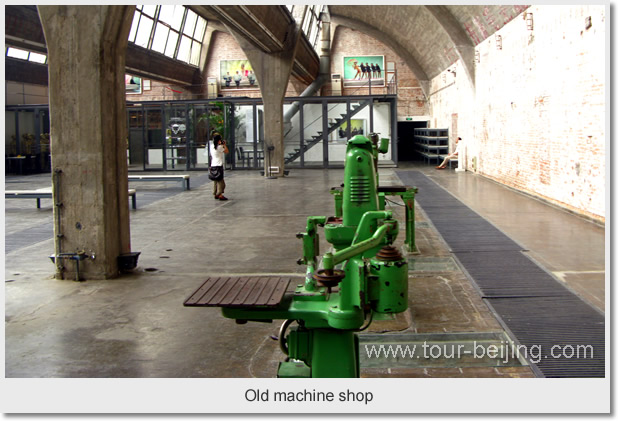 |
Some of the workshops are still operational on a small scale. But people are not allowed to go inside. There are quite a number of art exhibitions in the workshop-turned showrooms in the Factory 798
 |
Outside some of the galleries and spaces in the Factory 798, there are many and abstract Avant-garde statues.
 |
 |
|
The the former huge joint factory 719 ( later split into more manageable components, such as sub-Factories 706, 707, 751, 761, 797 and 798) once had its own steam locomotives.
 |
After lunch at Baguobuyi Restaurant, head to the Shichahai Area - the old part of Beijing.
With the help of your English speaking tour guide of the courtyard, you will have a detailed explanation of the old courtyard ( Siheyuan ) - its history, its layout, its Fengshui, and its traditiona Chinese culture involved. The photos below tells you partly what you will see on the one hour courtyard tour.
1. This courtyard is a private residence of the Zhu family. It can be dated to the Ming dynasty (1368 - 1644 ), and it is also one of the most complete existing courtyards in Beijing.
First let's look at its Ming Dynasty front gate and high steps. In the feudal society the number of the steps and the hexagonal poles protruding from the top beam were strictly regulated as a symbol of social rank. You can find the 4 steps leading up to the main gate, and the 4 poles protruding from the top beams, indicating the owner was a 3-rank army officer at that time. The gate is painted vermilion with copper door knockers. The gate is located at the southeastern corner of the courtyard built according to Fengshui.
 |
2. Why the owner was an army officer, not a civil official? The stone piers ( mendun ) are an indication of position and wealth of the former occupants of a old hutong courtyard home in Beijing. If the stone piers were circular, then host was an army officer. If square, the host was a civil official. So the host of the Zhu Family was an army officer.
 |
The rear parts of the stone piers are set astride the gate to either hold the gate and serve as the central axis.
 |
3. Entering the front gate, you find a screen wall to shield the house from outsiders'view for privacy. Superstition holds that it also protects the house from evil spirits. Remember both the front gate and the screen wall are located in the southeast corner of the courtyard. Turn left, you enter the yard of the old courtyard.
 |
4. The layout of the 300-year old courtyard
5. The building positioned to the north and facing the south is considered the main house. The main house receives the most sunlight, thus serving as the living room and bedroom of the owner or head of the family.
 |
6. The western side rooms receive less sunshine, and serve as the rooms for eldest children or less important members of the family. Now the descendants of the courtyard still live in the the west rooms. You can see the western rooms from the outside.
 |
7. The eastern side rooms receive the second less sunshine, and serve as the rooms for younger children or less important members of the family. Now most of the eatern rooms are vacant as showrooms. Still one of the eastern rooms is now used as a kitchen room.
 |
 |
 |
8. The opposite rooms (or southern side rooms). The southern side rooms receive the least sunlight, and usually serve as a reception room and the servants' dwelling, or where the family would gather to relax, eat or study.
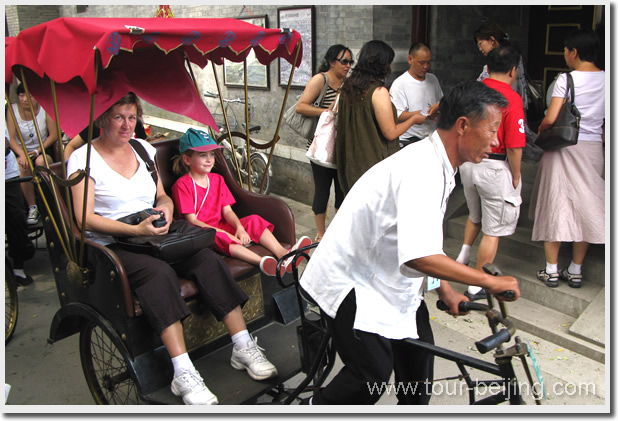
After visiting the old courtyard, take a 20-minute pedicab drive through the zigzag and narrow alleys or hutongs. Two people share one rickshaw. You are not supposed to tip the pedicab driver since the tour cost includes the tip.
 |
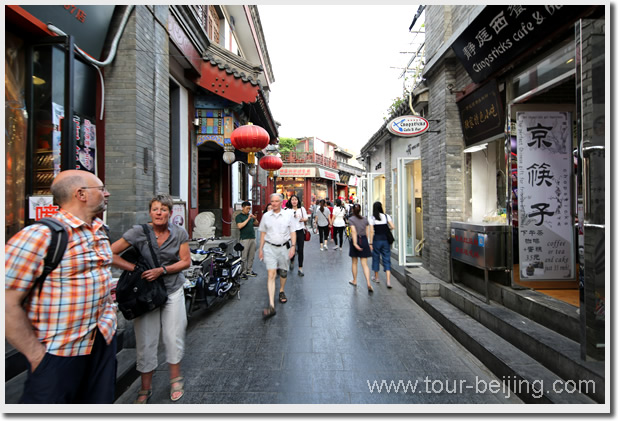 |
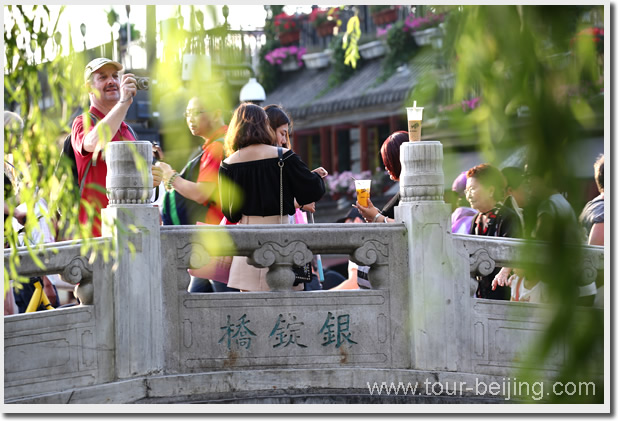
Drop off at the the Silver Ingot Bridge ( Yinding Bridge ), a narrow channel joining Qianhai Lake and the Houhai Lake, the hub of Shichhai area with surrounding quiet hutongs. Walking along the Yandai Xiejie ( Tobacco Pipe Lean Street ), a quaint 800-year-old hutong located directly north of Yinding Bridge between Qianhai and Houhai and the south of the Drum Tower, used to be well-known for sellers of long-stemmed pipes, hence the name.
 |
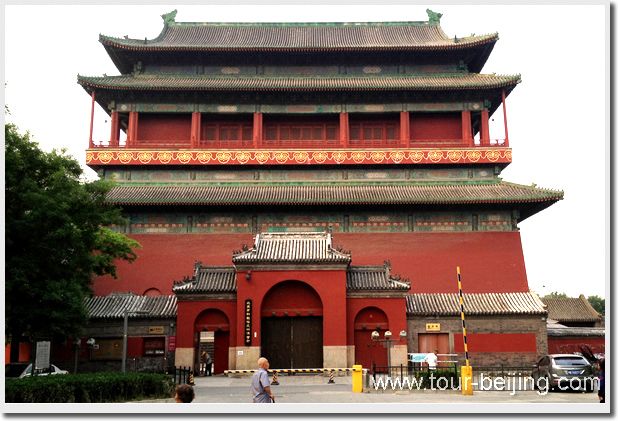
Ascending the 67-meter high and two-story Drum Tower dating from 1420 is sure to bring you back to the old Beijing by seeing the big drum tower and having bird's eye view of the surrounding communities of hutongs and siheyuan - existing traditional courtyards in Beijing.
 |
Return to your midtown hotel in Beijing after the half day tour.
Optional add-on:
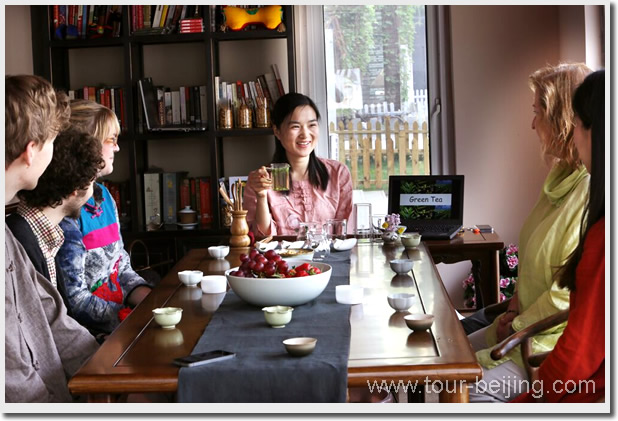
If you are interested in the Chinese tea culture, after the day tour, you are transferred to a nice tea market in the center of Beijing. There you see a tea performance and learn how to conduct your own kungfu tea ritual. The knowledge of tea, tea selection, steeping and savoring will be explained. After a simple tea ceremony, you are free on your own in choosing your favorite tea, teapots and teacups.
 |
Price List for this tour (Price per person in US dollars)
| Price without shopping stop | |
| Travelling Party | Tour Cost Per Person |
| 1 person | US$ 130 |
| 2 persons | US$ 80 |
| 3 persons | US$ 75 |
| 4persons | US$ 72 |
| 5persons | US$ 70 |
| 6persons | US$ 65 |
| 7persons | US$ 60 |
| 8persons | US$ 55 |
| 9persons | US$ 52 |
| 10persons up | US$ 50 |
 |
 |
| Price inclusion: 1.Air conditioned vehicle 2.Entrance fees 3.English Speaking tour guide 4.The above private transfer is customized for you, your family or your friends exclusively. No other travelers will join in your group. |
Price exclusion: 1.Gratuities to drivers and guides 2.Lunch 3.Travel insurance for your coverage of injury or accident |
Available:
Daily
Remark:
Our tour guide will contact you on the evening before your tour date by calling you or leaving a message at your hotel room and fix the pick-up time for next day morning.
Reservation Notes
| ● | Personal online booking information below must be provided or book by email  : :Full Name, Nationality, Gender, Names of Travelers, Flight No., Arriving Time and Start Date. You are also welcome to call us at (+86)18611964400 ( 9:00 am - 6:00 pm Monday through Saturday). Tour Beijing will not refund any losses due to missing or incorrect information. |
| ● | All rates on Tour-Beijing.com are subject to reconfirmation from our trip advisors when an actual booking is being made. |
| ● | Child definition: from Age 3 to 11 Years. Contact our trip advisors to check if discount rate is available for your kids. Basically, children under 1.2m in height will get child discount rate, except bus tours. |
| ● | All tours listed on website are all based in English Speaking local guides. For other languages, please contact our trip advisors for new quotations |
| ● | Cash or Prepayment (Paypal, credit card payment, wire transfer, AliPay, WeChat Pay). Both RMB and USD are acceptable. Your actual mode of payment will be confirmed by your trip advisor. Basically, only bus tours (day tour) accept cash payment on the day. |
| ● | When your booking is confirmed, you will get a confirmation email or call from us, which includes the confirmed detailed itinerary with prices. |
| ● | When your booking is confirmed, you will get a confirmation email or call from us, which includes the confirmed detailed itinerary with prices. |
| ● | The cancellation fee: to be confirmed by trip advisor, based on different itineraries and different policies. |
| ● | The schedule can be adjusted by your tour guide due to the actual traffic condition. |
| ● | You are strongly recommended to book this tour at least 35 days in advance to secure the land arrangement involved and avoid the risk of being canceled. |
Questions & Answers:
 Here is only for Questions and Answers. ( For anyone who wants to have an enquiry or customized tour, please email us to
  . )
. )